
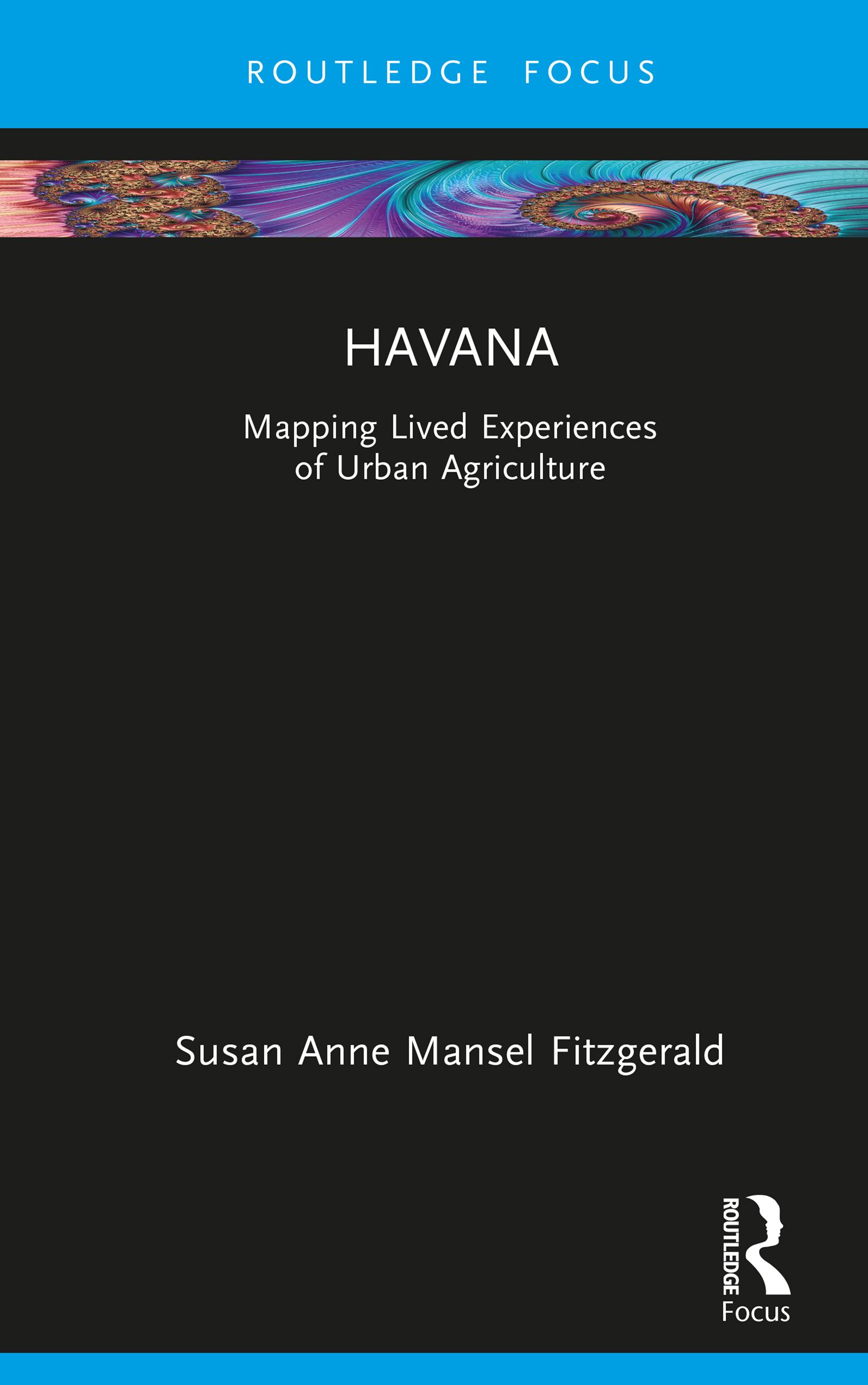
Following the crisis of the Special Period, Cuba promoted urban agriculture throughout its towns and cities to address food sovereignty and security. Through the adoption of state recommended design strategies, these gardens have become places of social and economic exchange throughout Cuba. This book maps the lived experiences surrounding three urban farms in Havana to construct a deeper understanding about the everyday life of this city. Using narratives and drawings, this research uncovers these sites as places where education, intimacy, entrepreneurism, wellbeing, and culture are interwoven alongside food production. Henri Lefebvre’s latent work on rhythmanalysis is used as a research method to capture the everyday beats particular to Havana surrounding these sites. This book maps the many ways in which these spaces shift power away from the state to become places that are co-created by the community to serve as a crucial hinge point between the ongoing collapse of the city and its future wellbeing.
Płać wygodnie kartą, Klarną, Apple Pay lub Google Pay. Nie jesteś zadowolony? Zawsze masz 14-dniową gwarancję zwrotu pieniędzy. Więcej przeczytasz w naszych warunkach. Masz pytania? Napisz do nas na hello@memmo.org.
Memmo ułatwia naukę – gdziekolwiek jesteś na świecie. U nas znajdziesz podręczniki i sprytne narzędzia do nauki w jednym miejscu: streszczenia, quizy, podcasty i fiszki. A do tego Ted, Twój kumpel do nauki, który odpowie na wszystko, co Cię nurtuje. Ponad 50 000 studentów już tu się uczy – stworzone, byś uczył się szybciej i mniej stresował.