
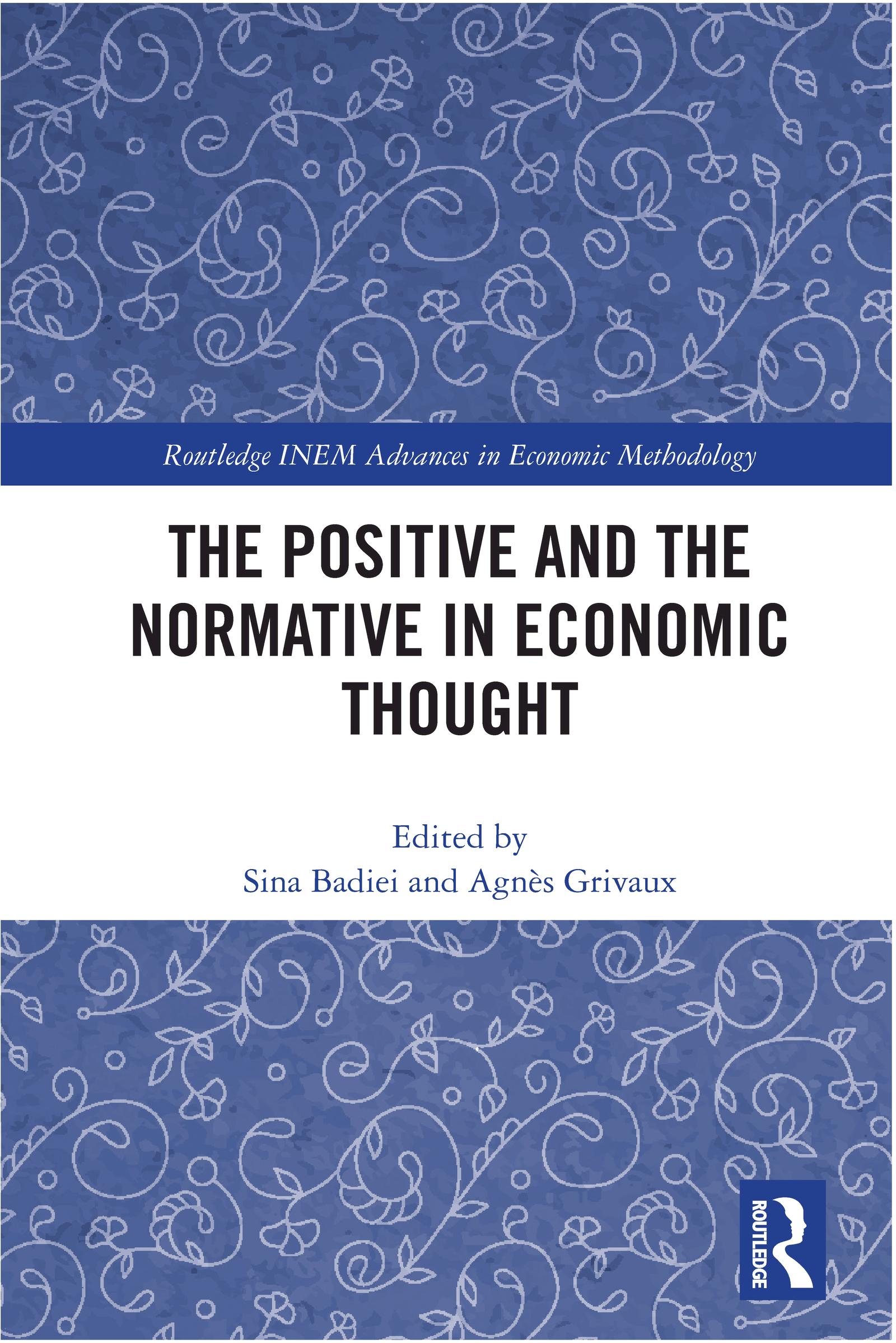
The book responds to the need for greater clarity regarding the relationship between descriptive, evaluative and prescriptive approaches within positive and normative economics. It also analyses the entanglement between evaluative and prescriptive perspectives within several theoretical frameworks in normative economics such as social choice theory, the capability approach, behavioural welfare economics and various theories of justice.
It provides a forum for discussion between various schools of economic thought and several theoretical frameworks on the relationship between the study of facts, norms and values, with particular emphasis on classical political economy, the Marxian school of economics, the Frankfurt School, the Austrian school, the Chicago school, rational choice theory, expected utility theory, behavioural economics, experimental economics, development economics, welfare economics, public economics, constitutional political economy, the capability approach and politico-economic theories of justice.
Given the scope of questions treated in this book, it will be of interest to economists, historians of economic thought, political philosophers and philosophers of science, especially those interested in the philosophy and epistemology of economics.
Płać wygodnie kartą, Klarną, Apple Pay lub Google Pay. Nie jesteś zadowolony? Zawsze masz 14-dniową gwarancję zwrotu pieniędzy. Więcej przeczytasz w naszych warunkach. Masz pytania? Napisz do nas na hello@memmo.org.
Memmo ułatwia naukę – gdziekolwiek jesteś na świecie. U nas znajdziesz podręczniki i sprytne narzędzia do nauki w jednym miejscu: streszczenia, quizy, podcasty i fiszki. A do tego Ted, Twój kumpel do nauki, który odpowie na wszystko, co Cię nurtuje. Ponad 50 000 studentów już tu się uczy – stworzone, byś uczył się szybciej i mniej stresował.