
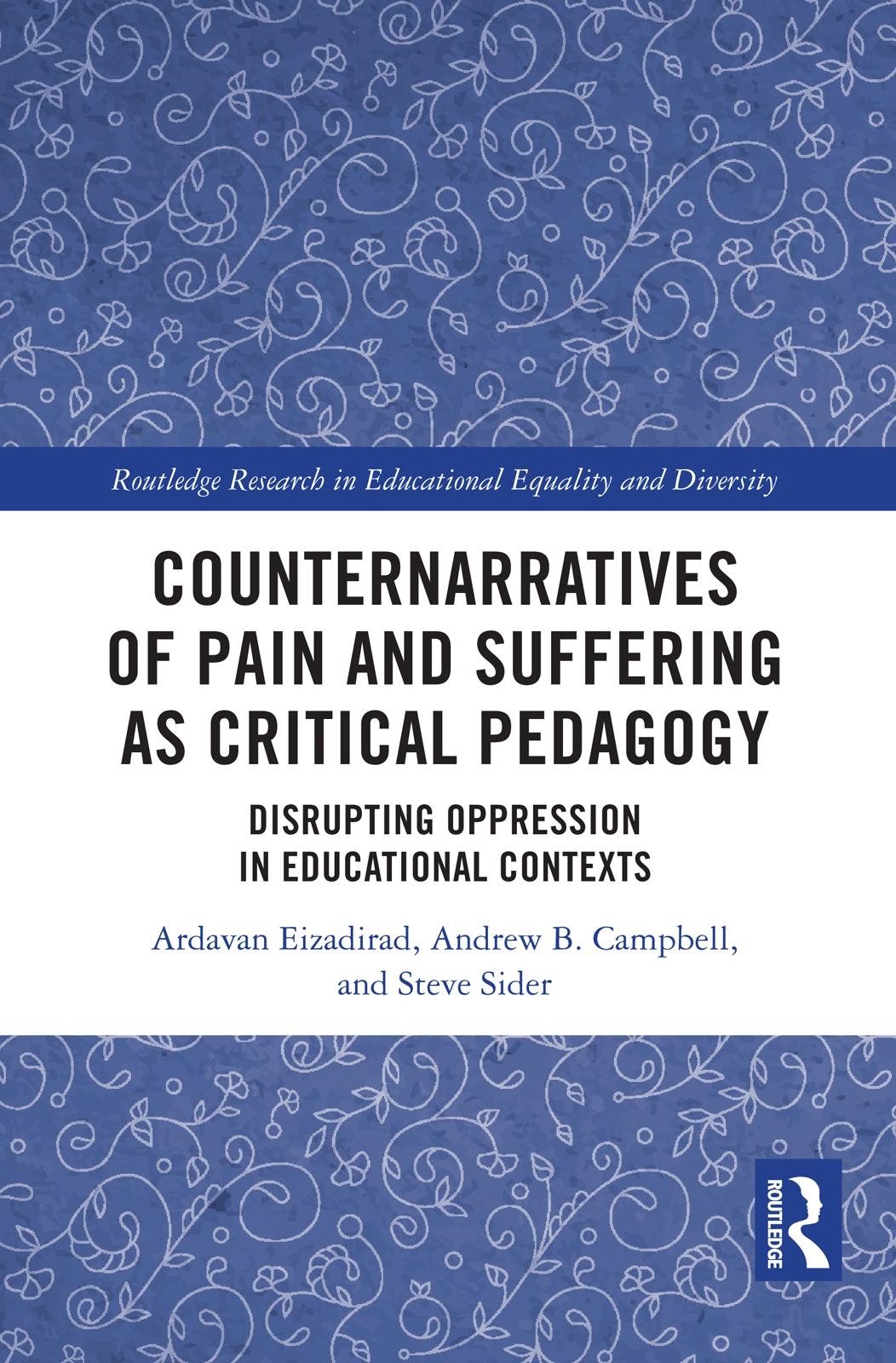
Foregrounding diverse lived experiences and non-dominant forms of knowledge, this edited volume showcases ways in which narrating and sharing stories of pain and suffering can be engaged as critical pedagogy to challenge oppression and inequity in educational contexts.
The volume illustrates the need to consider both the act of narrating and the experience of bearing witness to narration to harness the full transformative potentials of counternarratives in disrupting oppressive practices. Chapters are divided into three parts - "Telling and Reliving Trauma as Pedagogy," "Pedagogies of Overcoming Silence," and "Forgetting as Pedagogy" - illustrating a range of relational pedagogical and methodological approaches, including journaling, poetry, and arts-based narrative inquiry.
The authors make the argument that the language of pain and suffering is universal, hence its potential as critical pedagogy for transformative and therapeutic teaching and learning. Readers are encouraged to reflect on their own lived experiences to constructively engage with their pain, suffering, and trauma. Focusing on trauma-informed non-hegemonic storytelling and transformative pedagogies, this volume will be of interest to students, faculty, scholars, and community members with an interest in advancing anti-oppressive and social justice education.
Płać wygodnie kartą, Klarną, Apple Pay lub Google Pay. Nie jesteś zadowolony? Zawsze masz 14-dniową gwarancję zwrotu pieniędzy. Więcej przeczytasz w naszych warunkach. Masz pytania? Napisz do nas na hello@memmo.org.
Memmo ułatwia naukę – gdziekolwiek jesteś na świecie. U nas znajdziesz podręczniki i sprytne narzędzia do nauki w jednym miejscu: streszczenia, quizy, podcasty i fiszki. A do tego Ted, Twój kumpel do nauki, który odpowie na wszystko, co Cię nurtuje. Ponad 50 000 studentów już tu się uczy – stworzone, byś uczył się szybciej i mniej stresował.