
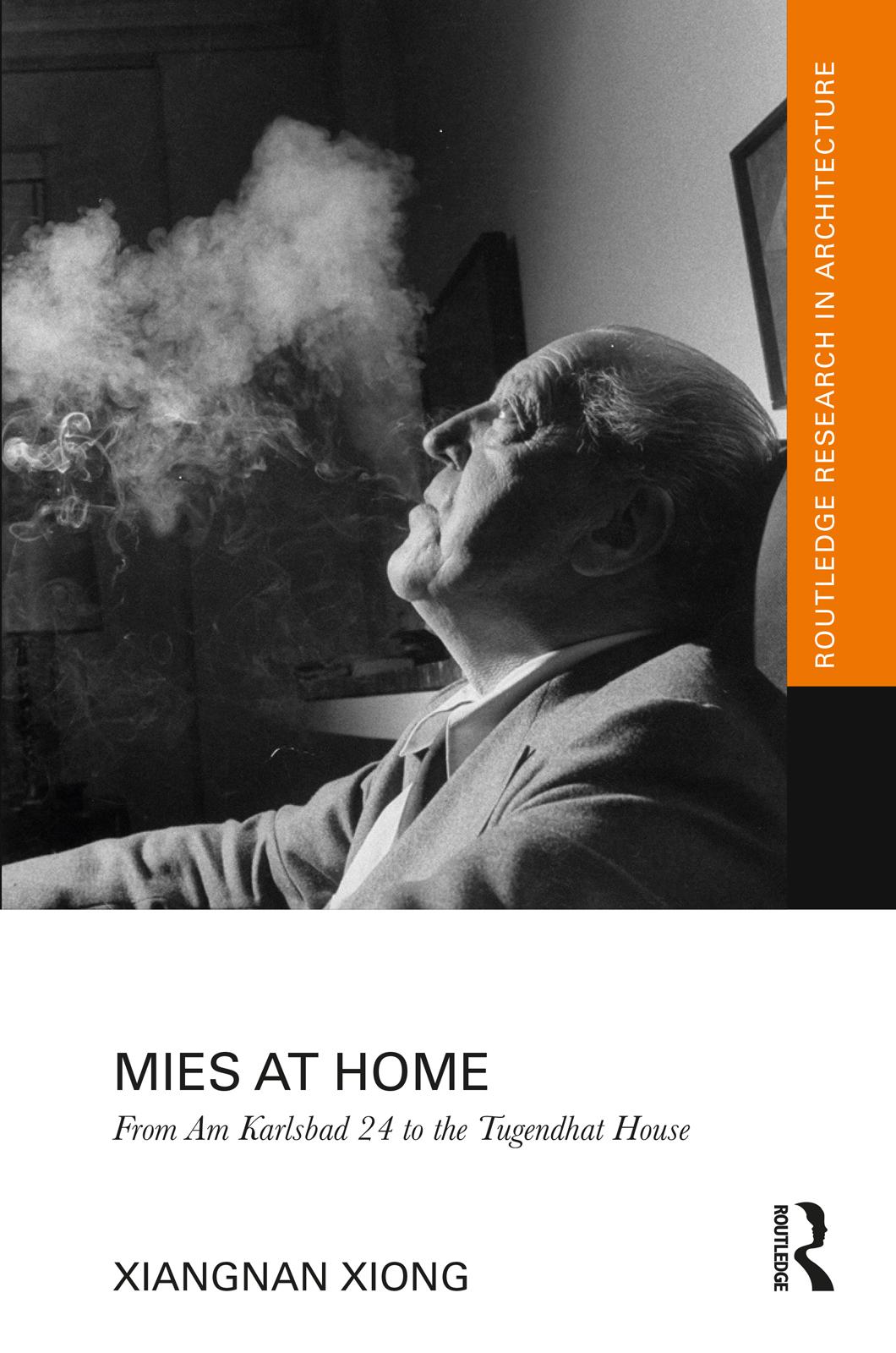
Mies at Home is a radical rereading of one of the most significant periods in Mies van der Rohe’s career, from the mid- to late 1920s when he was developing his seminal spatial ideas— ideas that would culminate in his celebrated design of the Tugendhat House.
The book examines how Mies’s experience of residing in his apartment, doubling as a studio, in central Berlin had an impact on his spatial concepts. It uncovers one of the most profound but virtually untold aspects of Mies’s development: how his visions of an ideal lifestyle came out of his own living experience and how they, in turn, informed his domestic architecture. Mies’s quest featured two breakthroughs. In the Weissenhof apartment building, he conveyed a flexible and manifold lifestyle that many of the avant-garde artists, including himself, were practicing. Later, in the Tugendhat House, he put forward an alternative way of living that centered on contemplation.
Beautifully illustrated throughout, Mies at Home offers a fresh investigation of the diverse intentions and strategies the architect used in creating his iconic open spaces. It will be an insightful read for researchers, academics, and students in architectural history and theory.
Płać wygodnie kartą, Klarną, Apple Pay lub Google Pay. Nie jesteś zadowolony? Zawsze masz 14-dniową gwarancję zwrotu pieniędzy. Więcej przeczytasz w naszych warunkach. Masz pytania? Napisz do nas na hello@memmo.org.
Memmo ułatwia naukę – gdziekolwiek jesteś na świecie. U nas znajdziesz podręczniki i sprytne narzędzia do nauki w jednym miejscu: streszczenia, quizy, podcasty i fiszki. A do tego Ted, Twój kumpel do nauki, który odpowie na wszystko, co Cię nurtuje. Ponad 50 000 studentów już tu się uczy – stworzone, byś uczył się szybciej i mniej stresował.