
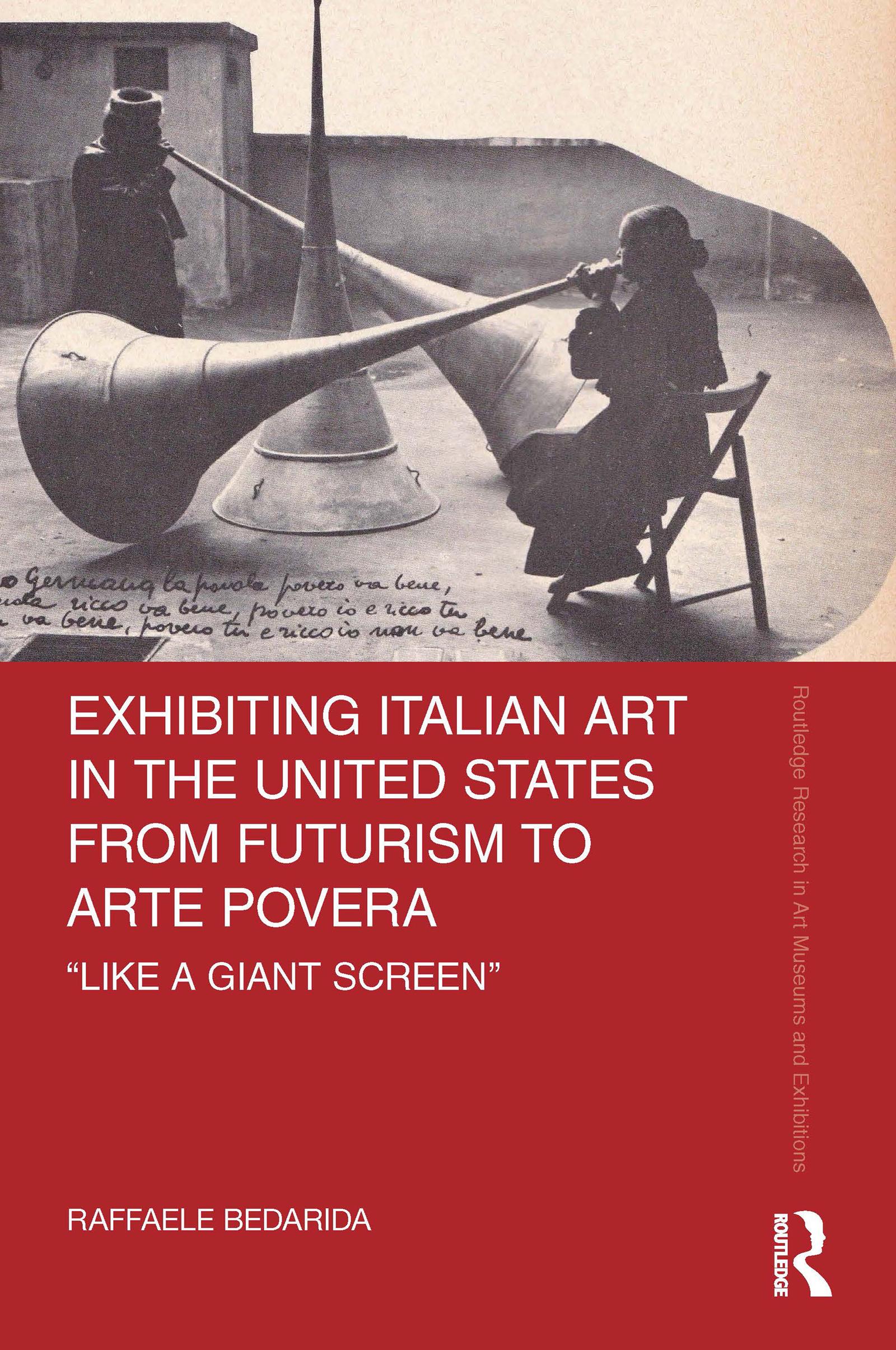
This volume explores how Italian institutions, dealers, critics, and artists constructed a modern national identity for Italy by exporting – literally and figuratively – contemporary art to the United States in key moments between 1929 and 1969.
From artist Fortunato Depero opening his Futurist House in New York City to critic Germano Celant launching Arte Povera in the United States, Raffaele Bedarida examines the thick web of individuals and cultural environments beyond the two more canonical movements that shaped this project. By interrogating standard narratives of Italian Fascist propaganda on the one hand and American Cold War imperialism on the other, this book establishes a more nuanced transnational approach. The central thesis is that, beyond the immediate aims of political propaganda and conquering a new market for Italian art, these art exhibitions, publications, and the critical discourse aimed at American audiences all reflected back on their makers: they forced and helped Italians define their own modernity in relation to the world’s new dominant cultural and economic power.
The book will be of interest to scholars working in art history, social history, exhibition history, and Italian studies.
Płać wygodnie kartą, Klarną, Apple Pay lub Google Pay. Nie jesteś zadowolony? Zawsze masz 14-dniową gwarancję zwrotu pieniędzy. Więcej przeczytasz w naszych warunkach. Masz pytania? Napisz do nas na hello@memmo.org.
Memmo ułatwia naukę – gdziekolwiek jesteś na świecie. U nas znajdziesz podręczniki i sprytne narzędzia do nauki w jednym miejscu: streszczenia, quizy, podcasty i fiszki. A do tego Ted, Twój kumpel do nauki, który odpowie na wszystko, co Cię nurtuje. Ponad 50 000 studentów już tu się uczy – stworzone, byś uczył się szybciej i mniej stresował.