
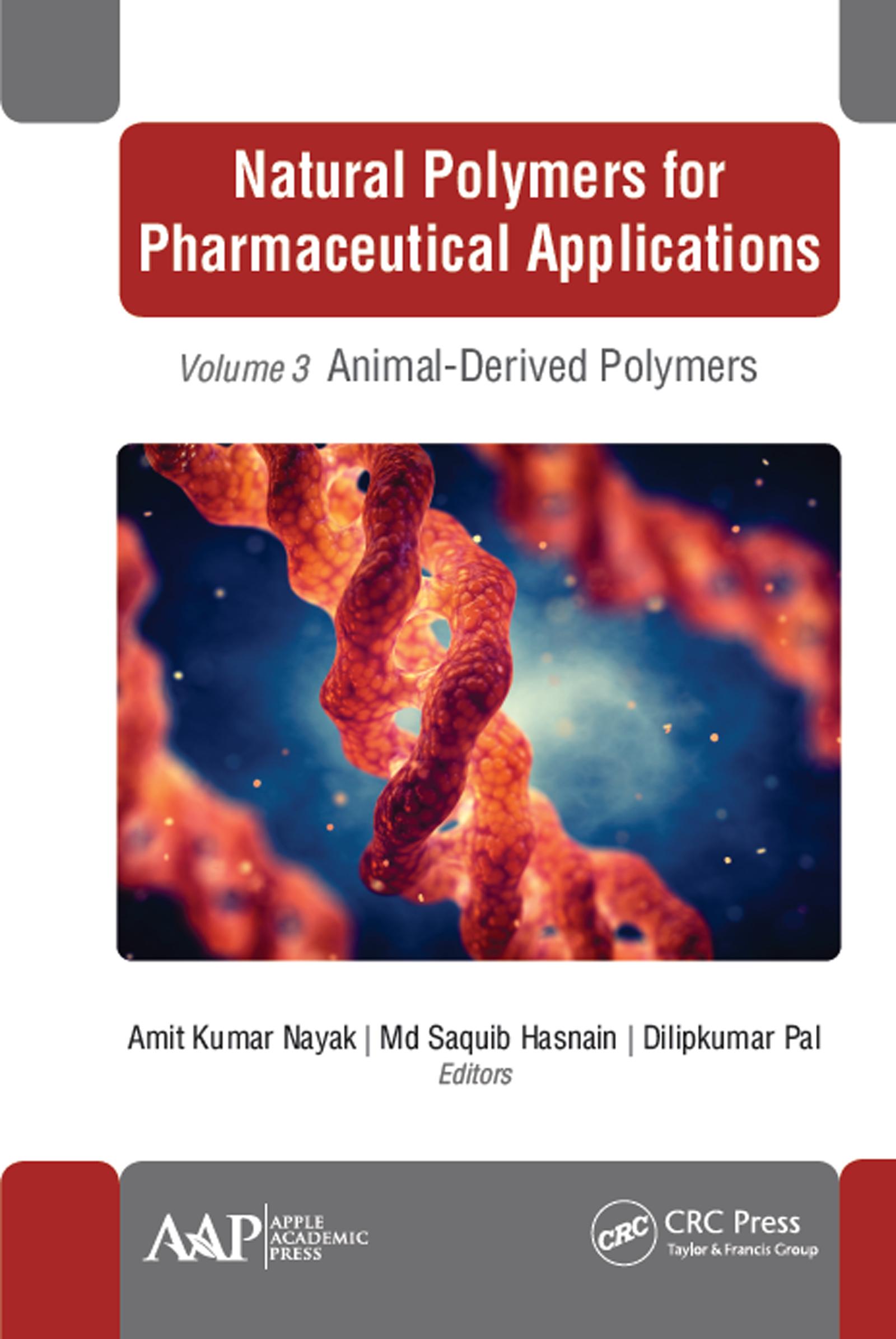
In recent years, many animal-derived polymers have emerged as an attractive category of naturally derived polymers because of their advantageous physicochemical, chemical, and biological properties. The important biological properties of these natural polymers derived from animals are biocompatibility and biodegradation. These polymers are generally composed of repeated units of amino acids. Moreover, these polymers can be modified physically and/or chemically to improve their biomaterial properties.
Natural Polymers for Pharmaceutical Applications, Volume 3: Animal-Derived Polymers looks at how these polymers can be exploited as pharmaceutical excipients in various pharmaceutical dosage forms, like microparticles, nanoparticles, ophthalmic preparations, gels, implants, etc. The commonly used animal-derived polymers used as pharmaceutical excipients are hyaluronic acid (hyaluronan), albumin, collagen, gelatin, chondroitin, etc.
Płać wygodnie kartą, Klarną, Apple Pay lub Google Pay. Nie jesteś zadowolony? Zawsze masz 14-dniową gwarancję zwrotu pieniędzy. Więcej przeczytasz w naszych warunkach. Masz pytania? Napisz do nas na hello@memmo.org.
Memmo ułatwia naukę – gdziekolwiek jesteś na świecie. U nas znajdziesz podręczniki i sprytne narzędzia do nauki w jednym miejscu: streszczenia, quizy, podcasty i fiszki. A do tego Ted, Twój kumpel do nauki, który odpowie na wszystko, co Cię nurtuje. Ponad 50 000 studentów już tu się uczy – stworzone, byś uczył się szybciej i mniej stresował.