
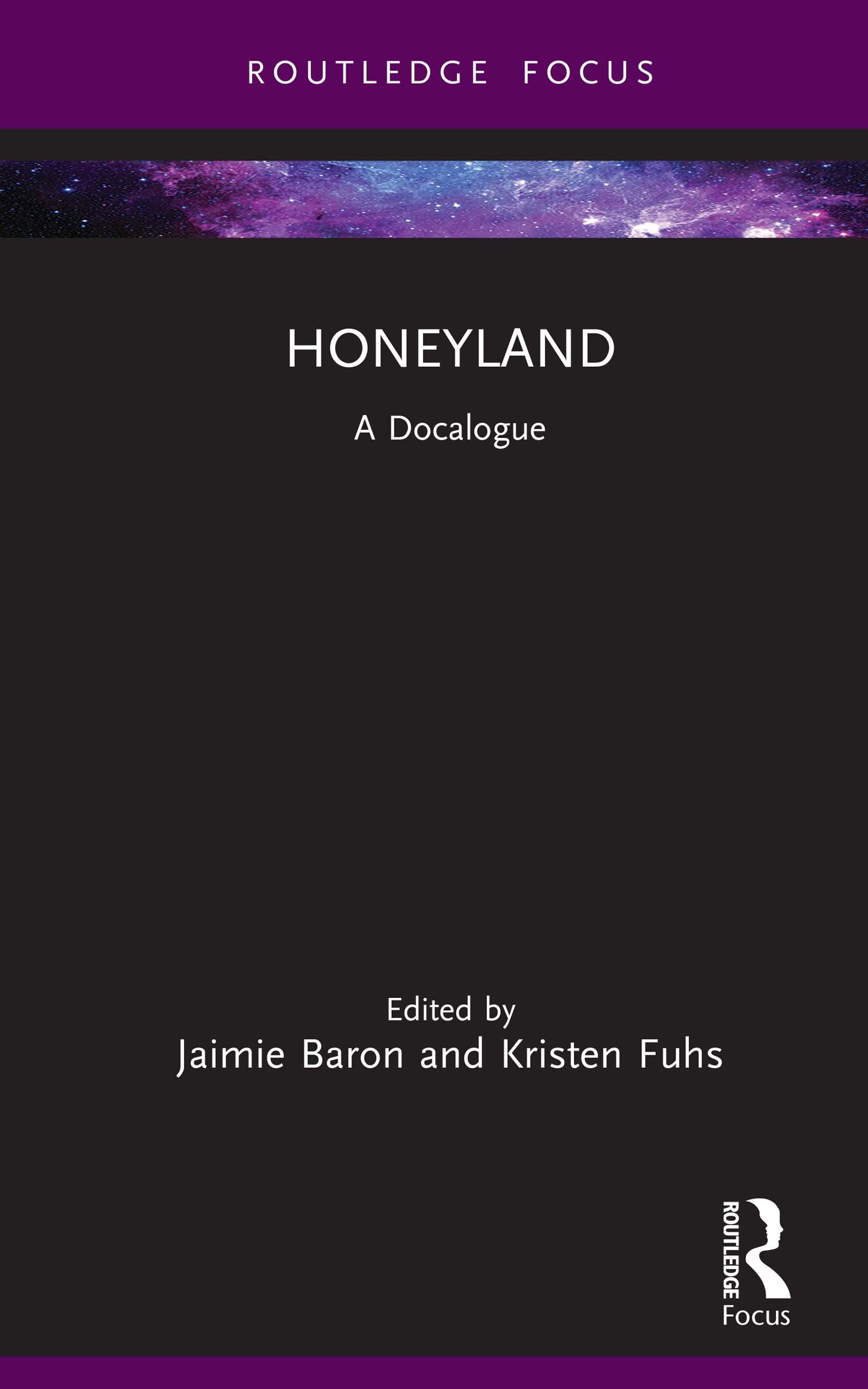
The fourth volume in the Docalogue series, this book explores the significance of the documentary Honeyland (2019) in relation to documentary ethics, the representation of human and animal relations, environmental studies, genre theory, and documentary distribution.
The film, focused on a Turkish-speaking woman in Macedonia who cultivates bees to produce honey through an ancient and environmentally sustainable method, raises important questions about the place of humans and economic activity within the broader ecosystem. The documentary also prompts critical reflection about the relationship between observation and storytelling, how the film festival circuit allows certain films to reach a wide audience, the ethics of ethnographic representation, the relationship between human and insect life, and to what extent film can allow us to experience others’ life-worlds. By combining five distinct critical perspectives on a single documentary, this book acts both as an intensive scholarly treatment of the film and as a guide for how to analyze, theorize, and contextualize a documentary text.
This book will be of interest to students and scholars of documentary studies, as well as those studying film and media more broadly.
Płać wygodnie kartą, Klarną, Apple Pay lub Google Pay. Nie jesteś zadowolony? Zawsze masz 14-dniową gwarancję zwrotu pieniędzy. Więcej przeczytasz w naszych warunkach. Masz pytania? Napisz do nas na hello@memmo.org.
Memmo ułatwia naukę – gdziekolwiek jesteś na świecie. U nas znajdziesz podręczniki i sprytne narzędzia do nauki w jednym miejscu: streszczenia, quizy, podcasty i fiszki. A do tego Ted, Twój kumpel do nauki, który odpowie na wszystko, co Cię nurtuje. Ponad 50 000 studentów już tu się uczy – stworzone, byś uczył się szybciej i mniej stresował.