
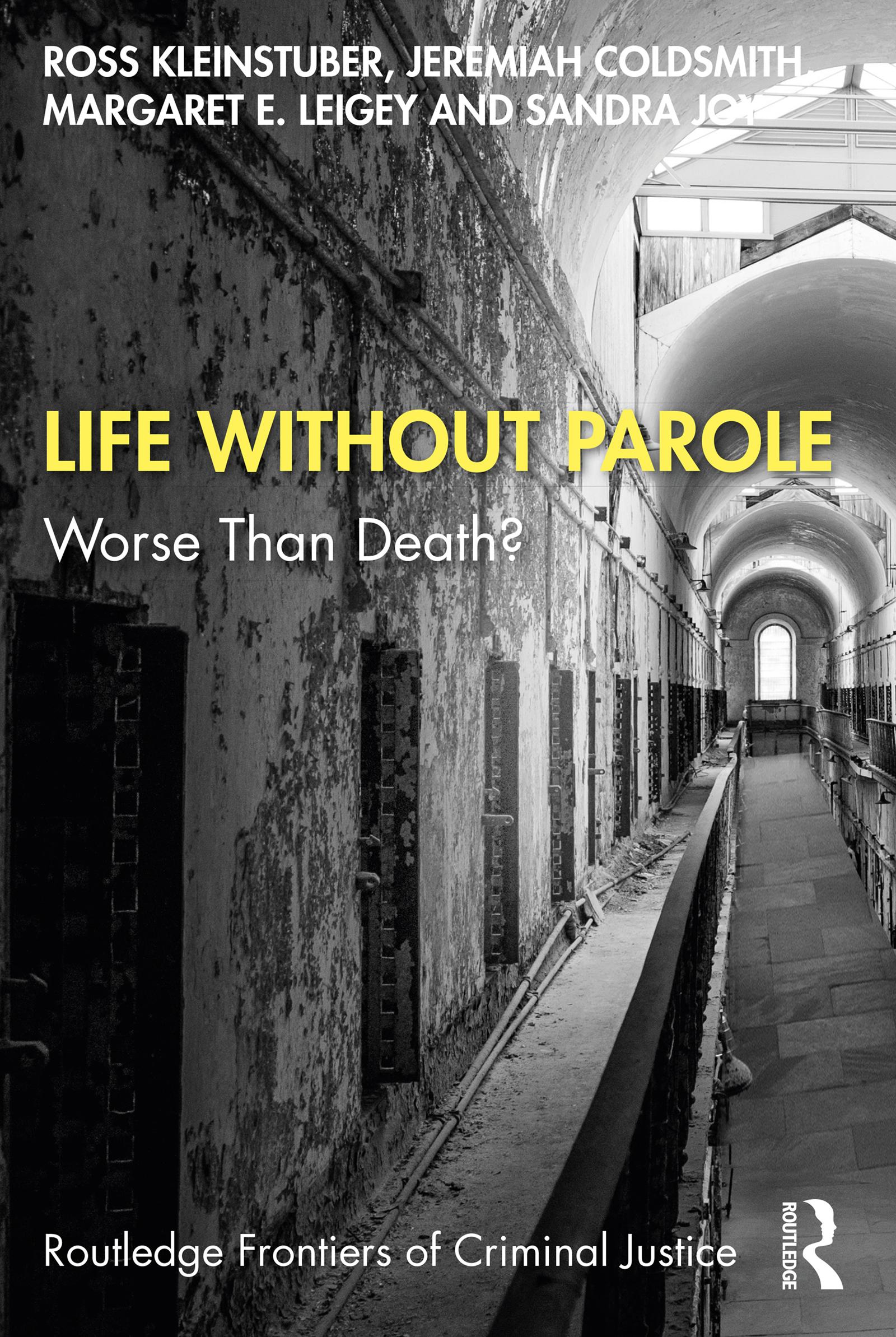
This book is an in-depth critical examination of all pertinent aspects of life without parole (LWOP). Empirically assessing key arguments that advance LWOP, including as an alternative to the death penalty, it reveals that not only is the punishment cruel while not providing any societal benefits, it is actually detrimental to society.
Over the last 30 years, LWOP has exploded in the United States. While the use of capital punishment over that same time period has declined, it must be recognized that LWOP is, in fact, a hidden death sentence. It is, however, implemented in a way that allows society to largely ignore this truth. While capital punishment has rightfully been subject to intense debate and scholarship, LWOP has mostly escaped such scrutiny. In fact, LWOP has been touted by both death penalty abolitionists and by tough-on-crime conservatives, which has allowed it to flourish under the radar. Specifically, abolitionists have advanced LWOP as a palatable alternative to capital punishment, which they perceive as inhumane, error-prone, costly, and racially biased. Conservatives, meanwhile, advocate for LWOP as an effective means of fighting crime, a just form of retribution, and necessary tool for managing incorrigible offenders. This book seeks to tap into and help inform this growing debate by subjecting these key arguments to empirical scrutiny. The results of those analyses fail to produce any evidence in support of any of those various justifications and therefore suggest that LWOP should be abolished and replaced with life sentences that come with parole eligibility after a maximum of 25 years.
The book will be of great interest to students and scholars of criminology and criminal justice and will also have crossover appeal into the fields of law, political science, and sociology. It will also appeal to criminal justice professionals, lawmakers, activists, and attorneys, as well as death penalty abolitionists, opponents of mass incarceration, advocates for sentencing reform, and supporters of prisoners’ rights.
Płać wygodnie kartą, Klarną, Apple Pay lub Google Pay. Nie jesteś zadowolony? Zawsze masz 14-dniową gwarancję zwrotu pieniędzy. Więcej przeczytasz w naszych warunkach. Masz pytania? Napisz do nas na hello@memmo.org.
Memmo ułatwia naukę – gdziekolwiek jesteś na świecie. U nas znajdziesz podręczniki i sprytne narzędzia do nauki w jednym miejscu: streszczenia, quizy, podcasty i fiszki. A do tego Ted, Twój kumpel do nauki, który odpowie na wszystko, co Cię nurtuje. Ponad 50 000 studentów już tu się uczy – stworzone, byś uczył się szybciej i mniej stresował.