
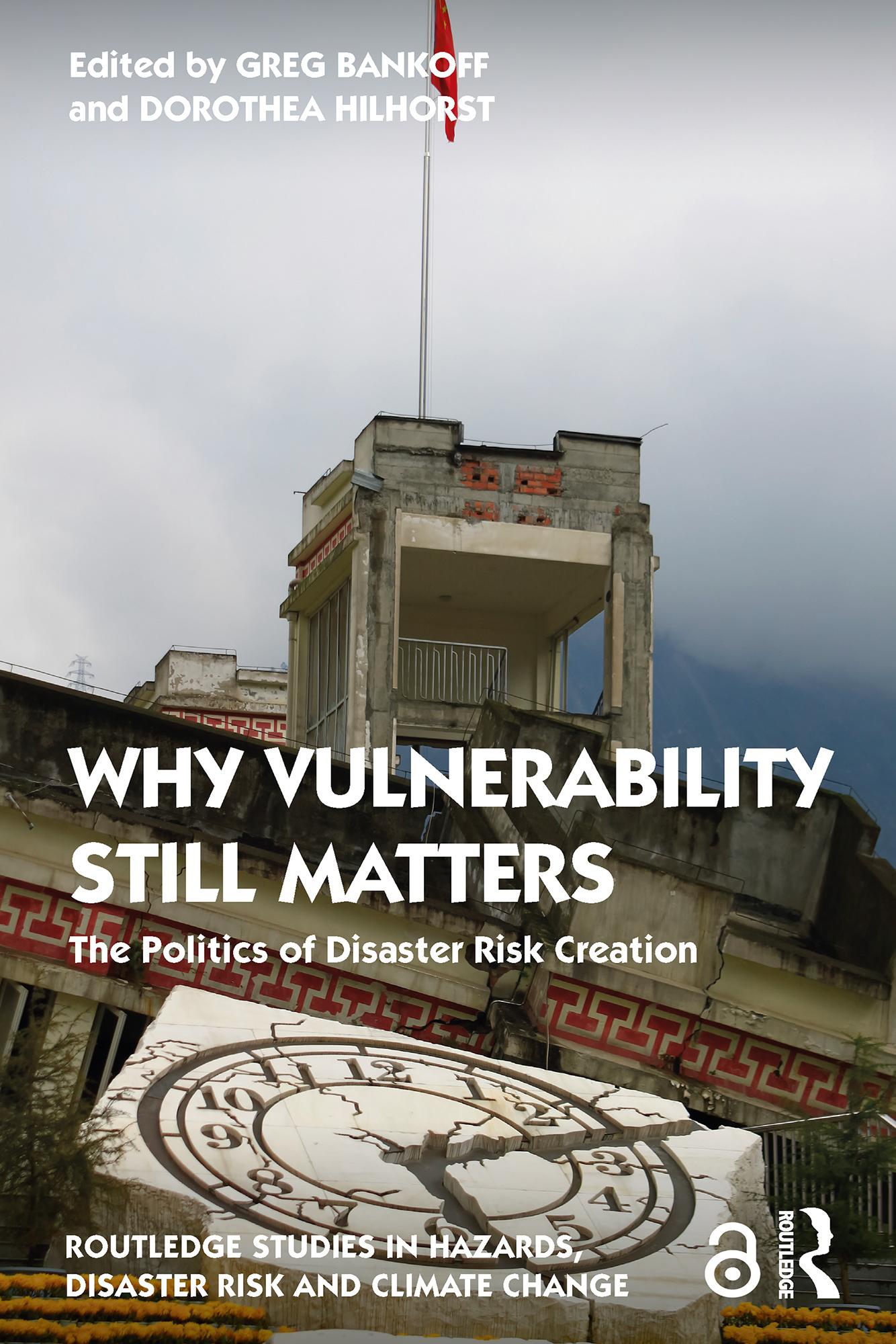
We think vulnerability still matters when considering how people are put at risk from hazards and this book shows why in a series of thematic chapters and case studies written by eminent disaster studies scholars that deal with the politics of disaster risk creation: precarity, conflict, and climate change.
The chapters highlight different aspects of vulnerability and disaster risk creation, placing the stress rightly on what causes disasters and explaining the politics of how they are created through a combination of human interference with natural processes, the social production of vulnerability, and the neglect of response capacities. Importantly, too, the book provides a platform for many of those most prominently involved in launching disaster studies as a social discipline to reflect on developments over the past 50 years and to comment on current trends.
The interdisciplinary and historical perspective that this book provides will appeal to scholars and practitioners at both the national and international level seeking to study, develop, and support effective social protection strategies to prevent or mitigate the effects of hazards on vulnerable populations. It will also prove an invaluable reference work for students and all those interested in the future safety of the world we live in.
The Open Access version of this book, available at http://www.taylorfrancis.com, has been made available under a Creative Commons Attribution-NonCommercial-ShareAlike (CC-BY-NC-SA) 4.0 International license.
Płać wygodnie kartą, Klarną, Apple Pay lub Google Pay. Nie jesteś zadowolony? Zawsze masz 14-dniową gwarancję zwrotu pieniędzy. Więcej przeczytasz w naszych warunkach. Masz pytania? Napisz do nas na hello@memmo.org.
Memmo ułatwia naukę – gdziekolwiek jesteś na świecie. U nas znajdziesz podręczniki i sprytne narzędzia do nauki w jednym miejscu: streszczenia, quizy, podcasty i fiszki. A do tego Ted, Twój kumpel do nauki, który odpowie na wszystko, co Cię nurtuje. Ponad 50 000 studentów już tu się uczy – stworzone, byś uczył się szybciej i mniej stresował.