
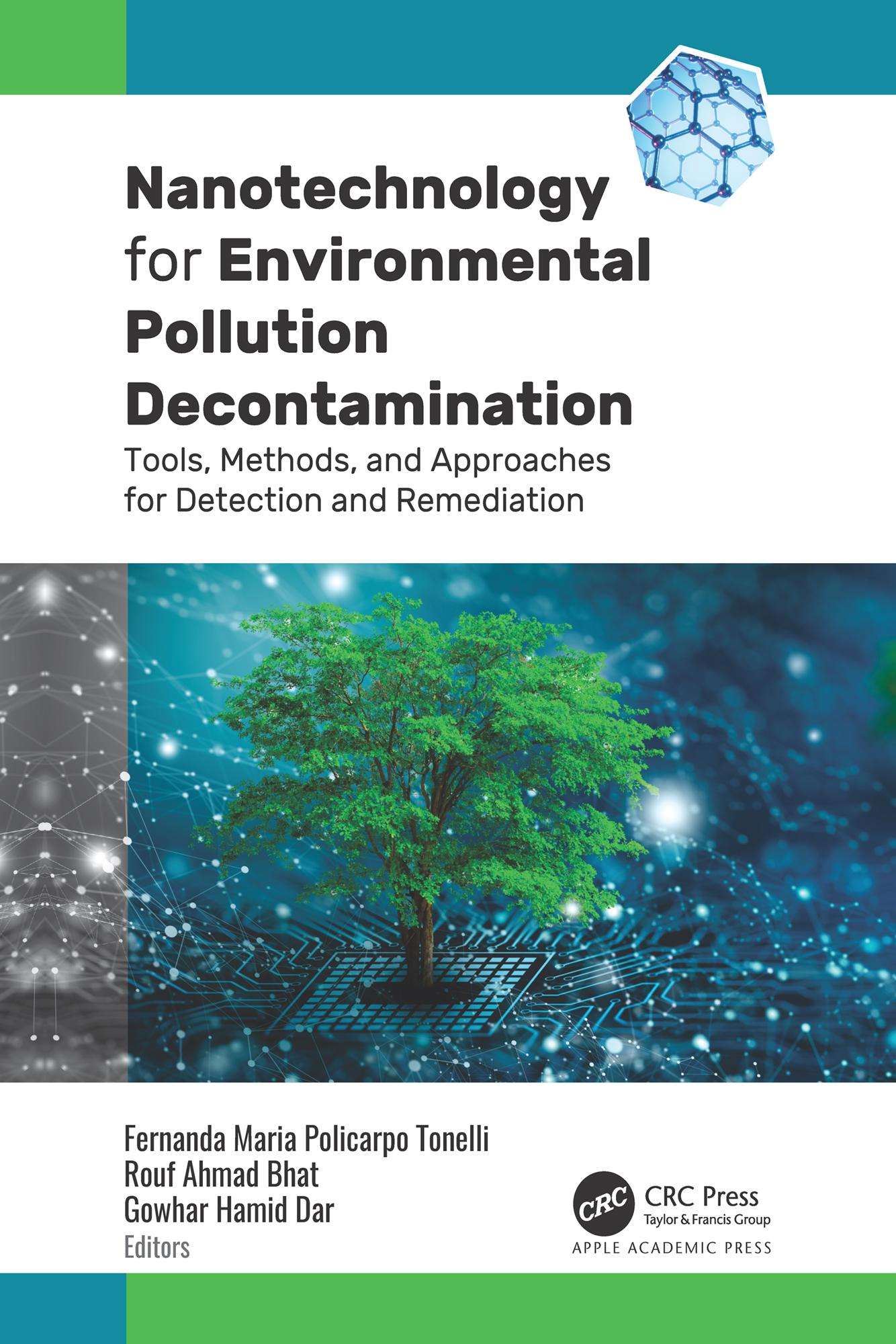
This new volume presents informative research on the different aspects of employing nanotechnology for environmental pollution decontamination, highlighting the main tools, methods, and approaches for contaminants detection and remediation.
The book takes a biotechnological point of view that considers the main environmental pollutants; the safety and economic aspects of nanoremediation, nanosensors and nanobiosensors for the detection of pollutants; and strategies to promote nanoremediation and nanobioremediation. The chapters offer a comprehensive overview of nanotechnologic strategies as essential tools to restore polluted environments and to make more feasible and harmonic the pathway to sustainable development. The volume also discusses the use of sensors to detect pollutants and to monitor the quality of environmental restoration.
Topics include nanozymes; organic and inorganic pollutants threatening human health; different types of carbon-based and non-carbon-based nanomaterials in nanosensors and nanobiosensors to detect environmental pollution; nanomaterials that specifically deal with water, soil, or air pollution; and assisted nanoremediation promoted by plants (nanophytoremediation) or microorganisms (for example, mycorrhizal fungus) that promote in situ nano-phyto-mycorrhizo-remediation. Also addressed are aspects related to a macroperspective of nanoremediation that highlight the economic aspects related to nanotechnology, the safety aspects of the use of nanomaterials, and the sustainability aspects related to the use of nanomaterials in strategies of environmental restoration.
Nanotechnology for Environmental Pollution Decontamination: Tools, Methods, and Approaches for Detection and Remediation offers extensive and comprehensive knowledge on nanotechnology applied to pollution detection and remediation, assisted or not by biological strategies.
Płać wygodnie kartą, Klarną, Apple Pay lub Google Pay. Nie jesteś zadowolony? Zawsze masz 14-dniową gwarancję zwrotu pieniędzy. Więcej przeczytasz w naszych warunkach. Masz pytania? Napisz do nas na hello@memmo.org.
Memmo ułatwia naukę – gdziekolwiek jesteś na świecie. U nas znajdziesz podręczniki i sprytne narzędzia do nauki w jednym miejscu: streszczenia, quizy, podcasty i fiszki. A do tego Ted, Twój kumpel do nauki, który odpowie na wszystko, co Cię nurtuje. Ponad 50 000 studentów już tu się uczy – stworzone, byś uczył się szybciej i mniej stresował.