
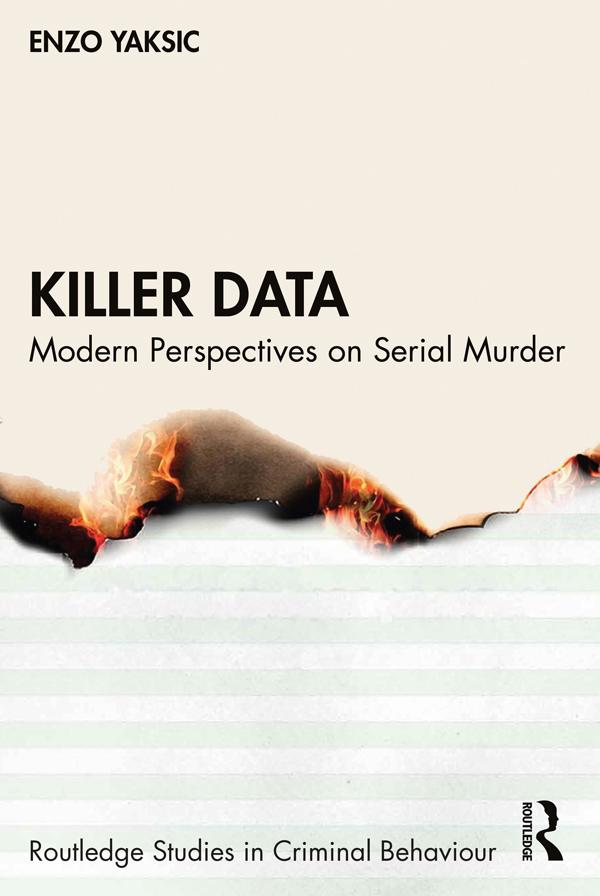
Killer Data examines the phenomenon of serial murder using data collected from international sources to review offender patterning with a focus on contemporary cases. This type of attention will allow for a broader understanding of modern-day serial murderers and will help to dispel some of the myths that surround offenders.
The current serial murder classification scheme incorrectly types serial murderers as supremely intelligent killing machines while discounting their socialization, experiences, and choices. This book exposes serial murderers as run-of-the-mill hometown losers, who brutalize women, and are lucky to escape apprehension. Like other atypical homicide offenders, modern-day serial murderers are propelled forward by a deep sense of entitlement, easy access to firearms, and a nonchalant attitude toward using murder to attain their goals. Readers should come away with a deeper understanding not of the ultra-rare or the "deadliest" serial murderers but of the more common offenders who pose a consistent threat to day-to-day life. The book utilizes the Consolidated Serial Homicide Offender Database, one of the largest and most robust open access databases of multiple murders available, presenting new thinking on areas such as:
- myths and stereotypes
- the impact of entertainment on the perception of serial murder
- inaccurate prevalence estimates
- spree/serial hybrid offenders
- the classification of two and three victim serial murderers
- how serial murderers pursue longevity
- the characteristics of aspiring serial murderers
- whether hit men and gang members are serial murderers
- if and why serial murder is in a state of decline
- how many serial murderers are responsible for the homicides that sent innocent people to prison
- luck as a factor of “success” for serial murderers.
These findings are illustrated with 200 narrative vignettes of serial murder series that occurred between 2011 and 2021, such as Itzcoatl Ocampo, Charles Severance, Nikko Jenkins, and Pamela Hupp, offenders who may be unfamiliar to many but represent the next iteration of the serial murderer.
Correcting decades of flawed assumptions about serial murderers, and written in an accessible and concise style, Killer Data is essential reading for students and scholars of criminal justice and criminology, law enforcement professionals, and the interested general reader.
Płać wygodnie kartą, Klarną, Apple Pay lub Google Pay. Nie jesteś zadowolony? Zawsze masz 14-dniową gwarancję zwrotu pieniędzy. Więcej przeczytasz w naszych warunkach. Masz pytania? Napisz do nas na hello@memmo.org.
Memmo ułatwia naukę – gdziekolwiek jesteś na świecie. U nas znajdziesz podręczniki i sprytne narzędzia do nauki w jednym miejscu: streszczenia, quizy, podcasty i fiszki. A do tego Ted, Twój kumpel do nauki, który odpowie na wszystko, co Cię nurtuje. Ponad 50 000 studentów już tu się uczy – stworzone, byś uczył się szybciej i mniej stresował.