
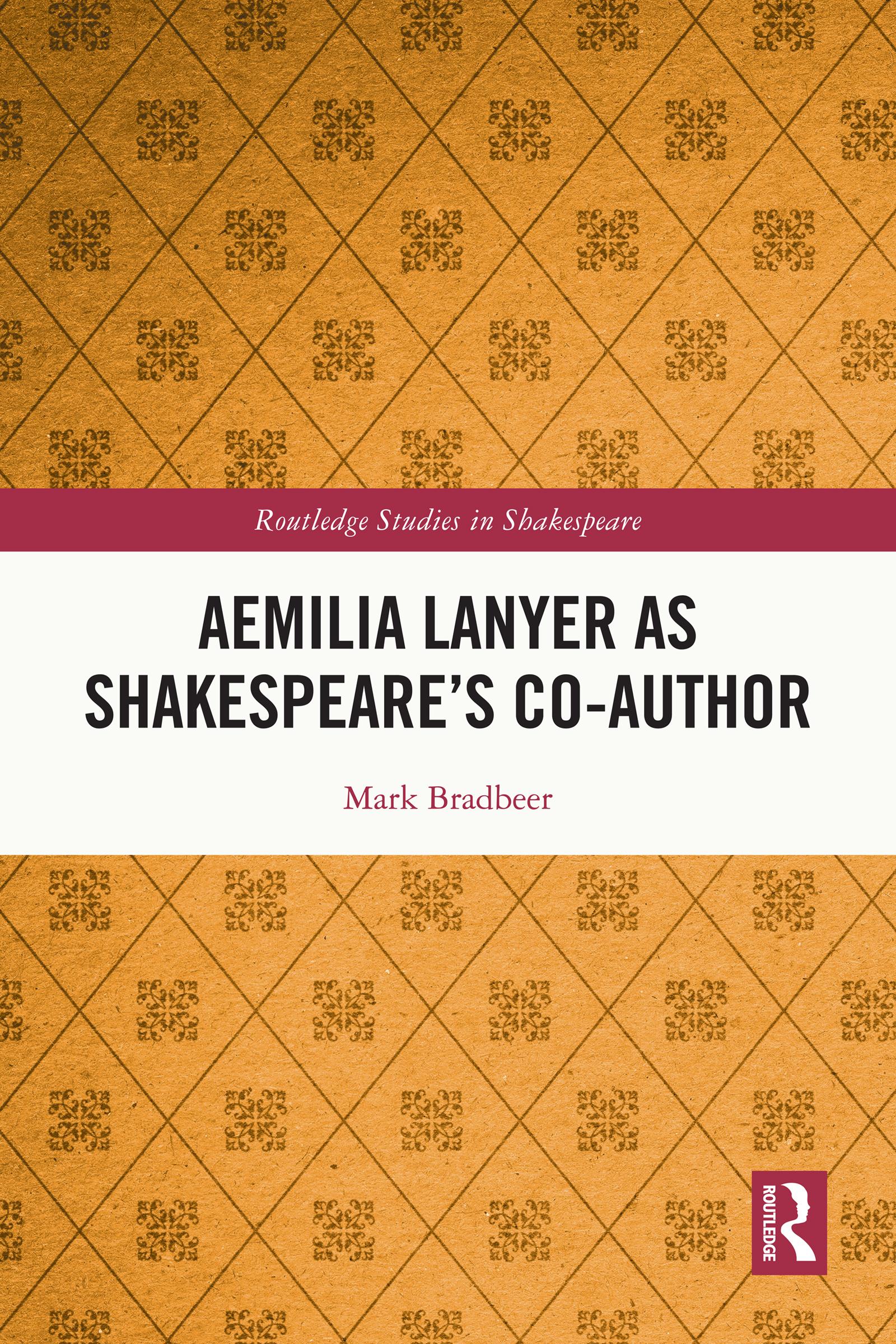
This book presents original material which indicates that Aemilia Lanyer – female writer, feminist, and Shakespeare contemporary – is Shakespeare’s hidden and arguably most significant co-author. Once dismissed as the mere paramour of Shakespeare’s patron, Lord Hunsdon, she is demonstrated to be a most articulate forerunner of #MeToo fury.
Building on previous research into the authorship of Shakespeare’s works, Bradbeer offers evidence in the form of three case studies which signal Aemilia’s collaboration with Shakespeare. The first case study matches the works of "George Wilkins" – who is currently credited as the co-author of the feminist Shakespeare play Pericles (1608) – with Aemilia Lanyer’s writing style, education, feminism and knowledge of Lord Hunsdon’s secret sexual life. The second case-study recognizes Titus Andronicus (1594), a play containing the characters Aemilius and Bassianus, to be a revision of the suppressed play Titus and Vespasian (1592), as authored by the unmarried pregnant Aemilia Bassano, as she then was. Lastly, it is argued that Shakespeare’s clowns, Bottom, Launce, Malvolio, Dromio, Dogberry, Jaques, and Moth, arise in her deeply personal war with the misogynist Thomas Nashe. Each case study reveals new aspects of Lanyer’s feminist activism and involvement in Shakespeare’s work, and allows for a deeper analysis and appreciation of the plays.
This research will prove provocative to students and scholars of Shakespeare studies, English literature, literary history, and gender studies.
Płać wygodnie kartą, Klarną, Apple Pay lub Google Pay. Nie jesteś zadowolony? Zawsze masz 14-dniową gwarancję zwrotu pieniędzy. Więcej przeczytasz w naszych warunkach. Masz pytania? Napisz do nas na hello@memmo.org.
Memmo ułatwia naukę – gdziekolwiek jesteś na świecie. U nas znajdziesz podręczniki i sprytne narzędzia do nauki w jednym miejscu: streszczenia, quizy, podcasty i fiszki. A do tego Ted, Twój kumpel do nauki, który odpowie na wszystko, co Cię nurtuje. Ponad 50 000 studentów już tu się uczy – stworzone, byś uczył się szybciej i mniej stresował.