
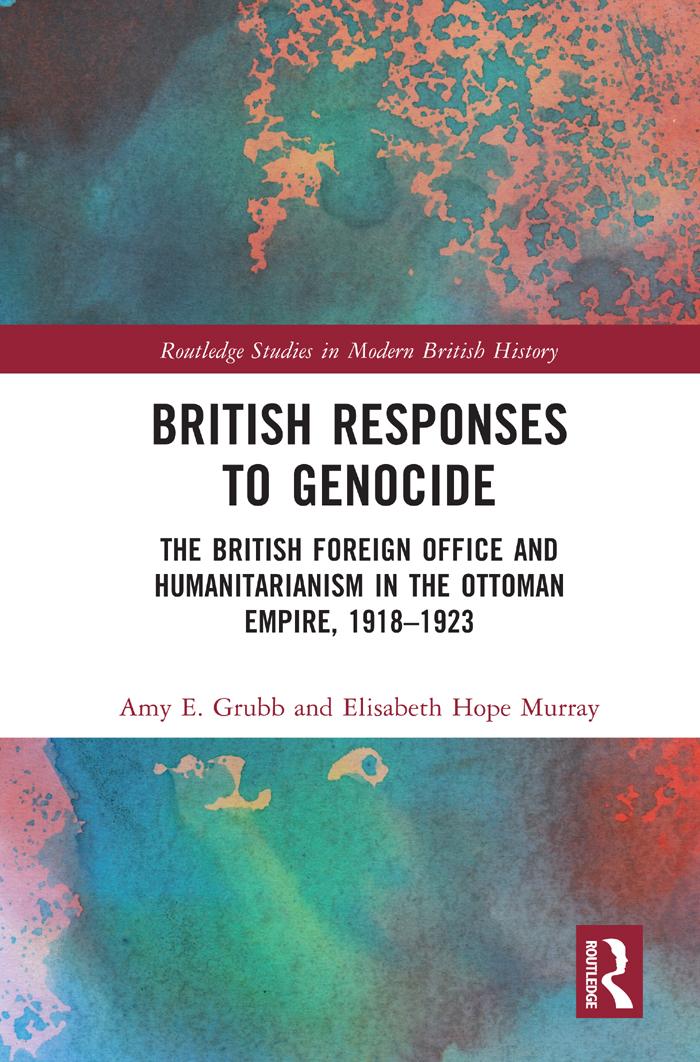
This book examines British responses to genocide and atrocity in the Ottoman Empire during the aftermath of World War I. The authors analyze British humanitarianism and humanitarian intervention through the advice and policies of the Foreign Office and British government in London and the actions of Foreign Officers in the field. British understandings of humanitarianism at the time revolved around three key elements: good government, atrocity, and the refugee crises; this ideology of humanitarianism, however, was challenged by disputed policies of post-war politics and goals regarding the Near East. This resulted in limited intervention methods available to those on the ground but did not necessarily result in the forfeiture of the belief in humanitarianism amongst the local British officials charged with upholding it. This study shows that the tension between altruism and political gain weakened British power in the region, influencing the continuation of violence and repression long after the date most perceive as the cessation of WWI.
The book is primarily aimed at scholars and researchers within the field; it is a research monograph and will be of greatest interest to scholars of genocide, British history, and refugee studies, as well as for activists and practitioners.
Płać wygodnie kartą, Klarną, Apple Pay lub Google Pay. Nie jesteś zadowolony? Zawsze masz 14-dniową gwarancję zwrotu pieniędzy. Więcej przeczytasz w naszych warunkach. Masz pytania? Napisz do nas na hello@memmo.org.
Memmo ułatwia naukę – gdziekolwiek jesteś na świecie. U nas znajdziesz podręczniki i sprytne narzędzia do nauki w jednym miejscu: streszczenia, quizy, podcasty i fiszki. A do tego Ted, Twój kumpel do nauki, który odpowie na wszystko, co Cię nurtuje. Ponad 50 000 studentów już tu się uczy – stworzone, byś uczył się szybciej i mniej stresował.