
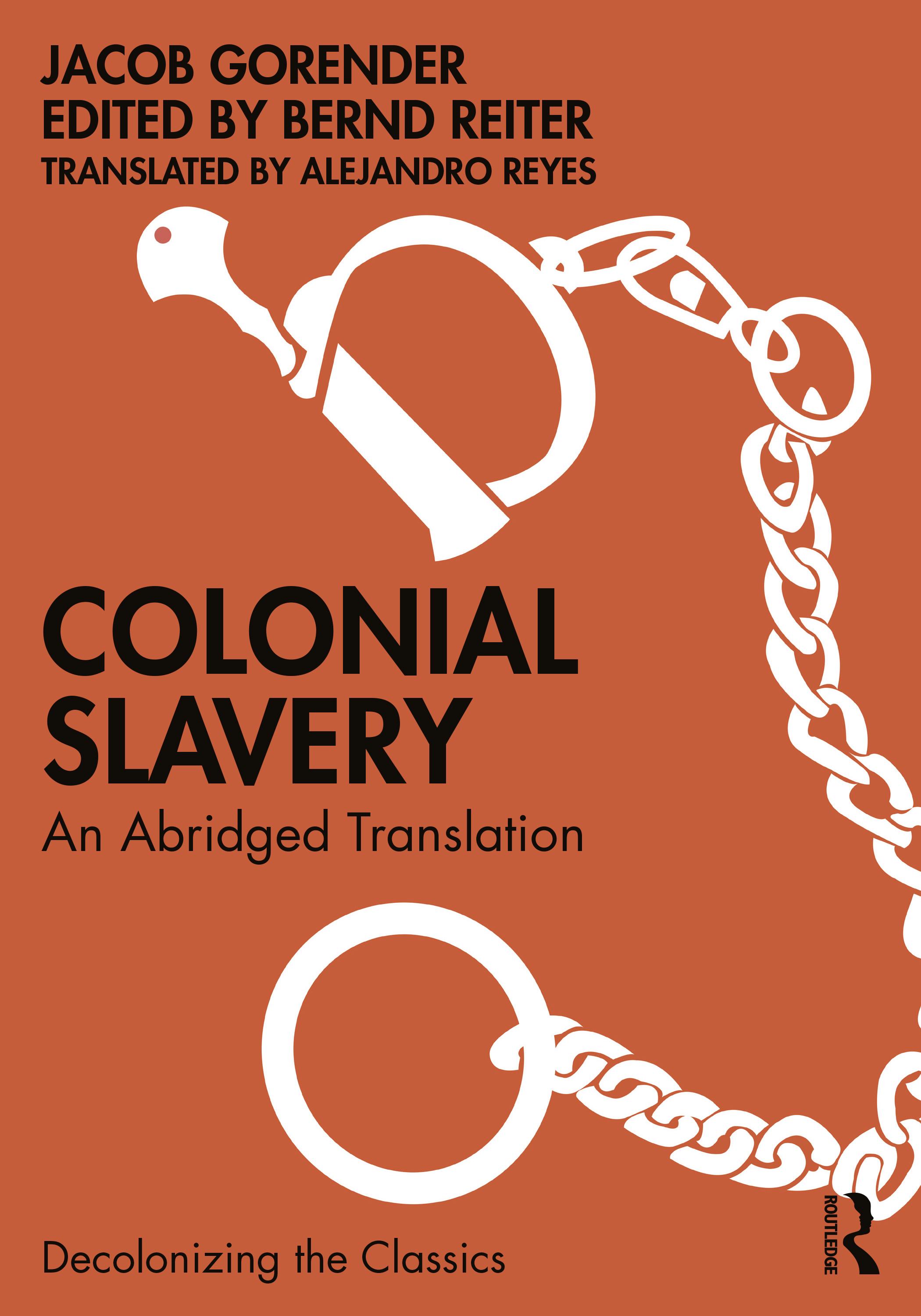
Jacob Gorender's (1923–2013) 1978 book, Colonial Slavery (O Escravismo Colonial), comes alive for English language readers thanks to Bernd Reiter and Alejandro Reyes's brilliant translation.
Gorender argued that slave-holding societies produced an economic system sui generis, not fitting into any of the established societal categories offered by Karl Marx and Max Weber. As such, Gorender proposed a theory of colonial slavery as the structuring force of slave-holding societies. For him, slave-holding societies are different from other societies in that slavery structured them differently. This is of the utmost relevance to this day as it allows for a new and different way to explain contemporary racial inequalities in post-slavery societies. An accomplished interpreter of Brazilian social formation, Gorender was motivated by the need to understand the historical roots of class domination and the emergence of Brazilian capitalist society. His presentation of rich historical data, rigorous theoretical and analytical framework, and militant action as an active member of the Brazilian Communist Party are the hallmarks of his writing.
Colonial Slavery: An Abridged Translation is a must-read for researchers, teachers, and students of history, sociology, economics, politics, as well as activists of the Black movement and other movements committed to anti-racism.
Płać wygodnie kartą, Klarną, Apple Pay lub Google Pay. Nie jesteś zadowolony? Zawsze masz 14-dniową gwarancję zwrotu pieniędzy. Więcej przeczytasz w naszych warunkach. Masz pytania? Napisz do nas na hello@memmo.org.
Memmo ułatwia naukę – gdziekolwiek jesteś na świecie. U nas znajdziesz podręczniki i sprytne narzędzia do nauki w jednym miejscu: streszczenia, quizy, podcasty i fiszki. A do tego Ted, Twój kumpel do nauki, który odpowie na wszystko, co Cię nurtuje. Ponad 50 000 studentów już tu się uczy – stworzone, byś uczył się szybciej i mniej stresował.