
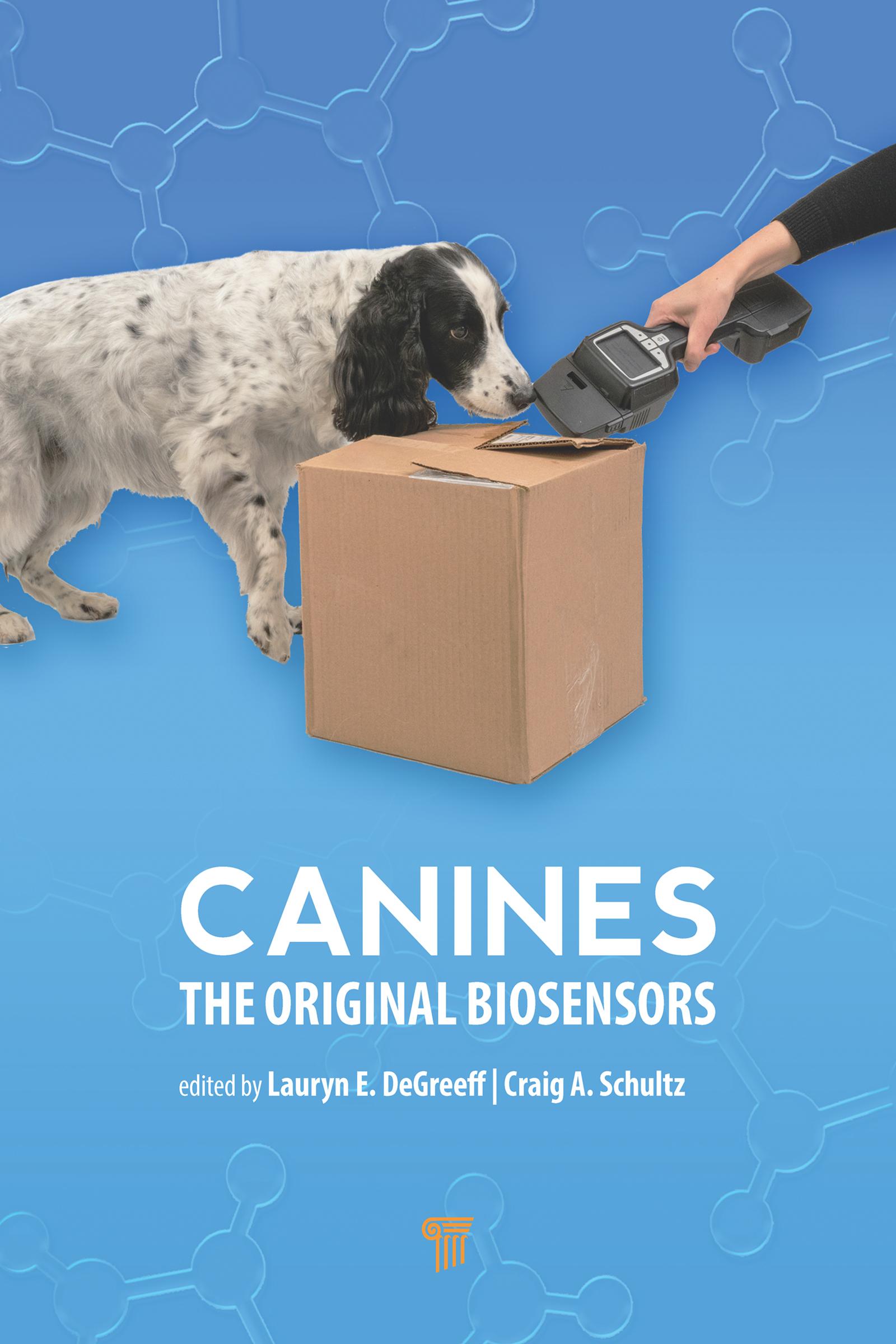
Detection canines have been utilized throughout the world for over a century, and while numerous attempts have been made to replicate the canine’s ability to detect substances by mechanical means, none has been as successful. The olfactory system is a highly intricate and sophisticated design for chemical sensing, and the olfactory capacity of many animals, including canines, is considered unmatched by machine due to not only their great sensitivity and superior selectivity but also their trainability and mobility. These unique features have led to the use of such animals as "whole-animal" biosensors.
Amplifying the benefits and diminishing the limitations of detection canines' interdisciplinary research is crucial to understanding canine olfaction and detection and enhancing this powerful and complex detector. The past 50 years have produced vast advancements in animal behavior/training technology to develop canines into more proficient and reliable sensors, while scientific research has provided tremendous support to help practitioners better understand how to utilize this powerful sensor. This book assembles a diverse group of authors with expertise in a variety of fields relating to detection canines and the chemical sensing industry, including both research and operational perspectives on detection canines. It illustrates how science enhances our understanding of how canines are employed for solving some of the world’s leading detection challenges.
Płać wygodnie kartą, Klarną, Apple Pay lub Google Pay. Nie jesteś zadowolony? Zawsze masz 14-dniową gwarancję zwrotu pieniędzy. Więcej przeczytasz w naszych warunkach. Masz pytania? Napisz do nas na hello@memmo.org.
Memmo ułatwia naukę – gdziekolwiek jesteś na świecie. U nas znajdziesz podręczniki i sprytne narzędzia do nauki w jednym miejscu: streszczenia, quizy, podcasty i fiszki. A do tego Ted, Twój kumpel do nauki, który odpowie na wszystko, co Cię nurtuje. Ponad 50 000 studentów już tu się uczy – stworzone, byś uczył się szybciej i mniej stresował.