
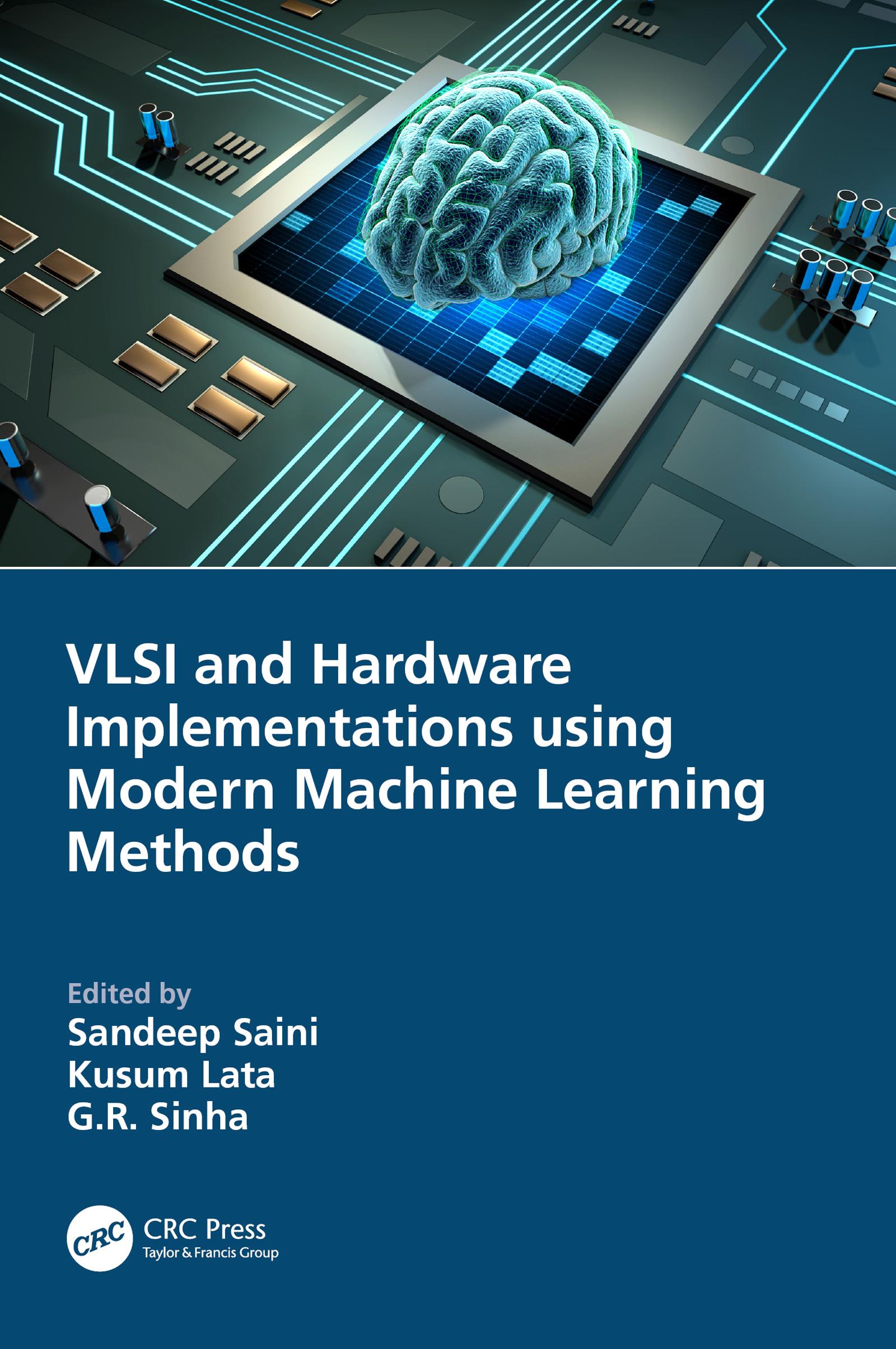
Machine learning is a potential solution to resolve bottleneck issues in VLSI via optimizing tasks in the design process. This book aims to provide the latest machine-learning–based methods, algorithms, architectures, and frameworks designed for VLSI design. The focus is on digital, analog, and mixed-signal design techniques, device modeling, physical design, hardware implementation, testability, reconfigurable design, synthesis and verification, and related areas. Chapters include case studies as well as novel research ideas in the given field. Overall, the book provides practical implementations of VLSI design, IC design, and hardware realization using machine learning techniques.
Features:
- Provides the details of state-of-the-art machine learning methods used in VLSI design
- Discusses hardware implementation and device modeling pertaining to machine learning algorithms
- Explores machine learning for various VLSI architectures and reconfigurable computing
- Illustrates the latest techniques for device size and feature optimization
- Highlights the latest case studies and reviews of the methods used for hardware implementation
This book is aimed at researchers, professionals, and graduate students in VLSI, machine learning, electrical and electronic engineering, computer engineering, and hardware systems.
Płać wygodnie kartą, Klarną, Apple Pay lub Google Pay. Nie jesteś zadowolony? Zawsze masz 14-dniową gwarancję zwrotu pieniędzy. Więcej przeczytasz w naszych warunkach. Masz pytania? Napisz do nas na hello@memmo.org.
Memmo ułatwia naukę – gdziekolwiek jesteś na świecie. U nas znajdziesz podręczniki i sprytne narzędzia do nauki w jednym miejscu: streszczenia, quizy, podcasty i fiszki. A do tego Ted, Twój kumpel do nauki, który odpowie na wszystko, co Cię nurtuje. Ponad 50 000 studentów już tu się uczy – stworzone, byś uczył się szybciej i mniej stresował.