
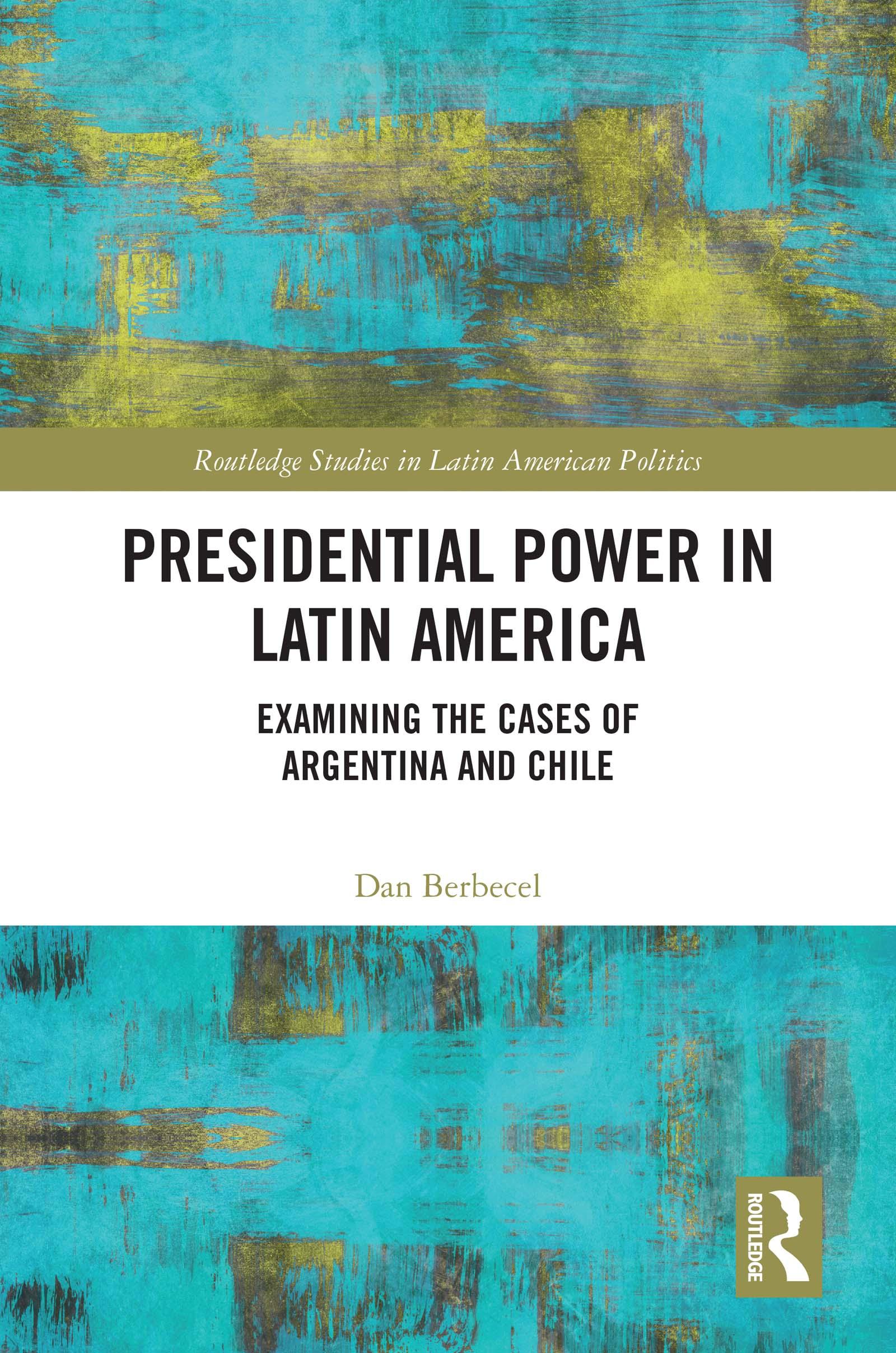
What explains variance in presidential power between countries? In Presidential Power in Latin America, Dan Berbecel provides a general, systematic theory for explaining presidential power in practice as opposed to presidential power in theory.
Using expert survey data from Varieties of Democracy (V-Dem) alongside interviews with high-level figures in politics, the judiciary, the public administration, NGOs, and academia in Argentina and Chile, Berbecel argues that constitutional presidential power (formal power) is a very poor predictor of presidential power in practice (informal power). Given the poor predictive value of formal rules, he provides an explanation why hyperpresidentialism emerges in some countries but not in others. Berbecel attributes the root causes of hyperpresidentialism to three independent variables (the strength of state institutions, the size of the president’s party in congress, and whether or not the country has a history of economic crises) which together determine how likely it is that a president will be able to concentrate power.
Presidential Power in Latin America will be of key interest to scholars and students of executive politics, Latin American politics, and more broadly, comparative politics.
Płać wygodnie kartą, Klarną, Apple Pay lub Google Pay. Nie jesteś zadowolony? Zawsze masz 14-dniową gwarancję zwrotu pieniędzy. Więcej przeczytasz w naszych warunkach. Masz pytania? Napisz do nas na hello@memmo.org.
Memmo ułatwia naukę – gdziekolwiek jesteś na świecie. U nas znajdziesz podręczniki i sprytne narzędzia do nauki w jednym miejscu: streszczenia, quizy, podcasty i fiszki. A do tego Ted, Twój kumpel do nauki, który odpowie na wszystko, co Cię nurtuje. Ponad 50 000 studentów już tu się uczy – stworzone, byś uczył się szybciej i mniej stresował.