
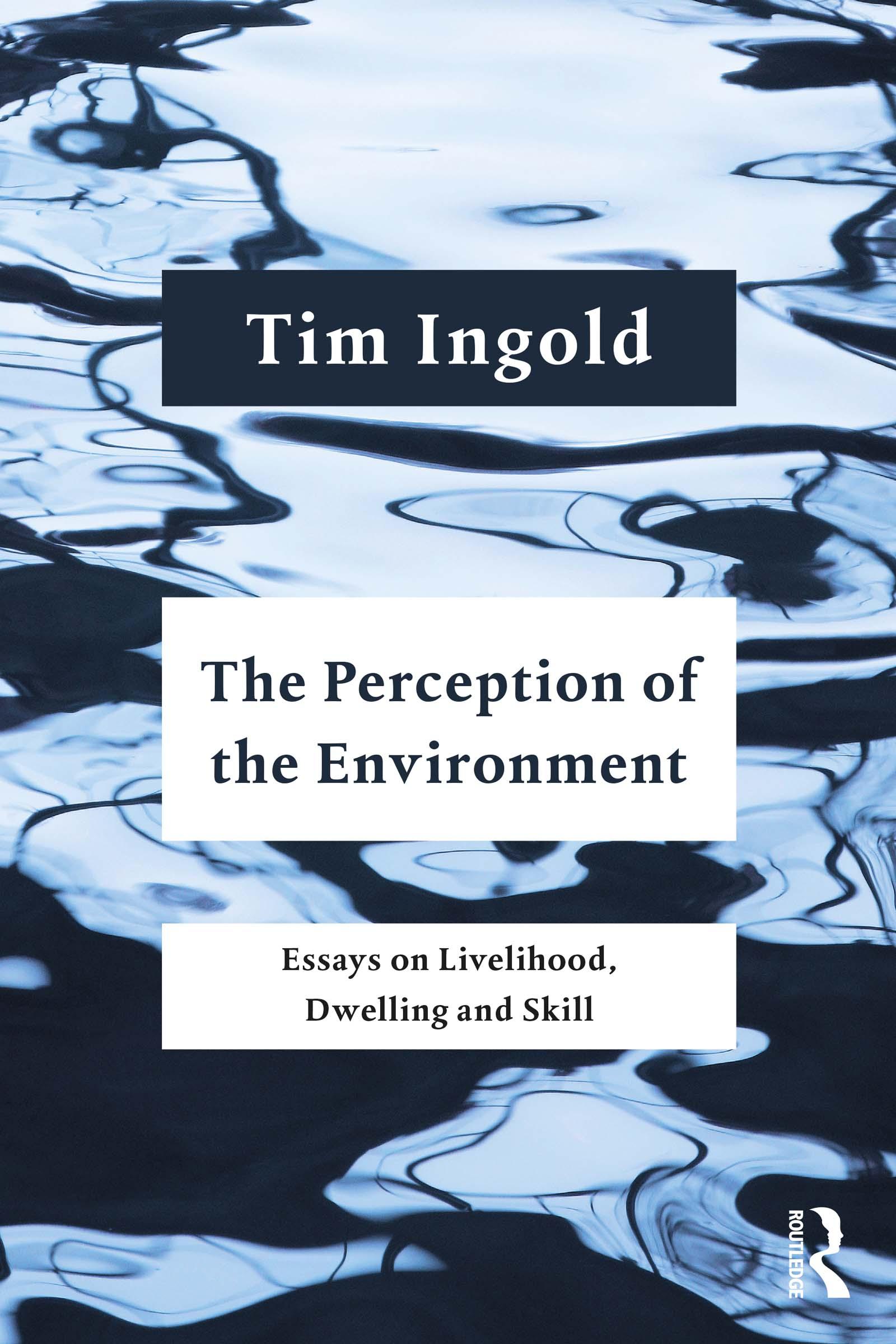
In this work Tim Ingold offers a persuasive new approach to understanding how human beings perceive their surroundings. He argues that what we are used to calling cultural variation consists, in the first place, of variations in skill. Neither innate nor acquired, skills are grown, incorporated into the human organism through practice and training in an environment. They are thus as much biological as cultural. To account for the generation of skills we have therefore to understand the dynamics of development. And this in turn calls for an ecological approach that situates practitioners in the context of an active engagement with the constituents of their surroundings.
The twenty-three essays comprising this book focus in turn on the procurement of livelihood, on what it means to ‘dwell’, and on the nature of skill, weaving together approaches from social anthropology, ecological psychology, developmental biology and phenomenology in a way that has never been attempted before. The book is set to revolutionise the way we think about what is ‘biological’ and ‘cultural’ in humans, about evolution and history, and indeed about what it means for human beings – at once organisms and persons – to inhabit an environment. The Perception of the Environment will be essential reading not only for anthropologists but also for biologists, psychologists, archaeologists, geographers and philosophers.
This edition includes a new Preface by the author.
Płać wygodnie kartą, Klarną, Apple Pay lub Google Pay. Nie jesteś zadowolony? Zawsze masz 14-dniową gwarancję zwrotu pieniędzy. Więcej przeczytasz w naszych warunkach. Masz pytania? Napisz do nas na hello@memmo.org.
Memmo ułatwia naukę – gdziekolwiek jesteś na świecie. U nas znajdziesz podręczniki i sprytne narzędzia do nauki w jednym miejscu: streszczenia, quizy, podcasty i fiszki. A do tego Ted, Twój kumpel do nauki, który odpowie na wszystko, co Cię nurtuje. Ponad 50 000 studentów już tu się uczy – stworzone, byś uczył się szybciej i mniej stresował.