
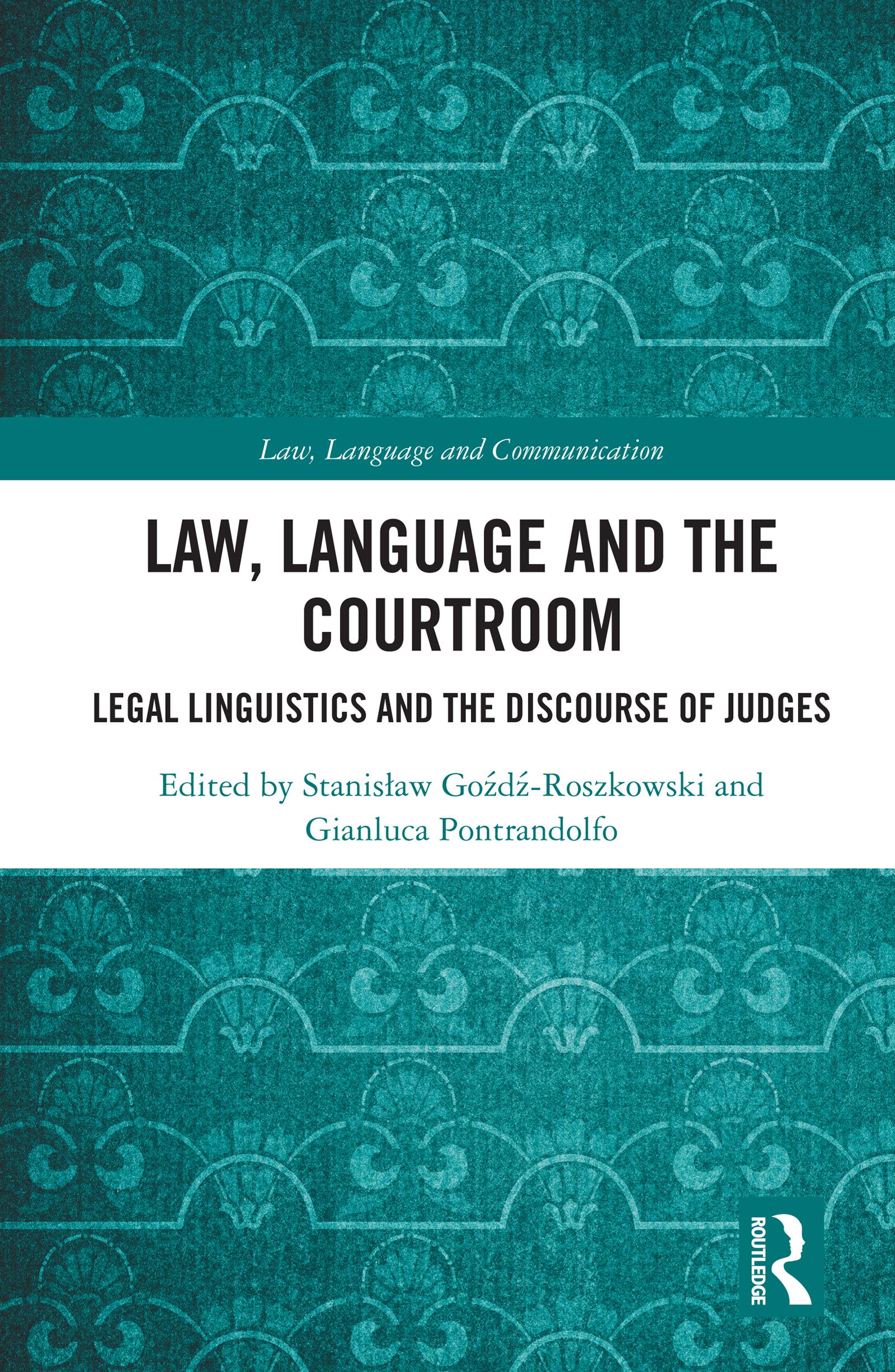
This book explores the language of judges. It is concerned with understanding how language works in judicial contexts. Using a range of disciplinary and methodological perspectives, it looks in detail at the ways in which judicial discourse is argued, constructed, interpreted and perceived. Focusing on four central themes - constructing judicial discourse and judicial identities, judicial argumentation and evaluative language, judicial interpretation, and clarity in judicial discourse - the book’s ultimate goal is to provide a comprehensive and in-depth analysis of current critical issues of the role of language in judicial settings. Contributors include legal linguists, lawyers, legal scholars, legal practitioners, legal translators and anthropologists, who explore patterns of linguistic organisation and use in judicial institutions and analyse language as an instrument for understanding both the judicial decision-making process and its outcome.
The book will be an invaluable resource for scholars in legal linguistics and those specialising in judicial argumentation and reasoning ,and forensic linguists interested in the use of language in judicial settings.
Płać wygodnie kartą, Klarną, Apple Pay lub Google Pay. Nie jesteś zadowolony? Zawsze masz 14-dniową gwarancję zwrotu pieniędzy. Więcej przeczytasz w naszych warunkach. Masz pytania? Napisz do nas na hello@memmo.org.
Memmo ułatwia naukę – gdziekolwiek jesteś na świecie. U nas znajdziesz podręczniki i sprytne narzędzia do nauki w jednym miejscu: streszczenia, quizy, podcasty i fiszki. A do tego Ted, Twój kumpel do nauki, który odpowie na wszystko, co Cię nurtuje. Ponad 50 000 studentów już tu się uczy – stworzone, byś uczył się szybciej i mniej stresował.