
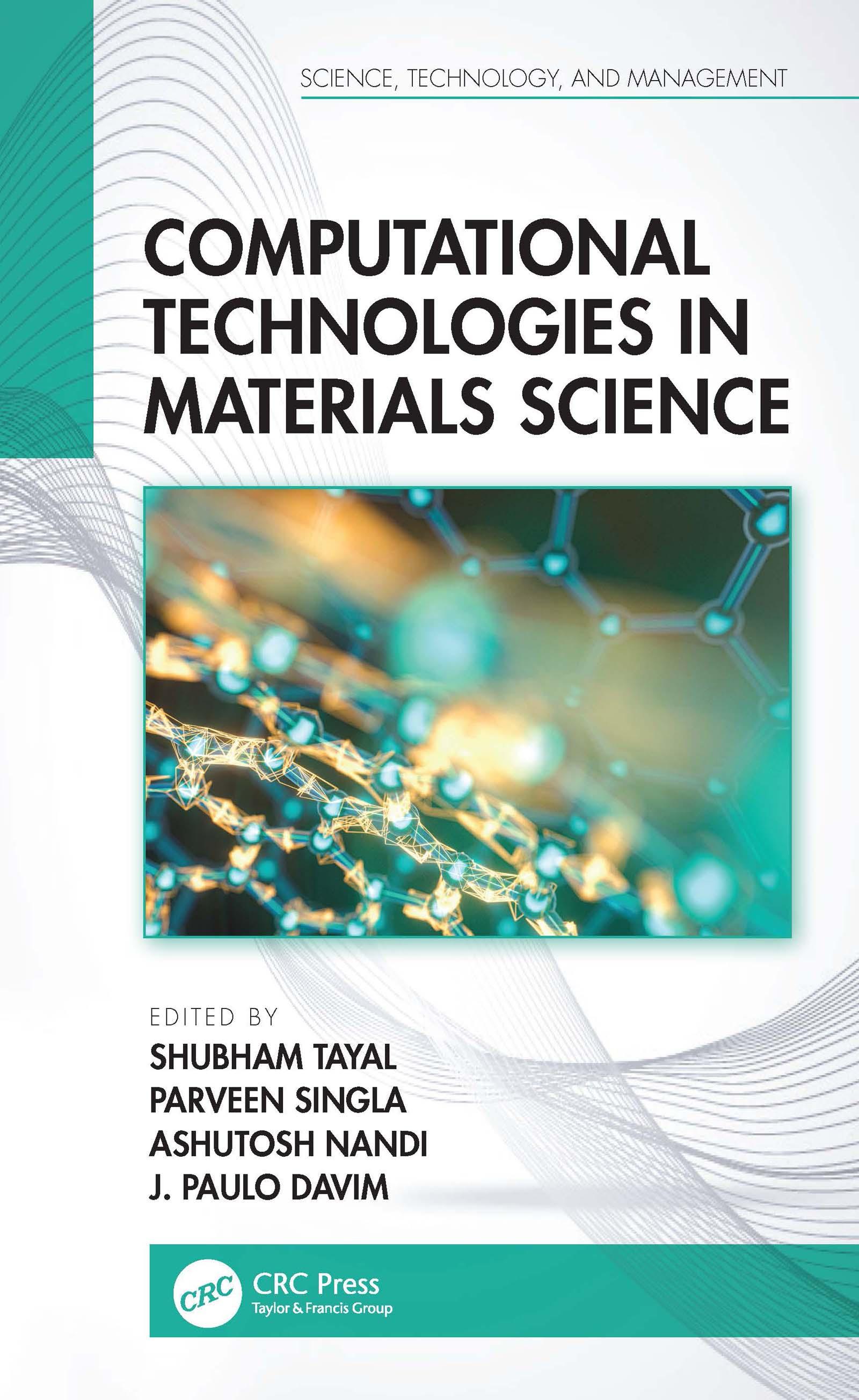
Advanced materials are essential for economic security and human well-being, with applications in industries aimed at addressing challenges in clean energy, national security, and human welfare. Yet, it can take years to move a material to the market after its initial discovery. Computational techniques have accelerated the exploration and development of materials, offering the chance to move new materials to the market quickly. Computational Technologies in Materials Science addresses topics related to AI, machine learning, deep learning, and cloud computing in materials science. It explores characterization and fabrication of materials, machine-learning-based models, and computational intelligence for the synthesis and identification of materials. This book
• Covers material testing and development using computational intelligence
• Highlights the technologies to integrate computational intelligence and materials science
• Details case studies and detailed applications
• Investigates challenges in developing and using computational intelligence in materials science
• Analyzes historic changes that are taking place in designing materials.
This book encourages material researchers and academics to develop novel theories and sustainable computational techniques and explores the potential for computational intelligence to replace traditional materials research.
Płać wygodnie kartą, Klarną, Apple Pay lub Google Pay. Nie jesteś zadowolony? Zawsze masz 14-dniową gwarancję zwrotu pieniędzy. Więcej przeczytasz w naszych warunkach. Masz pytania? Napisz do nas na hello@memmo.org.
Memmo ułatwia naukę – gdziekolwiek jesteś na świecie. U nas znajdziesz podręczniki i sprytne narzędzia do nauki w jednym miejscu: streszczenia, quizy, podcasty i fiszki. A do tego Ted, Twój kumpel do nauki, który odpowie na wszystko, co Cię nurtuje. Ponad 50 000 studentów już tu się uczy – stworzone, byś uczył się szybciej i mniej stresował.