
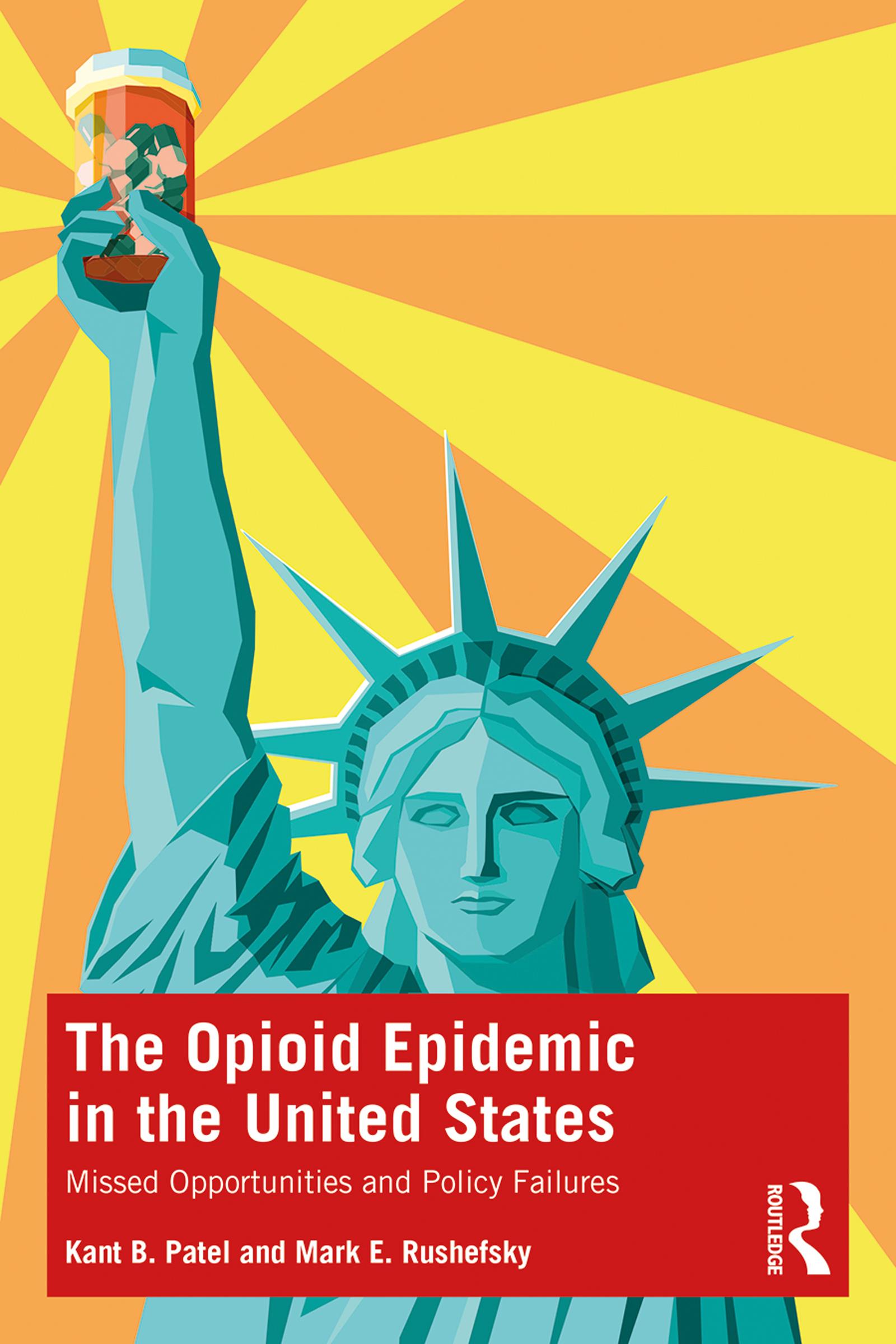
The current opioid epidemic in the United States began in the mid-1990s with the introduction of a new drug, OxyContin, viewed as a safer and more effective opiate for chronic pain management. By 2017, the opioid epidemic had become a full-blown crisis as over two million Americans had become dependent on and abused prescription pain pills and street drugs.
This book examines the origins, development, and rise of the opioid epidemic in the United States from the perspective of the public policy process. The authors, political scientists Kant Patel and Mark Rushefsky, discuss institutional features of the American political system that impact the making of public policy, arguing that the fragmentation of that system hinders the ability to coherently address policy problems, taking the opioid epidemic as an example. The book begins with a brief historical examination of the history of the problem of opioid addiction and crises in the United States and public policy responses to past crises, but the main focus is on the current national public health emergency. The book analyzes the following:
- The origins of the current crisis
- Indicators and warning signs pointing to the emergence of a significant public problem
- Factors that contributed to the opioid crisis
- Why the crisis emerged in the United States and not in other Western countries
- The nature and scope of the opioid crisis, including socioeconomic and demographic characteristics and the human, social, and economic costs
- Presidential administrations’ public response, and nonresponse, to the opioid crisis
- Parallels between the role played by opioid manufacturers and tobacco/cigarette manufacturers in creating the problem of addiction, resulting in high mortality rates, and the public policy response to both
This book explores the national policy response to the opioid crisis, as well as state and local government responses and separation of powers, including how the three branches of government deal with the opioid problem. The authors conclude with a discussion of how accurate problem definition, problem diagnosis, and appropriate and timely responses could have produced a more appropriate and robust policy response—policy process tools that will be essential in fighting both the current crisis and the next one. The Opioid Epidemic in the United States is essential reading for policy analysis courses in political science, health, and social work programs, as well as for United States policymakers at the local, state, and national levels.
Płać wygodnie kartą, Klarną, Apple Pay lub Google Pay. Nie jesteś zadowolony? Zawsze masz 14-dniową gwarancję zwrotu pieniędzy. Więcej przeczytasz w naszych warunkach. Masz pytania? Napisz do nas na hello@memmo.org.
Memmo ułatwia naukę – gdziekolwiek jesteś na świecie. U nas znajdziesz podręczniki i sprytne narzędzia do nauki w jednym miejscu: streszczenia, quizy, podcasty i fiszki. A do tego Ted, Twój kumpel do nauki, który odpowie na wszystko, co Cię nurtuje. Ponad 50 000 studentów już tu się uczy – stworzone, byś uczył się szybciej i mniej stresował.