
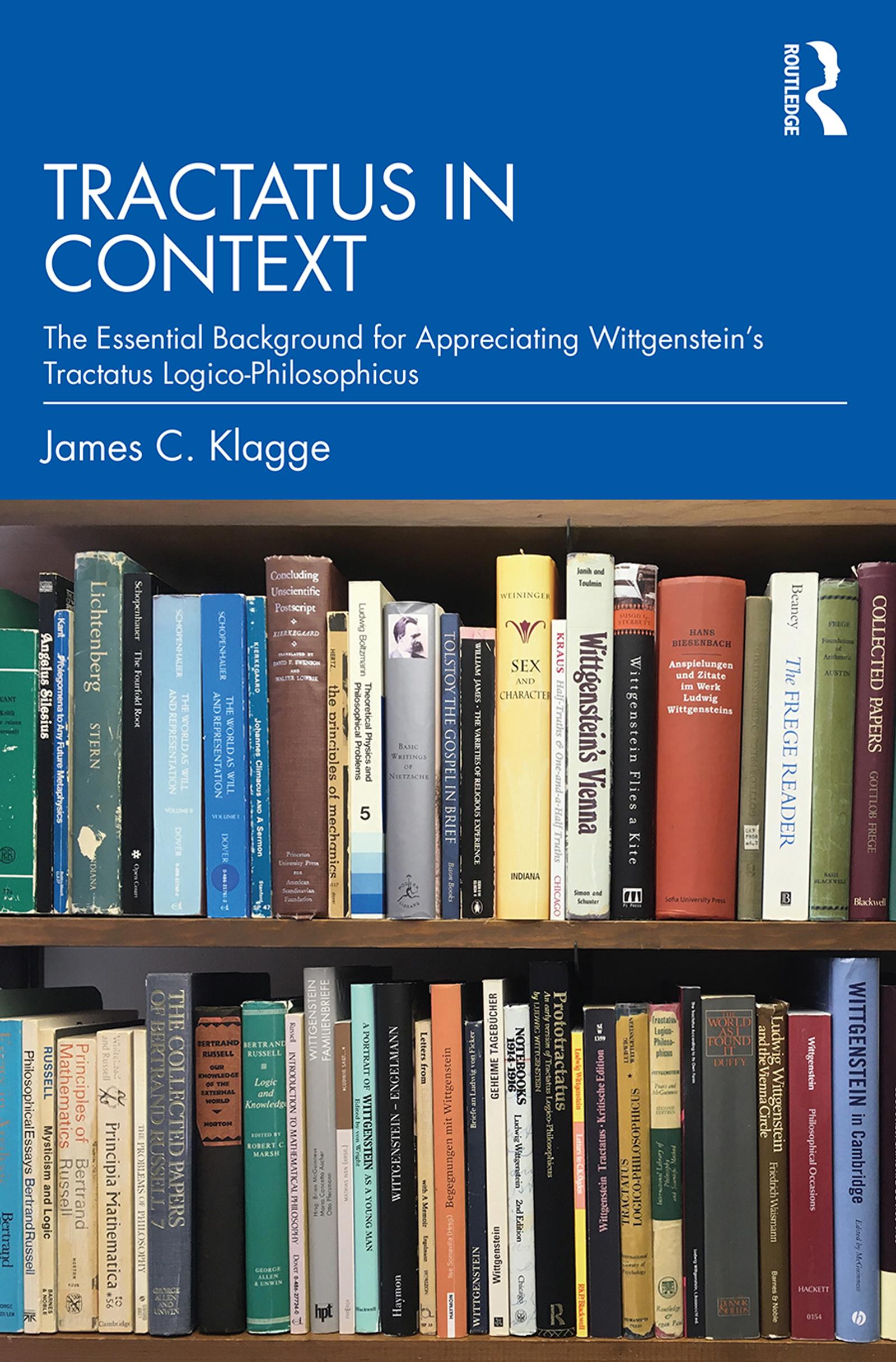
Ludwig Wittgenstein’s brief Tractatus Logico-Philosophicus (1922) is one of the most important philosophical works of the twentieth century, yet it offers little orientation for the reader. The first-time reader is left wondering what it could be about, and the scholar is left with little guidance for interpretation.
In Tractatus in Context, James C. Klagge presents the vital background necessary for appreciating Wittgenstein’s gnomic masterpiece. Tractatus in Context contains the early reactions to the Tractatus, including the initial reviews written in 1922-1924. And while we can’t talk with Wittgenstein, we can do the next best thing—hear what he had to say about the Tractatus. Klagge thus presents what Wittgenstein thought about germane issues leading up to his writing the book, in discussions and correspondence with others about his ideas, and what he had to say about the Tractatus after it was written—in letters, lectures and conversations. It offers, you might say, Wittgenstein’s own commentary on the book.
Key Features:
- Illuminates what is at stake in the Tractatus, by providing the views of others that engaged Wittgenstein as he was writing it.
- Includes Wittgenstein’s earlier thoughts on ideas in the book as recorded in his notebooks, letters, and conversations as well as his later, retrospective comments on those ideas.
- Draws on new or little-known sources, such as Wittgenstein’s coded notebooks, Hermine’s notes, Frege’s letters, Hänsel’s diary, Ramsey’s notes, and Skinner’s dictations.
- Draws connections between the background context and specific passages in the Tractatus, using a proposition-by-proposition commentary.
Płać wygodnie kartą, Klarną, Apple Pay lub Google Pay. Nie jesteś zadowolony? Zawsze masz 14-dniową gwarancję zwrotu pieniędzy. Więcej przeczytasz w naszych warunkach. Masz pytania? Napisz do nas na hello@memmo.org.
Memmo ułatwia naukę – gdziekolwiek jesteś na świecie. U nas znajdziesz podręczniki i sprytne narzędzia do nauki w jednym miejscu: streszczenia, quizy, podcasty i fiszki. A do tego Ted, Twój kumpel do nauki, który odpowie na wszystko, co Cię nurtuje. Ponad 50 000 studentów już tu się uczy – stworzone, byś uczył się szybciej i mniej stresował.