
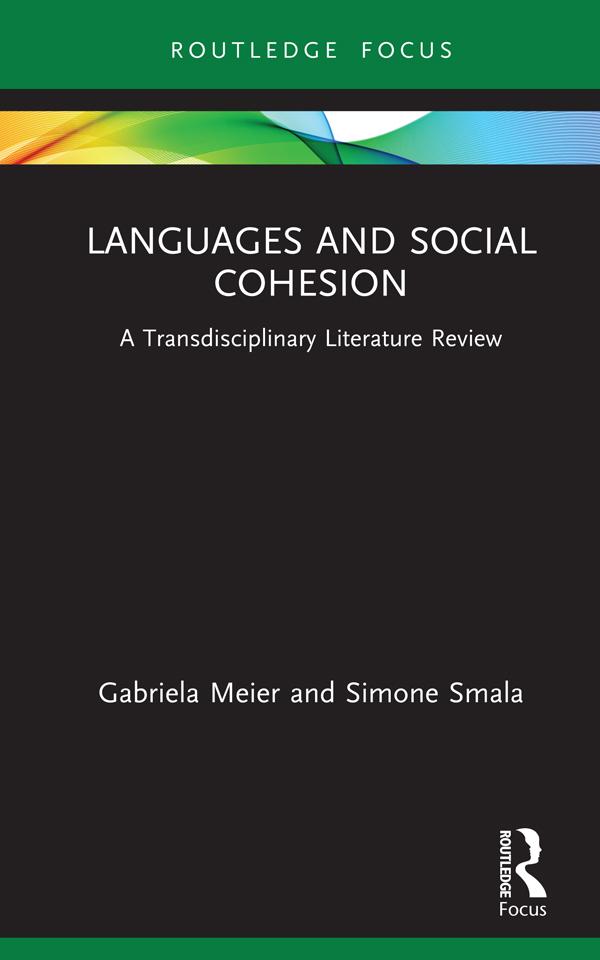
A critical and systematic review of existing research located at the crossroads of sociology, social psychology and applied linguistics, Languages and Social Cohesion offers valuable insights for social contexts in which decision makers and researchers grapple with questions of social cohesion in the presence of linguistic diversity.
Based on a thematic analysis of 285 studies from 50 countries (references available), this book emphasises the crucial role languages play in understanding social cohesion and provides a framework of perspectives to aid exploration of these complex interlinkages. Through interpreting the literature, the authors establish language repertoires as tools that facilitate social networks and access to resources. Furthermore, language norms and allegiances can subjectively shape the way groups use their language resources, which can result in social inclusion, exclusion and mediation between language groups.
Education in particular is highlighted as a policy tool that implements linguistic decisions and norms, and steers status, hierarchies and distribution of languages in society. The theory-informed and accessible tools featured can be used to guide and inform further research, workshops or projects that investigate social cohesion and languages. This book is relevant to diverse and intersecting spheres of influence, such as groups, communities, institutions and authorities at local, regional, national and international levels.
Płać wygodnie kartą, Klarną, Apple Pay lub Google Pay. Nie jesteś zadowolony? Zawsze masz 14-dniową gwarancję zwrotu pieniędzy. Więcej przeczytasz w naszych warunkach. Masz pytania? Napisz do nas na hello@memmo.org.
Memmo ułatwia naukę – gdziekolwiek jesteś na świecie. U nas znajdziesz podręczniki i sprytne narzędzia do nauki w jednym miejscu: streszczenia, quizy, podcasty i fiszki. A do tego Ted, Twój kumpel do nauki, który odpowie na wszystko, co Cię nurtuje. Ponad 50 000 studentów już tu się uczy – stworzone, byś uczył się szybciej i mniej stresował.