
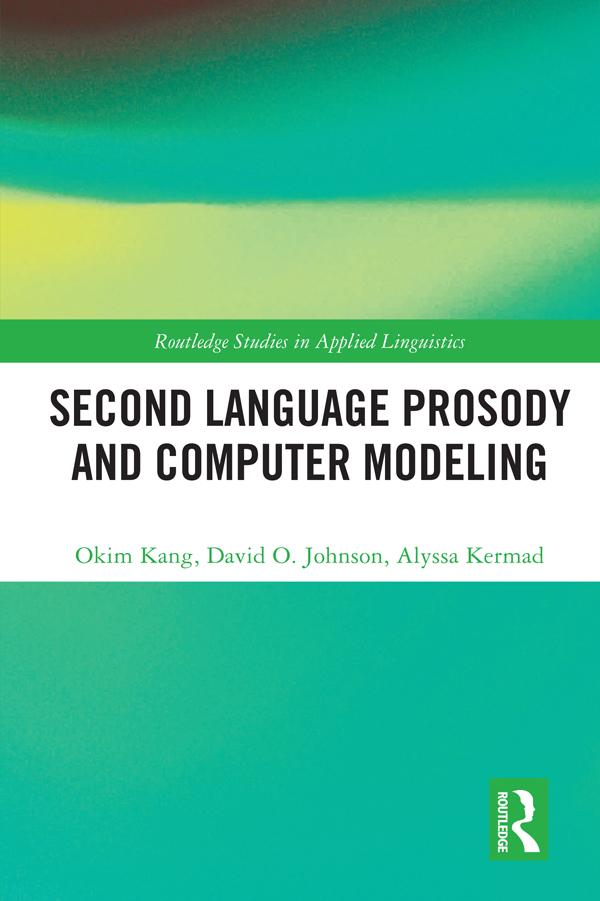
This volume presents an interdisciplinary approach to the study of second language prosody and computer modeling. It addresses the importance of prosody’s role in communication, bridging the gap between applied linguistics and computer science.
The book illustrates the growing importance of the relationship between automated speech recognition systems and language learning assessment in light of new technologies and showcases how the study of prosody in this context in particular can offer innovative insights into the computerized process of natural discourse. The book offers detailed accounts of different methods of analysis and computer models used and demonstrates how these models can be applied to L2 discourse analysis toward predicting real-world language use. Kang, Johnson, and Kermad also use these frameworks as a jumping-off point from which to propose new models of second language prosody and future directions for prosodic computer modeling more generally.
Making the case for the use of naturalistic data for real-world applications in empirical research, this volume will foster interdisciplinary dialogues across students and researchers in applied linguistics, speech communication, speech science, and computer engineering.
Płać wygodnie kartą, Klarną, Apple Pay lub Google Pay. Nie jesteś zadowolony? Zawsze masz 14-dniową gwarancję zwrotu pieniędzy. Więcej przeczytasz w naszych warunkach. Masz pytania? Napisz do nas na hello@memmo.org.
Memmo ułatwia naukę – gdziekolwiek jesteś na świecie. U nas znajdziesz podręczniki i sprytne narzędzia do nauki w jednym miejscu: streszczenia, quizy, podcasty i fiszki. A do tego Ted, Twój kumpel do nauki, który odpowie na wszystko, co Cię nurtuje. Ponad 50 000 studentów już tu się uczy – stworzone, byś uczył się szybciej i mniej stresował.