
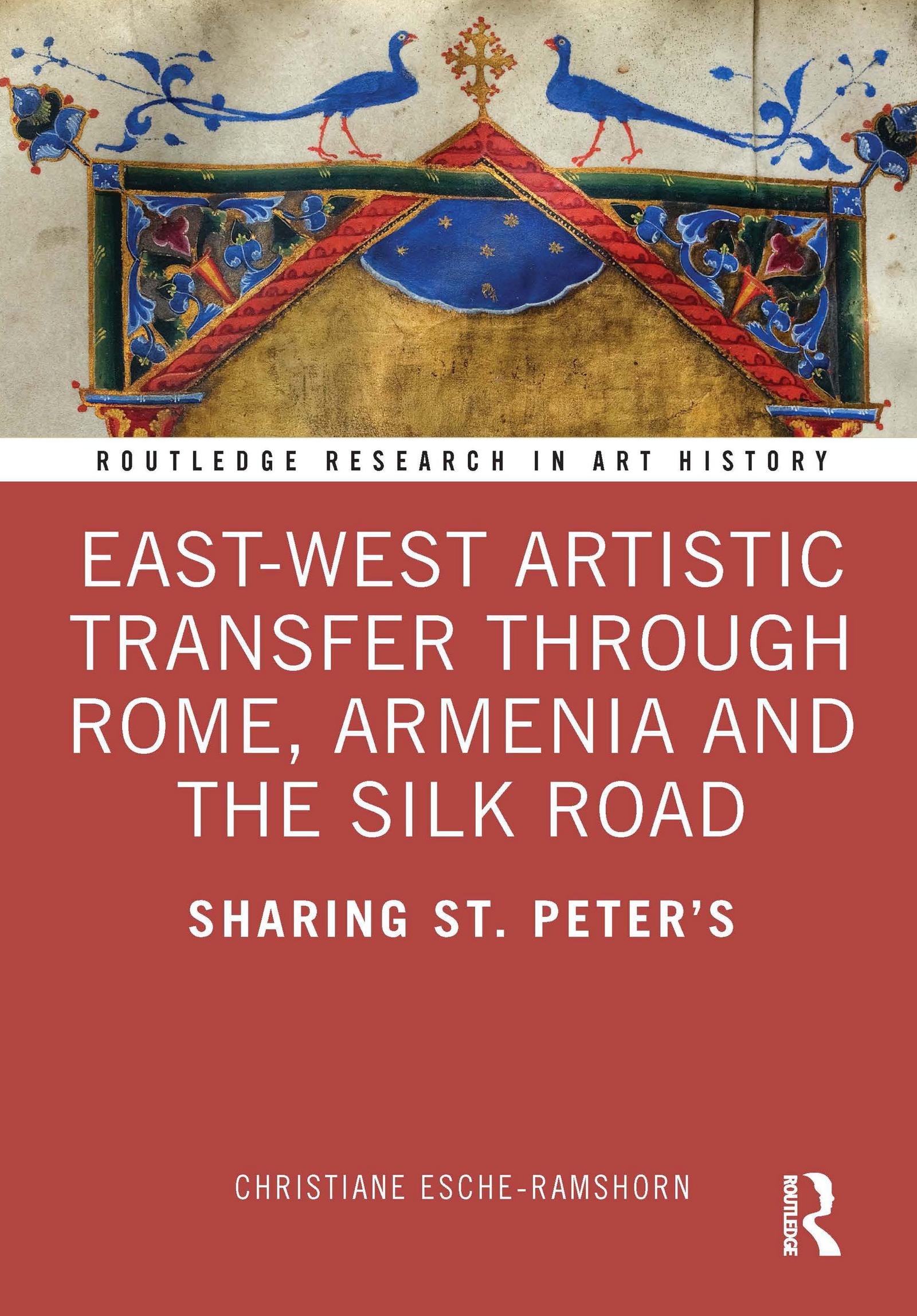
This book examines the arts and artistic exchanges at the ‘Christian Oriental’ fringes of Europe, especially Armenia.
It starts with the architecture, history and inhabitants of the lesser known pilgrim compounds at the Vatican in the Middle Ages and Renaissance, of Hungary, Germany, but namely those of the most ancient of Churches, the Churches of the Christian Orient Ethiopia and Armenia. Without taking an Eurocentric view, this book explores the role of missionaries, merchants, artists (for example Momik, Giotto, Minas, Domenico Veneziano, Duerer), and artefacts (such as fabrics, inscriptions and symbols) travelling into both directions along the western stretch of the Silk Road between Ayas (Cilicia), ancient Armenia and North-western Iran. This area was truly global before globalization, was a site of intense cultural exchanges and East-West cultural transmissions. This book opens a new research window into the culturally mixed landscapes in the Christian Orient, the Middle East and North-eastern Africa by taking into consideration their many indigenous and foreign artistic components and embeds Armenian arts into today’s wider art historical discourse.
This book will be of interest to scholars in art history, architectural history, missions, trade, Middle Eastern arts and the arts of the Southern Caucasus.
Płać wygodnie kartą, Klarną, Apple Pay lub Google Pay. Nie jesteś zadowolony? Zawsze masz 14-dniową gwarancję zwrotu pieniędzy. Więcej przeczytasz w naszych warunkach. Masz pytania? Napisz do nas na hello@memmo.org.
Memmo ułatwia naukę – gdziekolwiek jesteś na świecie. U nas znajdziesz podręczniki i sprytne narzędzia do nauki w jednym miejscu: streszczenia, quizy, podcasty i fiszki. A do tego Ted, Twój kumpel do nauki, który odpowie na wszystko, co Cię nurtuje. Ponad 50 000 studentów już tu się uczy – stworzone, byś uczył się szybciej i mniej stresował.