
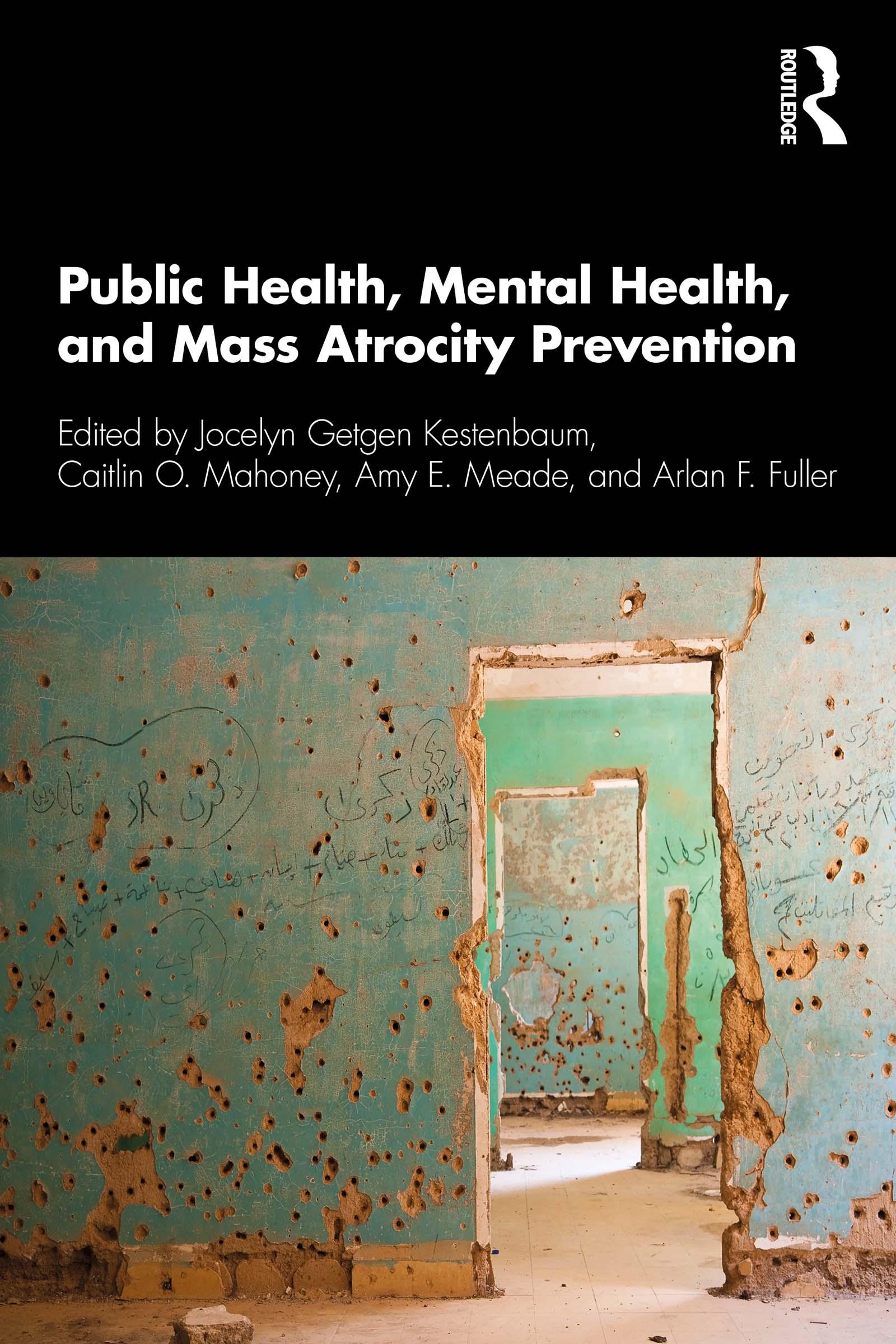
This multidisciplinary volume considers the role of both public health and mental health policies and practices in the prevention of mass atrocity, including war crimes, crimes against humanity, and genocide.
The authors address atrocity prevention through the framework of primary (pre-conflict), secondary (mid-conflict), and tertiary (post-conflict) settings. They examine the ways in which public health and mental health scholars and practitioners currently orient their research and interventions and the ways in which we can adapt frameworks, methods, tools, and practice toward a more sophisticated and truly interdisciplinary understanding and application of atrocity prevention. The book brings together diverse fields of study by global north and global south authors in diverse contexts. It culminates in a narrative that demonstrates the state of the current fields on intersecting themes within public health, mental health, and mass atrocity prevention and the future potential directions in which these intersections could go. Such discussions will serve to influence both policy makers and practitioners in these fields toward developing, adapting, and testing frames and tools for atrocity prevention. Multidisciplinary perspectives are represented among editors and authors, including law, political science, international studies, public health, mental health, philosophy, clinical psychology, social psychology, history, and peace studies.
Płać wygodnie kartą, Klarną, Apple Pay lub Google Pay. Nie jesteś zadowolony? Zawsze masz 14-dniową gwarancję zwrotu pieniędzy. Więcej przeczytasz w naszych warunkach. Masz pytania? Napisz do nas na hello@memmo.org.
Memmo ułatwia naukę – gdziekolwiek jesteś na świecie. U nas znajdziesz podręczniki i sprytne narzędzia do nauki w jednym miejscu: streszczenia, quizy, podcasty i fiszki. A do tego Ted, Twój kumpel do nauki, który odpowie na wszystko, co Cię nurtuje. Ponad 50 000 studentów już tu się uczy – stworzone, byś uczył się szybciej i mniej stresował.