
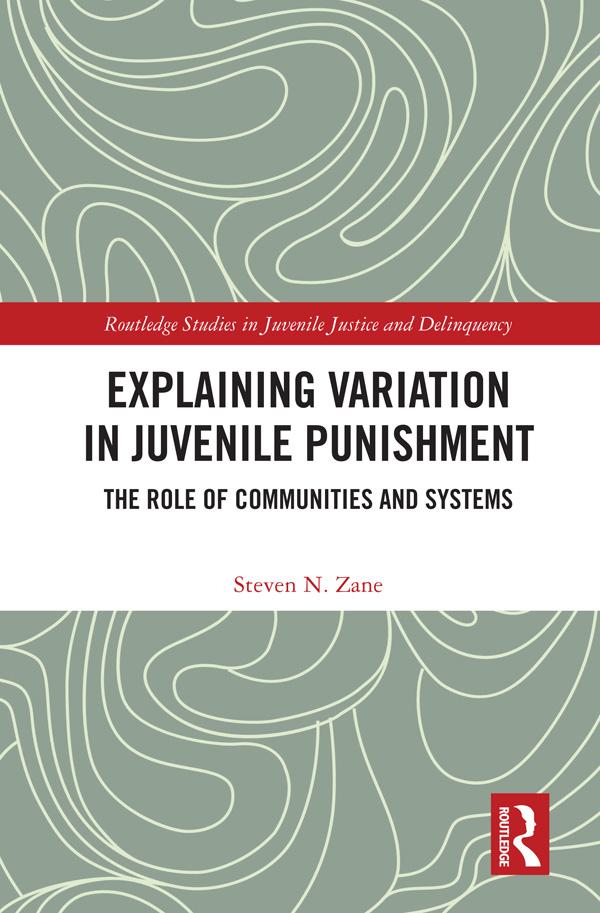
This research monograph provides a comparative analysis of juvenile court outcomes, exploring the influence of contextual factors on juvenile punishment across systems and communities. In doing so, it investigates whether, how, and to what extent macro-social context influences variation in juvenile punishment. The contextual hypotheses under investigation evaluate three prominent macro-sociall theoretical approaches: the conflict-oriented perspective of community threat, the consensus-oriented perspective of social disorganization, and the organizational perspective of the political economy of the juvenile court.
Using multilevel modeling techniques, the study investigates these macro-social influences on juvenile justice outcomes across nearly 500 counties in seven states—Alabama, Connecticut, Missouri, Oregon, South Carolina, Texas, and Utah. Findings suggest that the contextual indicators under investigation did not explain variation in juvenile court punishment across communities and systems, and the study proposes several implications for future research and policy.
This monograph is essential reading for scholars of juvenile justice system impact and reform as well as practitioners engaged in youth policy and juvenile justice work. It is unique in taking a comparative perspective that acknowledges that there is no one juvenile justice system in the United States, but many such systems.
Płać wygodnie kartą, Klarną, Apple Pay lub Google Pay. Nie jesteś zadowolony? Zawsze masz 14-dniową gwarancję zwrotu pieniędzy. Więcej przeczytasz w naszych warunkach. Masz pytania? Napisz do nas na hello@memmo.org.
Memmo ułatwia naukę – gdziekolwiek jesteś na świecie. U nas znajdziesz podręczniki i sprytne narzędzia do nauki w jednym miejscu: streszczenia, quizy, podcasty i fiszki. A do tego Ted, Twój kumpel do nauki, który odpowie na wszystko, co Cię nurtuje. Ponad 50 000 studentów już tu się uczy – stworzone, byś uczył się szybciej i mniej stresował.