
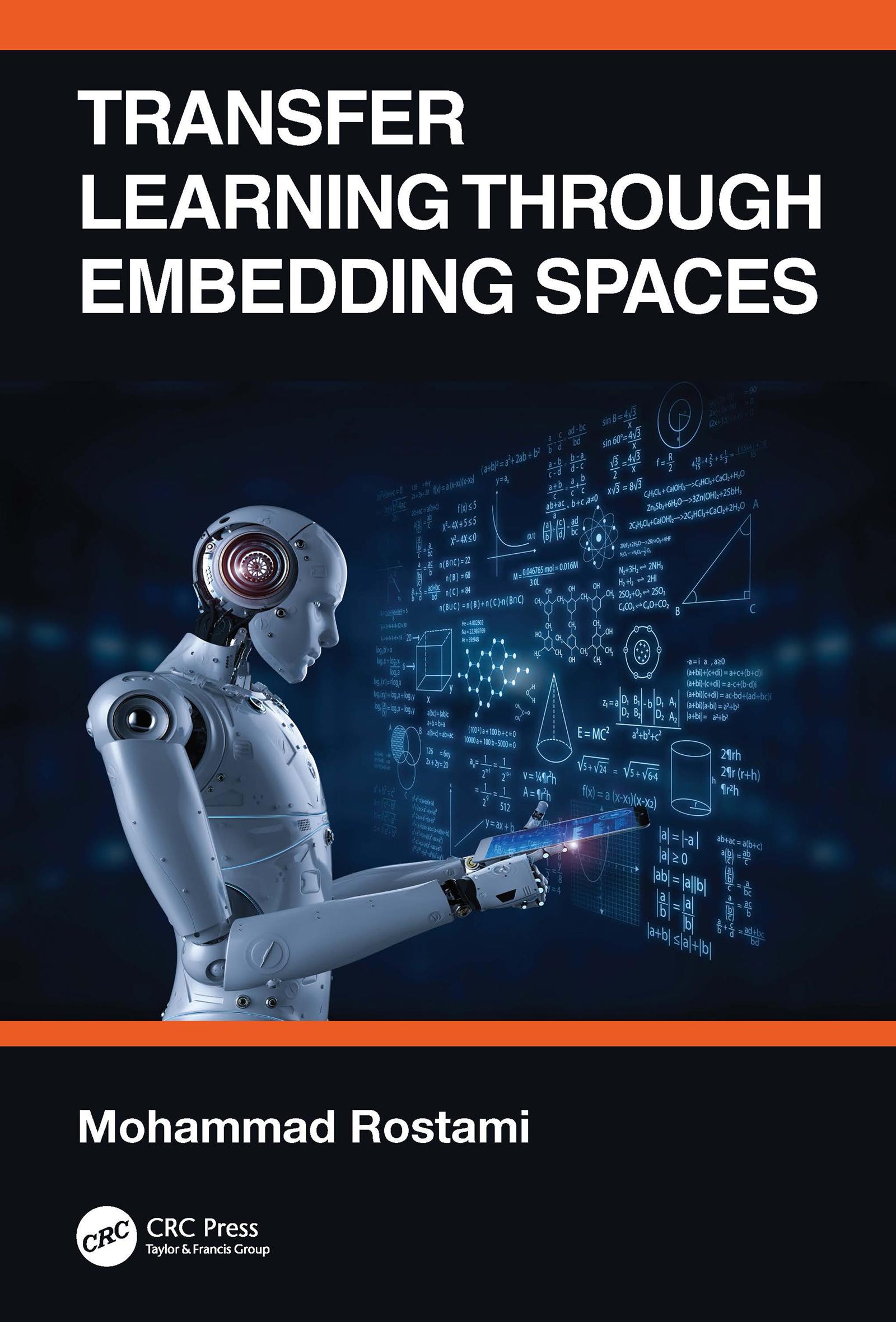
Recent progress in artificial intelligence (AI) has revolutionized our everyday life. Many AI algorithms have reached human-level performance and AI agents are replacing humans in most professions. It is predicted that this trend will continue and 30% of work activities in 60% of current occupations will be automated.
This success, however, is conditioned on availability of huge annotated datasets to training AI models. Data annotation is a time-consuming and expensive task which still is being performed by human workers. Learning efficiently from less data is a next step for making AI more similar to natural intelligence. Transfer learning has been suggested a remedy to relax the need for data annotation. The core idea in transfer learning is to transfer knowledge across similar tasks and use similarities and previously learned knowledge to learn more efficiently.
In this book, we provide a brief background on transfer learning and then focus on the idea of transferring knowledge through intermediate embedding spaces. The idea is to couple and relate different learning through embedding spaces that encode task-level relations and similarities. We cover various machine learning scenarios and demonstrate that this idea can be used to overcome challenges of zero-shot learning, few-shot learning, domain adaptation, continual learning, lifelong learning, and collaborative learning.
Płać wygodnie kartą, Klarną, Apple Pay lub Google Pay. Nie jesteś zadowolony? Zawsze masz 14-dniową gwarancję zwrotu pieniędzy. Więcej przeczytasz w naszych warunkach. Masz pytania? Napisz do nas na hello@memmo.org.
Memmo ułatwia naukę – gdziekolwiek jesteś na świecie. U nas znajdziesz podręczniki i sprytne narzędzia do nauki w jednym miejscu: streszczenia, quizy, podcasty i fiszki. A do tego Ted, Twój kumpel do nauki, który odpowie na wszystko, co Cię nurtuje. Ponad 50 000 studentów już tu się uczy – stworzone, byś uczył się szybciej i mniej stresował.