
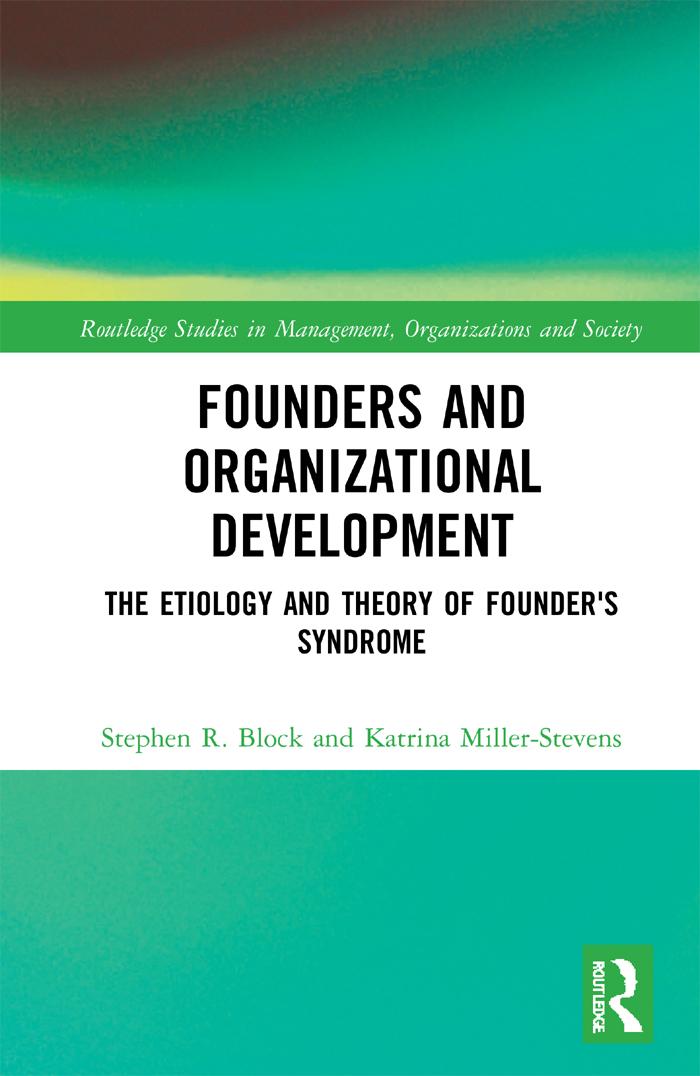
Founders and Organizational Development: The Etiology and Theory of Founder’s Syndrome is designed to help today’s researchers, faculty, students and practitioners become familiar with the etiology and dynamics of Founder’s Syndrome as an organizational condition challenging nonprofit/nongovernmental, social enterprise, and for-profit and publicly traded organizations. The book uses applied social and psychological theories and concepts to peel away the layers of an organizational enigma, revealing three causes of Founder’s Syndrome and insight into the power and privileges assumed by founders who engage in undesirable and self-destructive behaviors leading to their termination; going from hero status to antihero.
Researchers, instructors, students, and practitioners will find thought-provoking case studies from the real world of organization development practice. Segments from interviews during interventions reveal the type of emotional turmoil experienced in organizations where founder’s syndrome is present. Insight is provided into accounts of well-known founders who were terminated or forced to resign. The unique features of this book include: integrating theory into practice, describing a new theory about the psychological reaction of founder’s syndrome victims, prevention ideas when designing new organizations, strategies for intervention, using content based on research and organization development consultation experiences, and, integrating feedback from students who have launched organizations.
Płać wygodnie kartą, Klarną, Apple Pay lub Google Pay. Nie jesteś zadowolony? Zawsze masz 14-dniową gwarancję zwrotu pieniędzy. Więcej przeczytasz w naszych warunkach. Masz pytania? Napisz do nas na hello@memmo.org.
Memmo ułatwia naukę – gdziekolwiek jesteś na świecie. U nas znajdziesz podręczniki i sprytne narzędzia do nauki w jednym miejscu: streszczenia, quizy, podcasty i fiszki. A do tego Ted, Twój kumpel do nauki, który odpowie na wszystko, co Cię nurtuje. Ponad 50 000 studentów już tu się uczy – stworzone, byś uczył się szybciej i mniej stresował.