
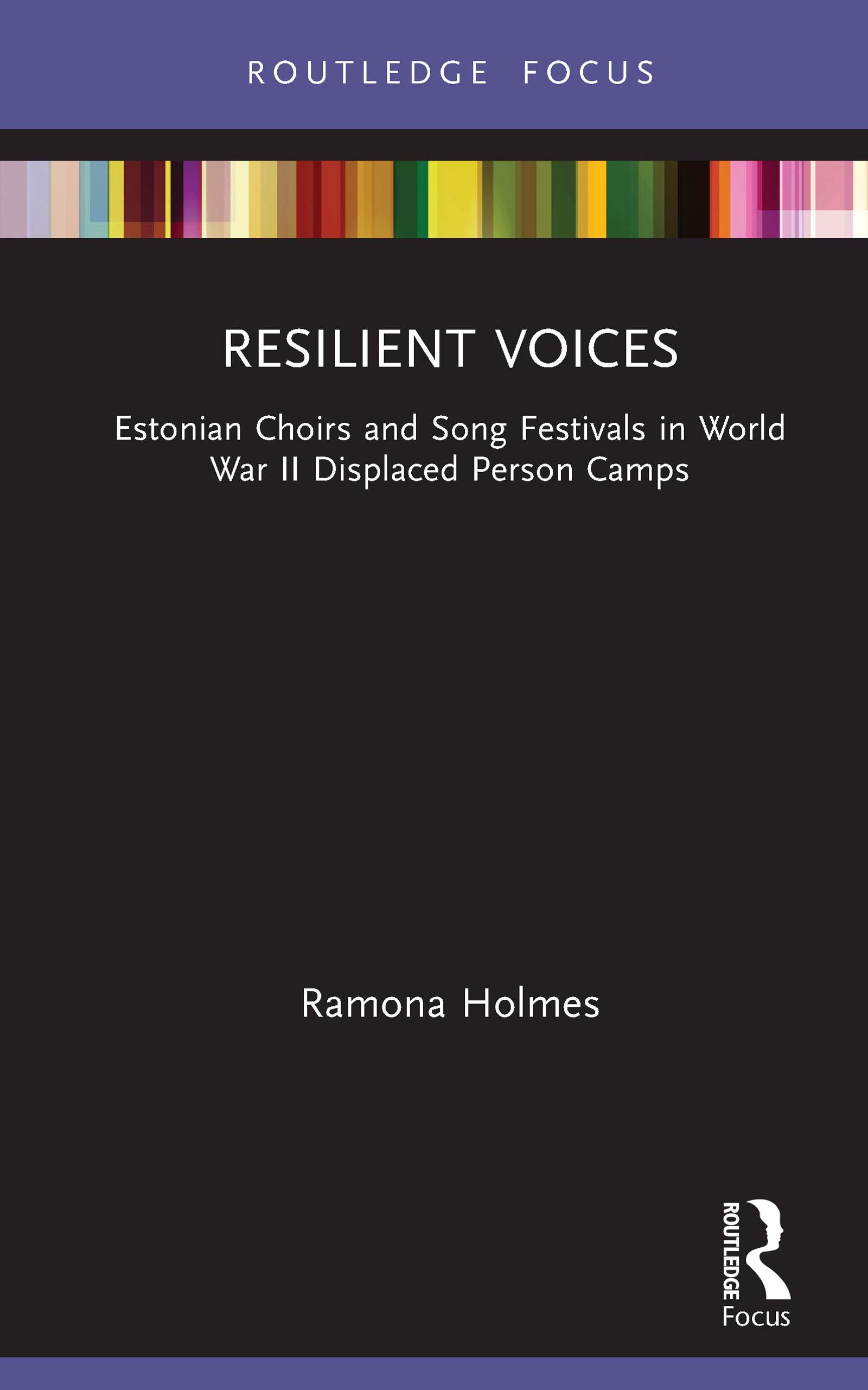
The aftermath of World War II sent thousands of Estonian refugees into Europe. The years of Estonian independence (1917-1940) had given them a taste of freedom and so relocation to displaced person (DP) camps in post-war Germany was extremely painful. One way in which Estonians dealt with the chaos and trauma of WWII and its aftermath was through choral singing. Just as song festivals helped establish national identity in 1869, song festivals promoted cultural cohesiveness for Estonians in WWII displaced person camps. A key turning point in hope for the Estonian DPs was the 1947 Augsburg Song Festival, which is the center point of this book. As Estonian DPs dispersed to Australia, Canada, Europe, and the United States these choirs and song festivals gave Estonians the resilience to retain their identity and to thrive in their new homes. This history of Estonian WWII DP camp choirs and song festivals is gathered from the stories of many courageous individuals and filled with the tenacious spirit of the Estonian singing culture. This work contributes to an understanding of immigration, identity, and resilience and is particularly important within the field of music regarding music and healing, music and identity, historical musicology, ethnomusicology, and music and politics.
Płać wygodnie kartą, Klarną, Apple Pay lub Google Pay. Nie jesteś zadowolony? Zawsze masz 14-dniową gwarancję zwrotu pieniędzy. Więcej przeczytasz w naszych warunkach. Masz pytania? Napisz do nas na hello@memmo.org.
Memmo ułatwia naukę – gdziekolwiek jesteś na świecie. U nas znajdziesz podręczniki i sprytne narzędzia do nauki w jednym miejscu: streszczenia, quizy, podcasty i fiszki. A do tego Ted, Twój kumpel do nauki, który odpowie na wszystko, co Cię nurtuje. Ponad 50 000 studentów już tu się uczy – stworzone, byś uczył się szybciej i mniej stresował.