
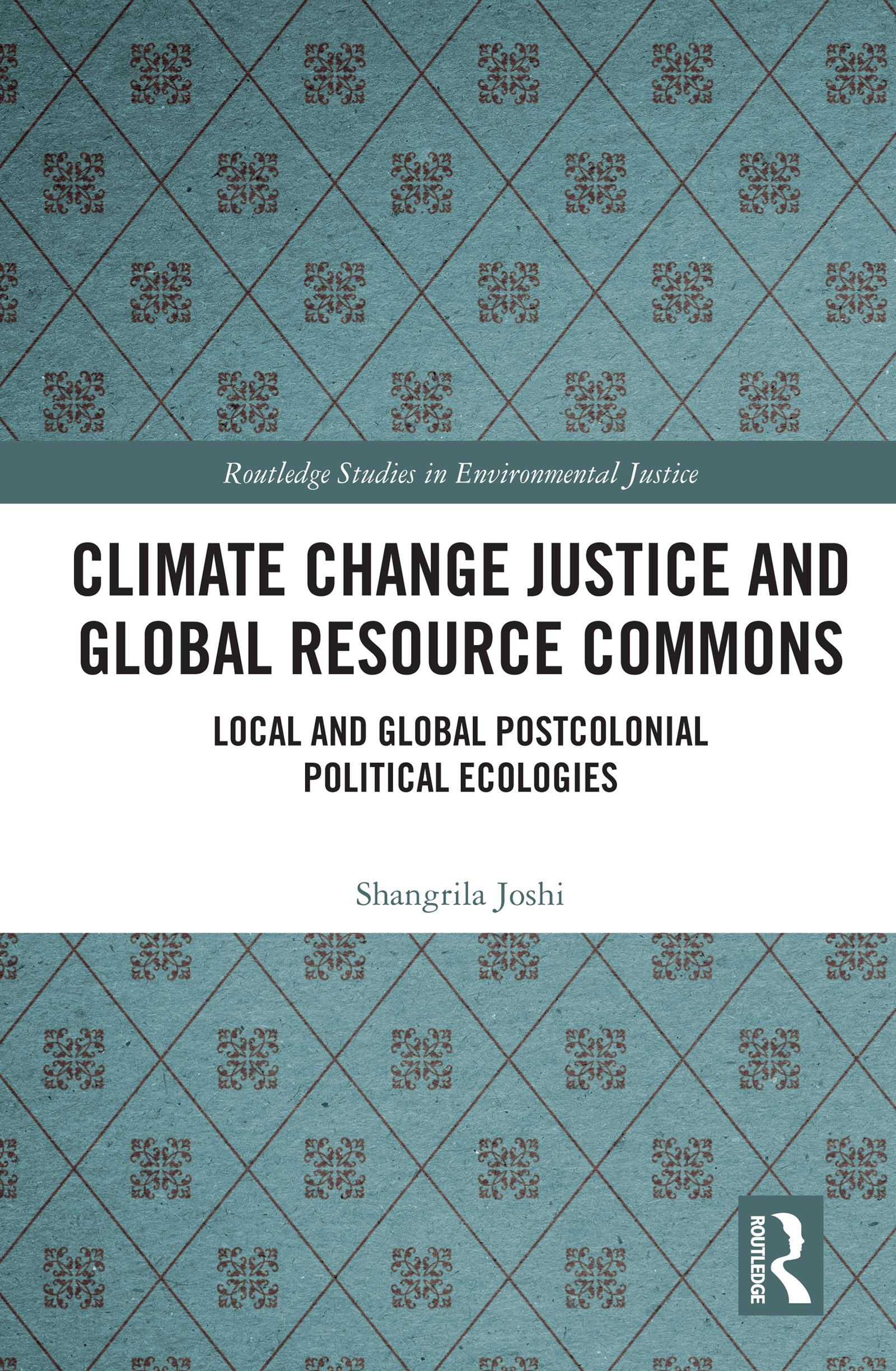
This book examines the multiple scales at which the inequities of climate change are borne out.
Shangrila Joshi engages in a multi-scalar analysis of the myriad ways in which various resource commons – predominantly atmosphere and forests – are implicated in climate governance, with a consistent emphasis throughout on the justice implications for disenfranchised communities. The book starts with an analysis of North-South inequities in responsibility, vulnerability, and capability, as evidenced in global climate treaty negotiations from Rio to Paris. It then moves on to examine the ways in which structural inequalities are built into the conceptualization and operationalization of various neoliberal climate solutions such as Reducing Emissions from Deforestation and Forest Degradation (REDD+) and the Clean Development Mechanism (CDM). Drawing on qualitative interviews conducted in Delhi, Kathmandu, and the Terai region of Nepal, participant observation at the Climate Conference in Copenhagen (COP-15), and textual analysis of official documents, the book articulates a geography of climate justice, considering how ideas of injustice pertaining to colonialism, race, Indigeneity, caste, gender, and global inequality intersect with the politics of scale.
This book will be of great interest to students and scholars of environmental justice, climate justice, climate policy, political ecology, and South Asian studies.
Płać wygodnie kartą, Klarną, Apple Pay lub Google Pay. Nie jesteś zadowolony? Zawsze masz 14-dniową gwarancję zwrotu pieniędzy. Więcej przeczytasz w naszych warunkach. Masz pytania? Napisz do nas na hello@memmo.org.
Memmo ułatwia naukę – gdziekolwiek jesteś na świecie. U nas znajdziesz podręczniki i sprytne narzędzia do nauki w jednym miejscu: streszczenia, quizy, podcasty i fiszki. A do tego Ted, Twój kumpel do nauki, który odpowie na wszystko, co Cię nurtuje. Ponad 50 000 studentów już tu się uczy – stworzone, byś uczył się szybciej i mniej stresował.