
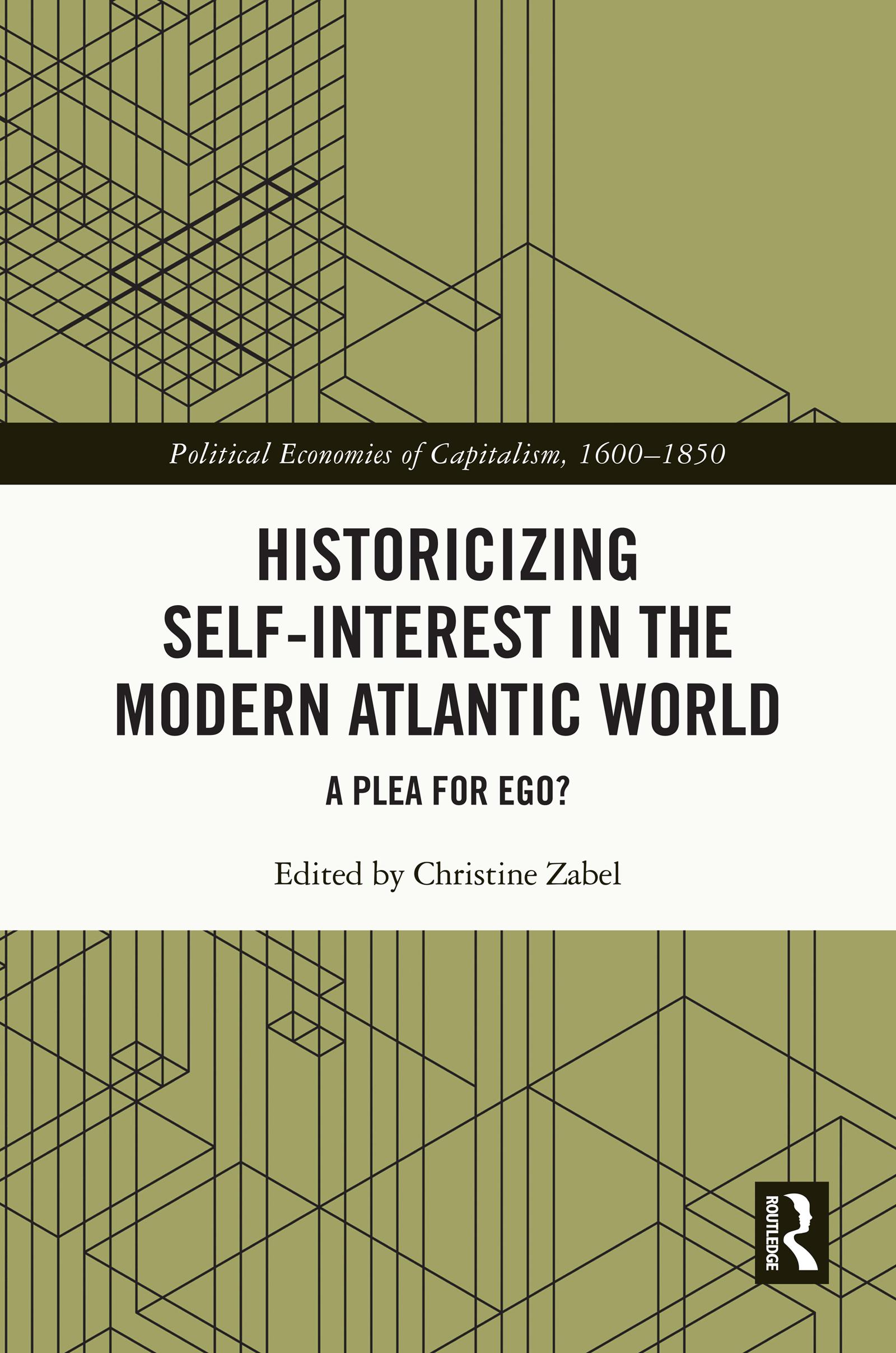
This volume historicizes the use of the notion of self-interest that at least since Bernard de Mandeville and Adam Smith’s theories is considered a central component of economic theory.
Having in the twentieth century become one of the key-features of rational choice models, and thus is seen as an idealized trait of human behavior, self-interest has, despite Albert O. Hirschman’s pivotal analysis of self-interest, only marginally been historicized. A historicization(s) of self-interest, however, offers new insights into the concept by asking why, when, for what reason and in which contexts the notion was discussed or referred to, how it was employed by contemporaries, and how the different usages developed and changed over time. This helps us to appreciate the various transformations in the perception of the notion, and also to explore how and in what ways different people at different times and in different regions reflected on or realized the act of considering what was in their best interest. The volume focuses on those different usages, knowledges, and practices concerned with self-interest in the modern Atlantic World from the seventeenth to twentieth centuries, by using different approaches, including political and economic theory, actuarial science, anthropology, or the history of emotions.
Offering a new perspective on a key component of Western capitalism, this is the ideal resource for researches and scholars of intellectual, political and economic history in the modern Atlantic World.
Płać wygodnie kartą, Klarną, Apple Pay lub Google Pay. Nie jesteś zadowolony? Zawsze masz 14-dniową gwarancję zwrotu pieniędzy. Więcej przeczytasz w naszych warunkach. Masz pytania? Napisz do nas na hello@memmo.org.
Memmo ułatwia naukę – gdziekolwiek jesteś na świecie. U nas znajdziesz podręczniki i sprytne narzędzia do nauki w jednym miejscu: streszczenia, quizy, podcasty i fiszki. A do tego Ted, Twój kumpel do nauki, który odpowie na wszystko, co Cię nurtuje. Ponad 50 000 studentów już tu się uczy – stworzone, byś uczył się szybciej i mniej stresował.