
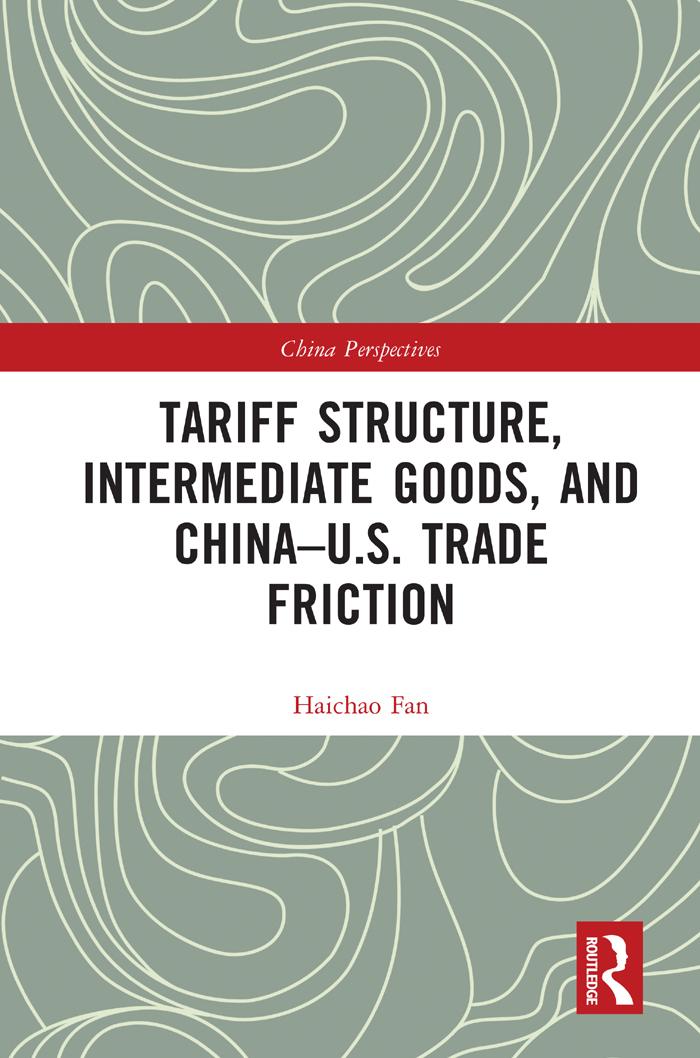
Focusing on the interconnection of tariff structure, international trade and welfare evaluation, the book investigates the characteristics of tariff structures of China and the U.S. in recent years and measures the impact of the Sino–U.S. trade friction that started in 2018. The first part of the book discusses levels and evolution trends of tariff systems of China and the U.S. from 2000 to 2014 and makes a comparison between the two countries' tariff structures. The second part centers on the Sino–U.S. trade friction in 2018, analyzing its development, overall impact on welfare, and relevant impact mechanisms. The author draws on the quantitative analysis method currently prevailing in the field of international trade, taking global value chains, intermediate goods, and variable markup into consideration. In contrast to the research conclusion applying standard trade theory, the result indicates that either unilateral imposition of additional tariffs or bilateral tariff friction will give rise to the deteriorated welfare level of both countries. The book will appeal to academics and policy makers interested in international trade, China–U.S. relation and the trade friction.
Płać wygodnie kartą, Klarną, Apple Pay lub Google Pay. Nie jesteś zadowolony? Zawsze masz 14-dniową gwarancję zwrotu pieniędzy. Więcej przeczytasz w naszych warunkach. Masz pytania? Napisz do nas na hello@memmo.org.
Memmo ułatwia naukę – gdziekolwiek jesteś na świecie. U nas znajdziesz podręczniki i sprytne narzędzia do nauki w jednym miejscu: streszczenia, quizy, podcasty i fiszki. A do tego Ted, Twój kumpel do nauki, który odpowie na wszystko, co Cię nurtuje. Ponad 50 000 studentów już tu się uczy – stworzone, byś uczył się szybciej i mniej stresował.