
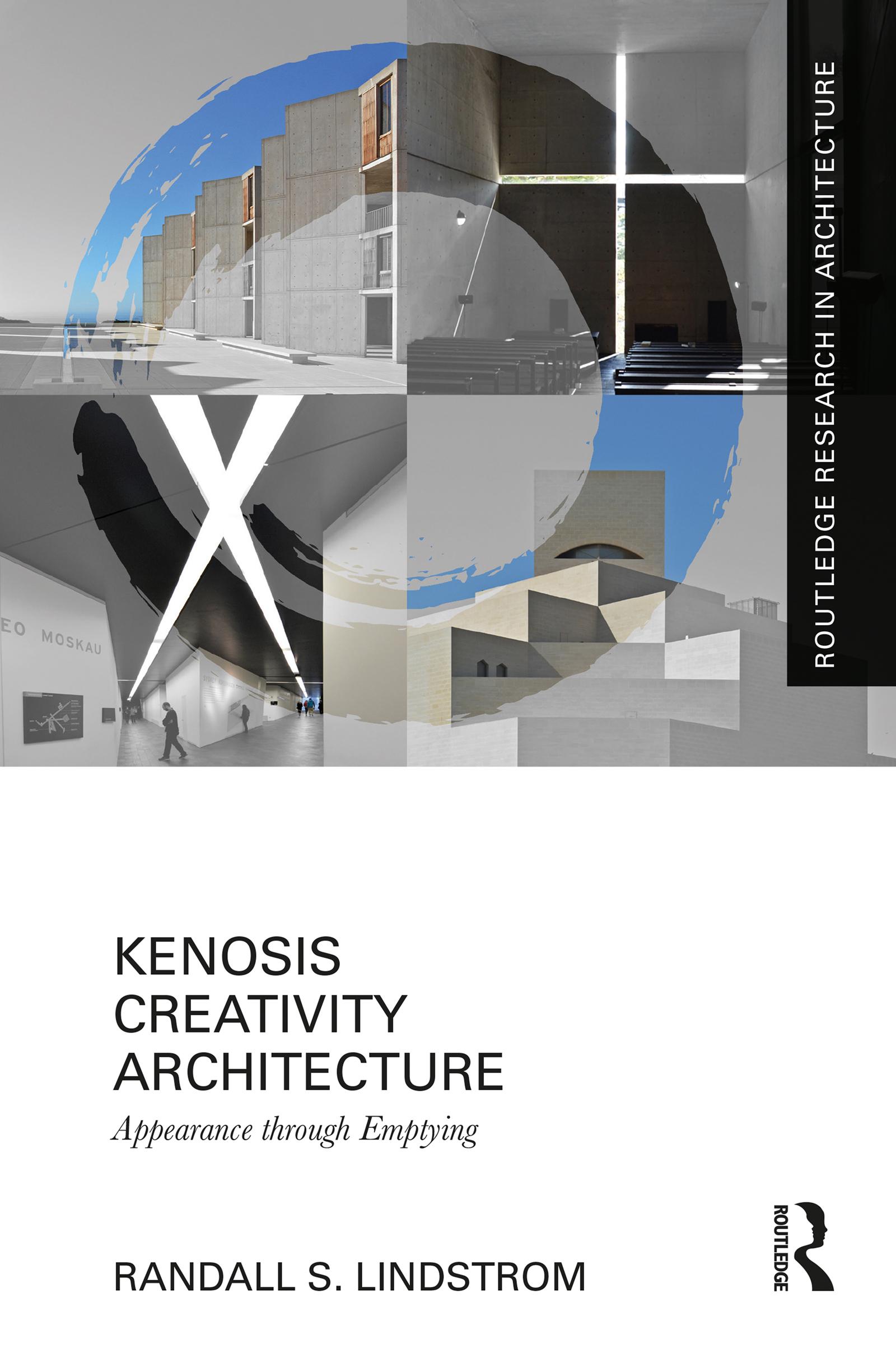
Kenosis Creativity Architecture locates and explores creativity’s grounding in the ancient concept of kenosis, the “emptying” that allows creativity to happen; that makes appearance possible.
It concretises that grounding through architecture—a primal expression of human creativity—critically examining, for the first time, kenotic instantiations evidenced in four iconic, international projects; works by Kahn, Pei, Ando, and Libeskind. Then, in a final turn, the potentiality of architecture’s own emptying is probed. Architect and author Randall Lindstrom draws on Western and Eastern philosophy, including that of Heidegger, Levinas, Derrida, Vattimo, Nishida, and Nishitani, as well as on the theology of Christianity, Judaism, and aspects of Buddhism, Hinduism, and Islam. Every chapter expands the argument that, if responsiveness to our world is taken seriously—if proper and sustainable responses are to be realised—then a deeper understanding of creativity, and so kenosis, is essential.
This book opens-up a way of thinking about creativity and humanity’s readiness to be creative. It thereby presents a crucial enquiry—at the nexus of architecture, philosophy, and theology—for researchers, graduate and postgraduate students, and practitioners alike.
Płać wygodnie kartą, Klarną, Apple Pay lub Google Pay. Nie jesteś zadowolony? Zawsze masz 14-dniową gwarancję zwrotu pieniędzy. Więcej przeczytasz w naszych warunkach. Masz pytania? Napisz do nas na hello@memmo.org.
Memmo ułatwia naukę – gdziekolwiek jesteś na świecie. U nas znajdziesz podręczniki i sprytne narzędzia do nauki w jednym miejscu: streszczenia, quizy, podcasty i fiszki. A do tego Ted, Twój kumpel do nauki, który odpowie na wszystko, co Cię nurtuje. Ponad 50 000 studentów już tu się uczy – stworzone, byś uczył się szybciej i mniej stresował.