
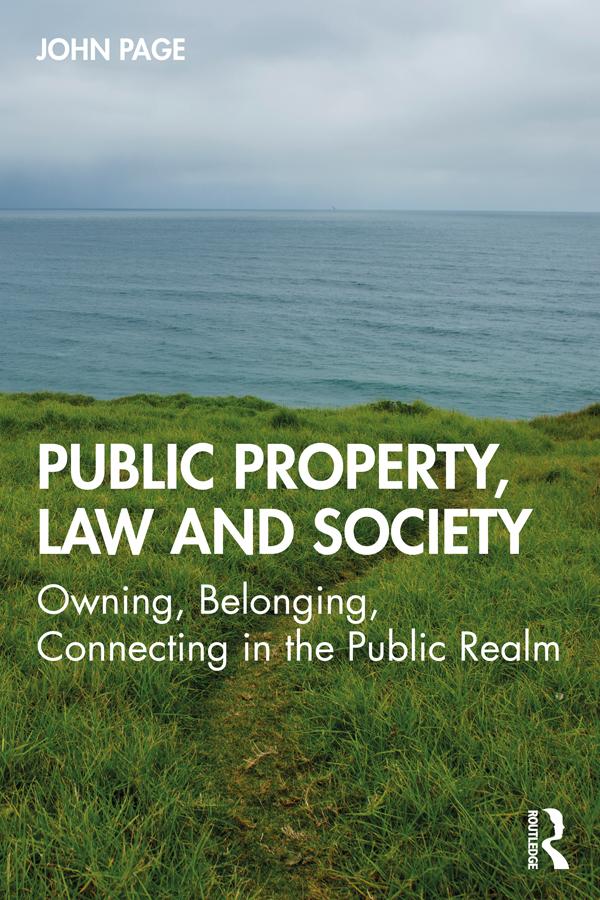
This book examines the almost entirely neglected realm of public property, identifying and describing a number of key organizing principles around which a nascent jurisprudence of public property may be developed.
In property law terms, the public realm is lost to plain view. Despite the vast acreage of public lands, or the extensive tracts of private lands over which public rights subsist, there is little commensurate scholarly discussion of the ideas, theories, practices, and laws of public property. This is no accident. Public property has been marginalized and pushed to the periphery for centuries, a consequence of the dominant discourse of private property, and its enclosing, encroaching tendencies. This book explores the rich diversity of the public estate, of what the public realm means for us, the general public, canvassing what we may ‘own’, where we may ‘belong’, or not, and how we may ‘connect’ through a shared use and enjoyment of public place and space. To better understand public property is to better value its critical public-wealth. Whether overlooked, over-used, or under threat of imminent loss, this book maintains that our loved (and not so loved) public spaces are essential components of our diverse, functioning, and optimistically livable human geographies. As such, they demand legal protection.
This important and original book will be of considerable interest to scholars and others with interests in property and land law, socio-legal studies, legal geography and urban studies.
Płać wygodnie kartą, Klarną, Apple Pay lub Google Pay. Nie jesteś zadowolony? Zawsze masz 14-dniową gwarancję zwrotu pieniędzy. Więcej przeczytasz w naszych warunkach. Masz pytania? Napisz do nas na hello@memmo.org.
Memmo ułatwia naukę – gdziekolwiek jesteś na świecie. U nas znajdziesz podręczniki i sprytne narzędzia do nauki w jednym miejscu: streszczenia, quizy, podcasty i fiszki. A do tego Ted, Twój kumpel do nauki, który odpowie na wszystko, co Cię nurtuje. Ponad 50 000 studentów już tu się uczy – stworzone, byś uczył się szybciej i mniej stresował.