
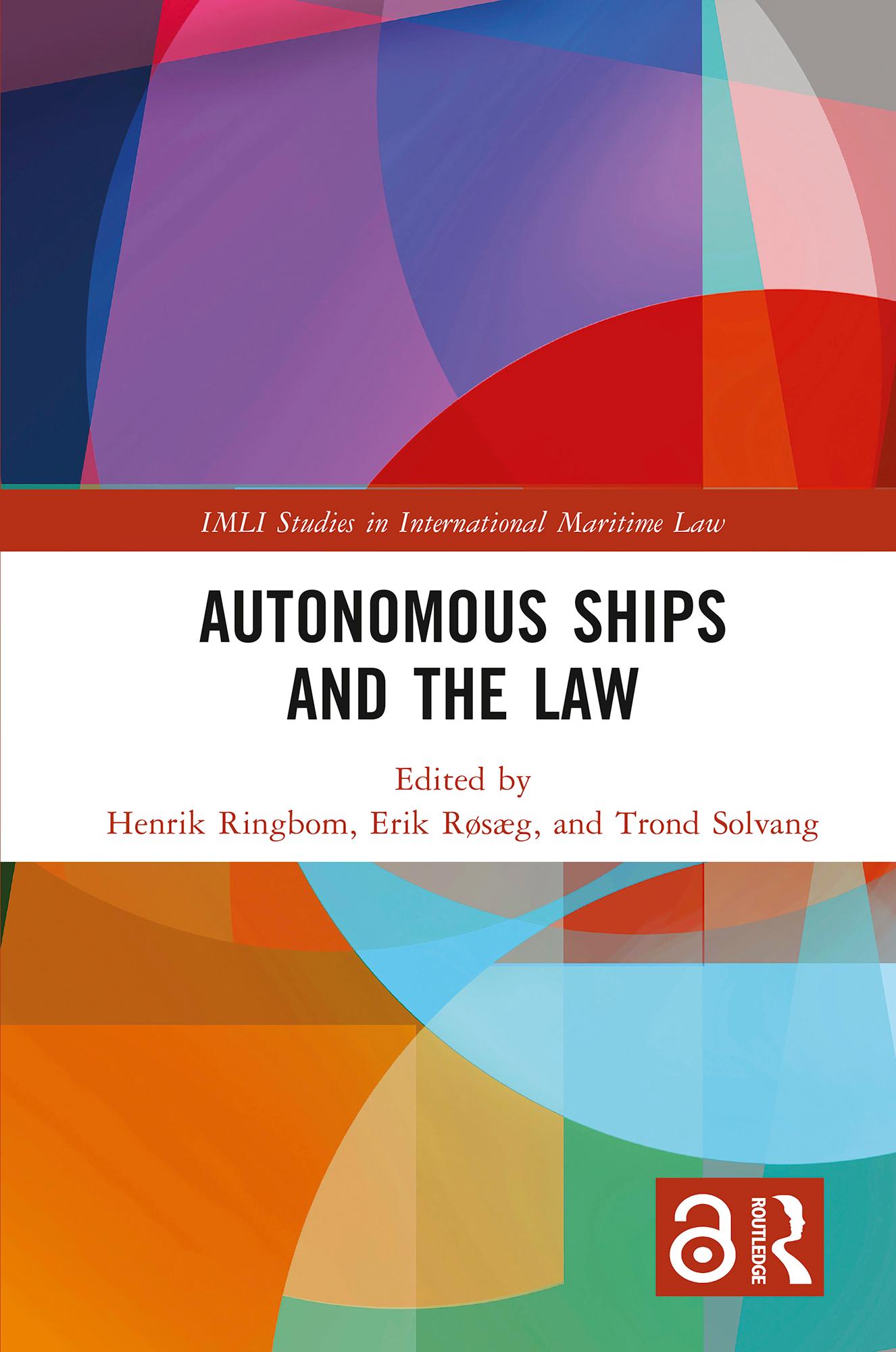
Interest in autonomous ships has grown exponentially over the past few years. Whereas a few years ago, the prospect of unmanned and autonomous vessels sailing on the seas was considered unrealistic, the debate now centers on when and in what format and pace the development will take place.
Law has a key role to play in this development and legal obstacles are often singled out as principal barriers to the rapid introduction of new technologies in shipping. Within a few years, autonomous ships have turned from a non-issue to one of the main regulatory topics being addressed by the International Maritime Organization. However, the regulatory discussion is still in its infancy, and while many new questions have been raised, few answers have been provided to them to date.
Increased automation of tasks that have traditionally been undertaken by ships' crews raises interesting legal questions across the whole spectrum of maritime law. The first of its kind, this book explores the issue of autonomous ships from a wide range of legal perspectives, including both private law and public law at international and national level, making available cutting-edge research which will be of significant interest to researchers in maritime law.
Chapter 3 of this book is freely available as a downloadable Open Access PDF at http://www.taylorfrancis.com under a Creative Commons Attribution-Non Commercial (CC-BY-NC) 4.0 license.
Płać wygodnie kartą, Klarną, Apple Pay lub Google Pay. Nie jesteś zadowolony? Zawsze masz 14-dniową gwarancję zwrotu pieniędzy. Więcej przeczytasz w naszych warunkach. Masz pytania? Napisz do nas na hello@memmo.org.
Memmo ułatwia naukę – gdziekolwiek jesteś na świecie. U nas znajdziesz podręczniki i sprytne narzędzia do nauki w jednym miejscu: streszczenia, quizy, podcasty i fiszki. A do tego Ted, Twój kumpel do nauki, który odpowie na wszystko, co Cię nurtuje. Ponad 50 000 studentów już tu się uczy – stworzone, byś uczył się szybciej i mniej stresował.