
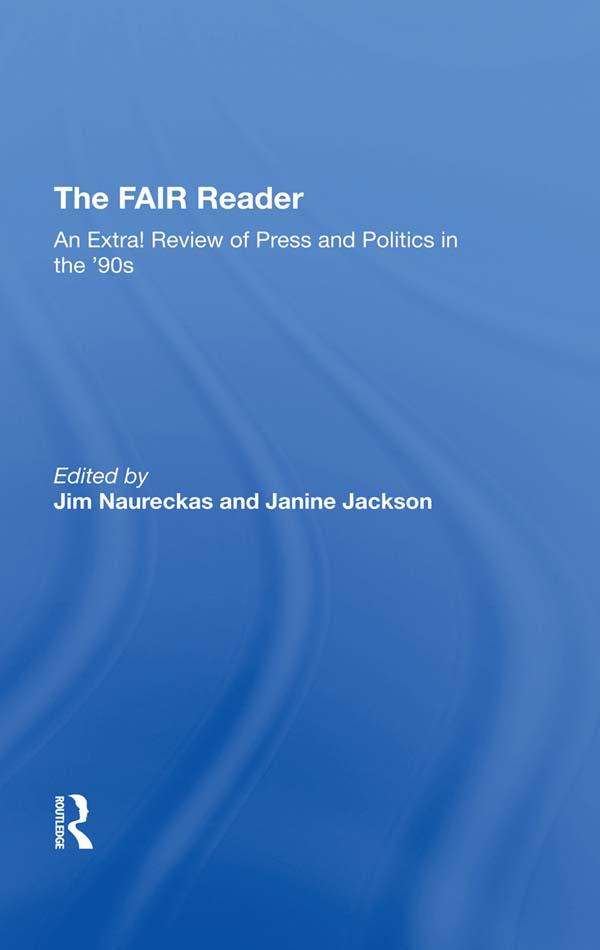
Why did major news outlets virtually ignore the only cost-effective plan for universal health care coverage—even though polls showed the plan had majority support? Why did leading journalists go out of their way to attack Bill Clinton’s rivals in the 1992 Democratic primary—while focusing unprecedented attention on Clinton’s personal life? Why do establishment media consider falling unemployment to be bad news? In the tradition of I.F. Stone and George Seldes, the contributors to The FAIR Reader probe the often mysterious connections between press and politics in the 1990s. The essays are filled with startling information about the critical issues of our time—from the Gulf War and the Clarence Thomas hearings to the debates over health care reform and NAFTA—documenting the deceptive, one-sided mainstream reporting that leaves the public in the dark. Particular attention is paid to the election of 1992 and the Clinton administration, showing how the media promoted, undercut, and finally shaped Clinton to fit a media agenda, the book demonstrates that systematic media bias poses a threat to the democratic process and the free flow of information to the U.S. citizenry. FAIR, founded in 1986, is the national media watch group dedicated to the principle that independent, aggressive, and critical media are essential to an informed democracy. In the nine years since FAIR was launched, it has gained national recognition for its well-documented studies of media bias, its challenge to powerful media figures like Rush Limbaugh, and its award-winning journal of media criticism and politics, Extra!. The FAIR Reader collects Extra!’s most incisive reporting on journalism and politics in the ‘90s. It will be invaluable to anyone interested in decoding the media agenda behind the daily news.
Płać wygodnie kartą, Klarną, Apple Pay lub Google Pay. Nie jesteś zadowolony? Zawsze masz 14-dniową gwarancję zwrotu pieniędzy. Więcej przeczytasz w naszych warunkach. Masz pytania? Napisz do nas na hello@memmo.org.
Memmo ułatwia naukę – gdziekolwiek jesteś na świecie. U nas znajdziesz podręczniki i sprytne narzędzia do nauki w jednym miejscu: streszczenia, quizy, podcasty i fiszki. A do tego Ted, Twój kumpel do nauki, który odpowie na wszystko, co Cię nurtuje. Ponad 50 000 studentów już tu się uczy – stworzone, byś uczył się szybciej i mniej stresował.