
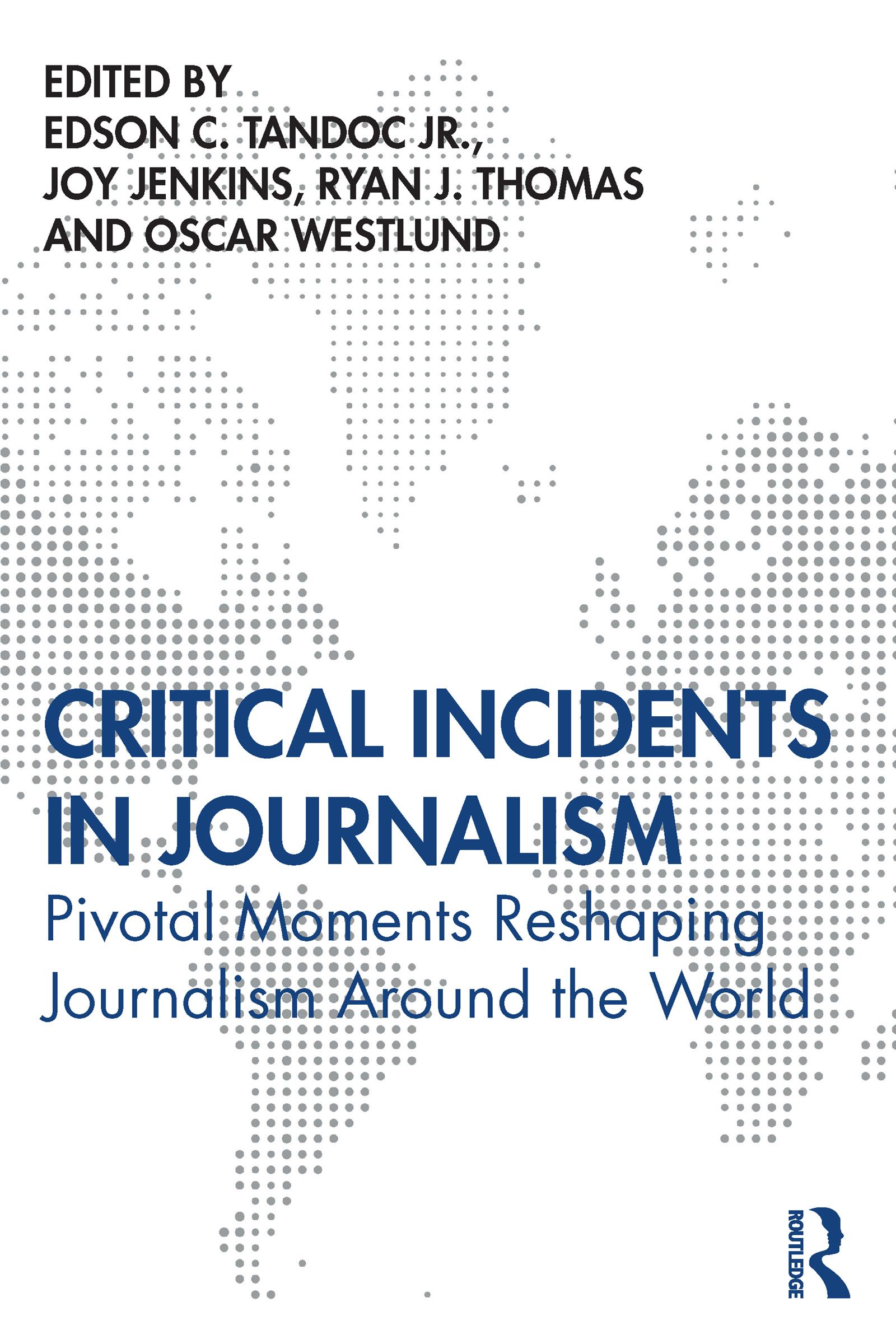
This edited collection examines critical incidents journalists have faced across different media contexts, exploring how journalists and other key actors negotiate various aspects of their work.
Ranging from the Rwandan genocide to the News of the World hacking scandal in the UK, this book defines a critical incident as an event that has led journalists to reconsider their routines, roles, and rules. Combining theoretical and practical analysis, the contributors offer a discussion of the key events that journalists cover, such as political turmoil or natural disasters, as well as events that directly involve and affect journalists. Featuring case studies from countries including Australia, Germany, Brazil, Kenya, and the Philippines, the book explores the discourses that critical events have generated, how journalists and other stakeholders have responded to them, and how they have reshaped (or are reshaping) journalistic norms and practices. The book also proposes a roadmap for studying such pivotal moments in journalism.
This one-of-a-kind collection is a valuable resource for students and scholars across journalism studies disciplines, from journalism history, to sociology of news, to digital journalism and political communication.
Płać wygodnie kartą, Klarną, Apple Pay lub Google Pay. Nie jesteś zadowolony? Zawsze masz 14-dniową gwarancję zwrotu pieniędzy. Więcej przeczytasz w naszych warunkach. Masz pytania? Napisz do nas na hello@memmo.org.
Memmo ułatwia naukę – gdziekolwiek jesteś na świecie. U nas znajdziesz podręczniki i sprytne narzędzia do nauki w jednym miejscu: streszczenia, quizy, podcasty i fiszki. A do tego Ted, Twój kumpel do nauki, który odpowie na wszystko, co Cię nurtuje. Ponad 50 000 studentów już tu się uczy – stworzone, byś uczył się szybciej i mniej stresował.