
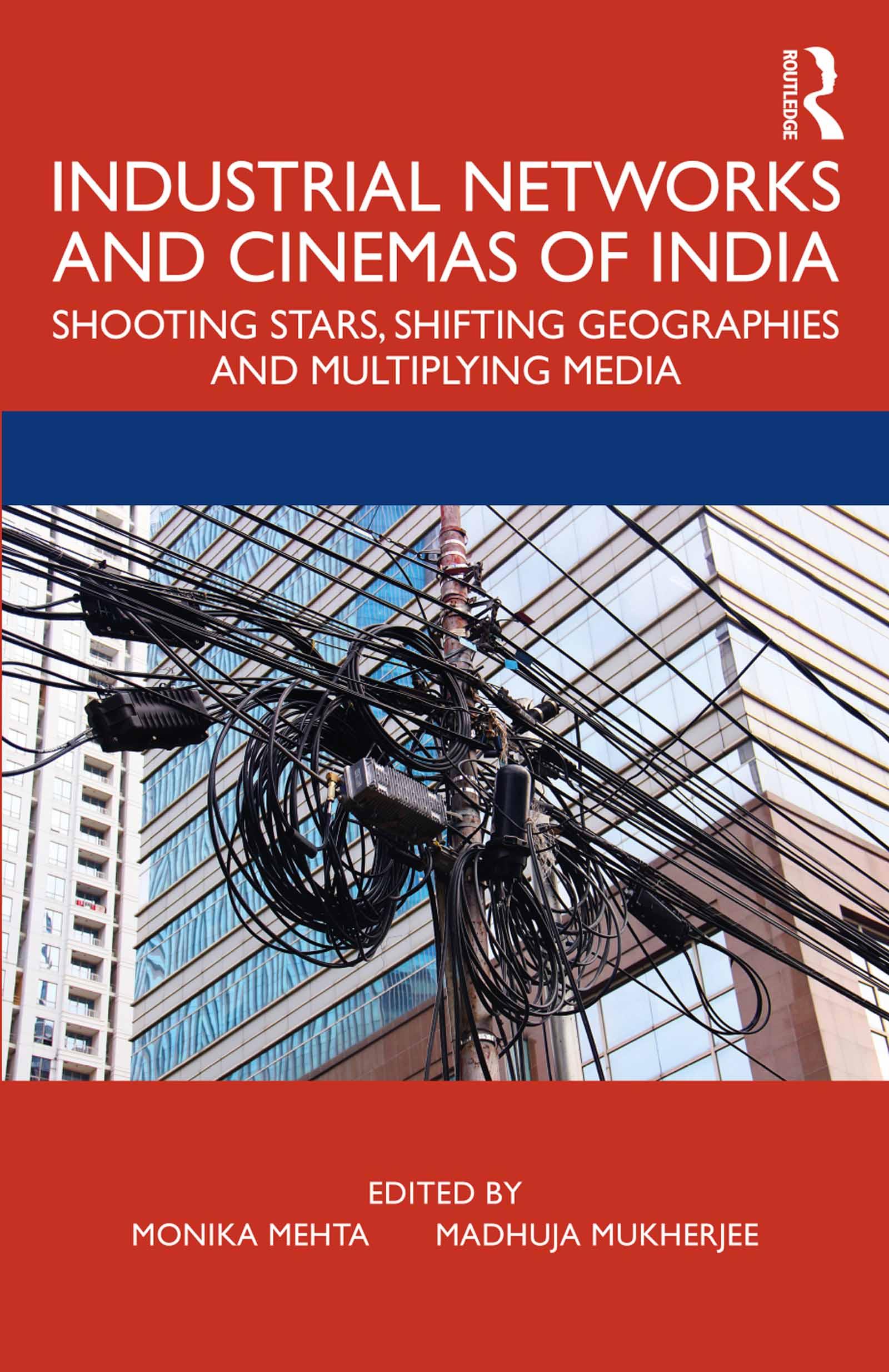
This volume points to the limits of models such as regional, national, and transnational, and develops ‘network’ as a conceptual category to study cinemas of India. Through grounded and interdisciplinary research, it shows how film industries located in disparate territories have not functioned as isolated units and draws attention to the industrial traffic – of filmic material, actors, performers, authors, technicians, genres, styles, sounds, expertise, languages, and capital, across trans-regional contexts -- since the inception of cinema. It excavates histories of film production, distribution and exhibition, and their connections beyond regional and national boundaries, and between places, industrial practices, and multiple media.
The chapters in this volume address a range of themes such as transgressive female figures; networks of authors and technicians; trans-regional production links and changing technologies, and new media geographies. By tracking manifold changes in the contexts of transforming media, and inter-connections between diverse industrial nodal points, this book expands the critical vocabulary in media and production studies and foregrounds new methods for examining cinema.
A generative account of industrial networks, this volume will be useful for scholars and researchers of film studies, cinema studies, media studies, production studies, media sociology, gender studies, South Asian studies, and cultural studies.
Płać wygodnie kartą, Klarną, Apple Pay lub Google Pay. Nie jesteś zadowolony? Zawsze masz 14-dniową gwarancję zwrotu pieniędzy. Więcej przeczytasz w naszych warunkach. Masz pytania? Napisz do nas na hello@memmo.org.
Memmo ułatwia naukę – gdziekolwiek jesteś na świecie. U nas znajdziesz podręczniki i sprytne narzędzia do nauki w jednym miejscu: streszczenia, quizy, podcasty i fiszki. A do tego Ted, Twój kumpel do nauki, który odpowie na wszystko, co Cię nurtuje. Ponad 50 000 studentów już tu się uczy – stworzone, byś uczył się szybciej i mniej stresował.