
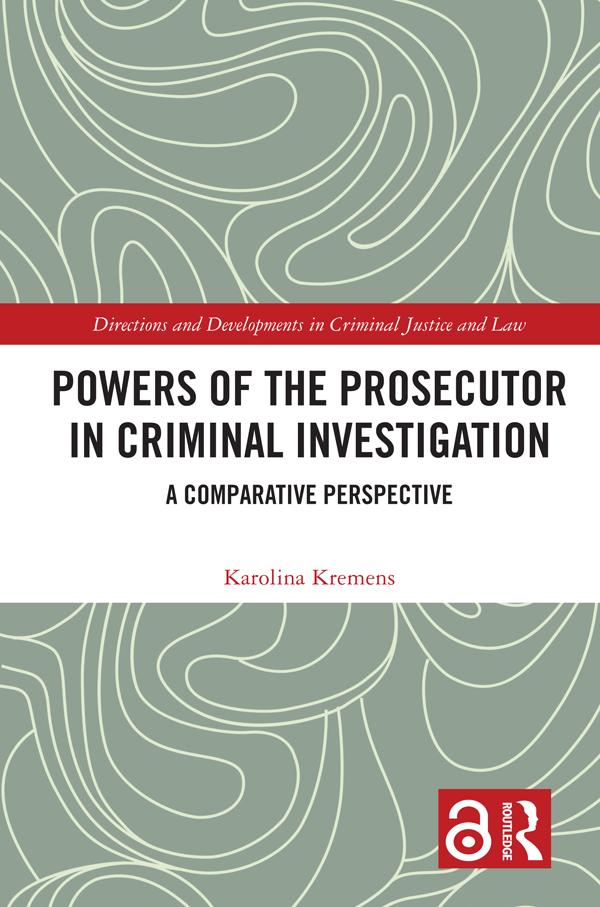
This comparative analysis examines the scope of prosecutorial powers at different phases of criminal investigation in four countries: the United States, Italy, Poland, and Germany. Since in all four the number of criminal cases decided without trial is constantly increasing, criminal investigation has become central in the criminal process. The work asks: who should be in charge of this stage of the process? Prosecutors have gained tremendous powers to influence the outcome of the criminal cases, including powers once reserved for judges. In a system in which the role of the trial is diminishing and the significance of criminal investigation is growing, this book questions whether the prosecutor's powers at the early stage of the process should be enhanced.
Using a problem-oriented approach, the book provides a parallel analysis of each country along five possible spheres of prosecutorial engagement: commencing criminal investigation; conducting criminal investigation, undertaking initial charging decisions; imposing coercive measures; and discontinuing criminal investigation. Using the competing adversarial–inquisitorial models as a framework, the focus is on the prosecutor as a crucial figure in the criminal process and investigation.
The insights of this book will be of interest and relevance to students and academics in criminal justice, criminology, law, and public policy, as well as policymakers, government officials, and others interested in legal reform.
Płać wygodnie kartą, Klarną, Apple Pay lub Google Pay. Nie jesteś zadowolony? Zawsze masz 14-dniową gwarancję zwrotu pieniędzy. Więcej przeczytasz w naszych warunkach. Masz pytania? Napisz do nas na hello@memmo.org.
Memmo ułatwia naukę – gdziekolwiek jesteś na świecie. U nas znajdziesz podręczniki i sprytne narzędzia do nauki w jednym miejscu: streszczenia, quizy, podcasty i fiszki. A do tego Ted, Twój kumpel do nauki, który odpowie na wszystko, co Cię nurtuje. Ponad 50 000 studentów już tu się uczy – stworzone, byś uczył się szybciej i mniej stresował.