
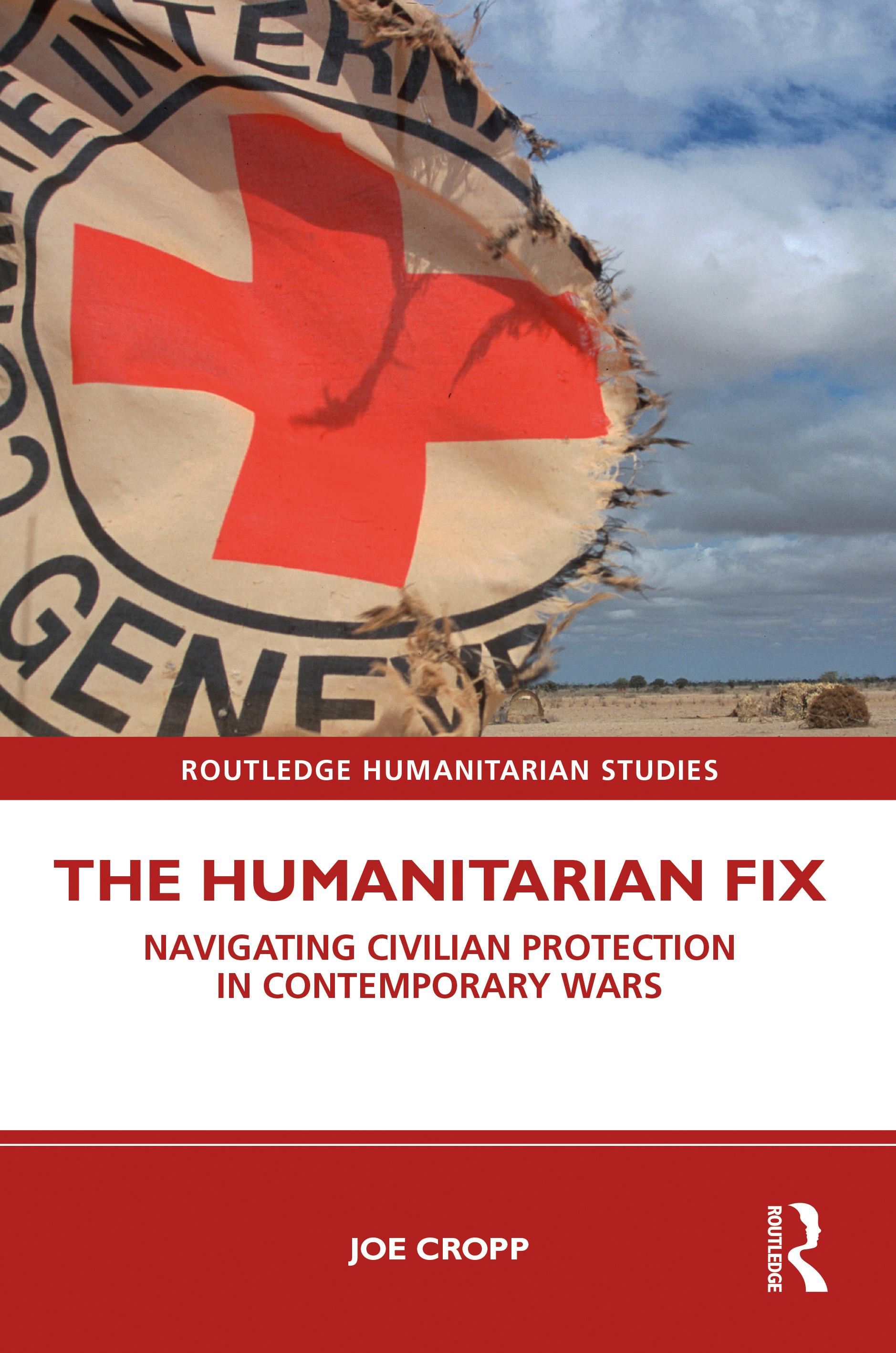
This book investigates how humanitarians balance the laws and principles of civilian protection with the realities of contemporary warzones, where non-state armed actors assert cultural, political and religious traditions that are often at odds with official frameworks.
This book argues that humanitarian protection on the ground is driven not by official frameworks in the traditional sense, but by the relationships between the complex mix of actors involved in contemporary wars. The frameworks, in turn, act as a unifying narrative that preserves these relationships. As humanitarian practitioners navigate this complex space, they act as unofficial brokers, translating the official frameworks to align with the often-divergent agendas of non-state armed actors. In doing so, they provide an unofficial humanitarian fix for the challenges inherent in applying the official frameworks in contemporary wars.
Drawing on rich ethnographic observations from the author’s time in northern Iraq, and complemented by interviews with a range of fieldworkers and humanitarian policy makers and lawyers, this book will be a compelling read for researchers and students within humanitarian and development studies, and to practitioners and policy makers who are grappling with the contradictions this book explores.
Płać wygodnie kartą, Klarną, Apple Pay lub Google Pay. Nie jesteś zadowolony? Zawsze masz 14-dniową gwarancję zwrotu pieniędzy. Więcej przeczytasz w naszych warunkach. Masz pytania? Napisz do nas na hello@memmo.org.
Memmo ułatwia naukę – gdziekolwiek jesteś na świecie. U nas znajdziesz podręczniki i sprytne narzędzia do nauki w jednym miejscu: streszczenia, quizy, podcasty i fiszki. A do tego Ted, Twój kumpel do nauki, który odpowie na wszystko, co Cię nurtuje. Ponad 50 000 studentów już tu się uczy – stworzone, byś uczył się szybciej i mniej stresował.