
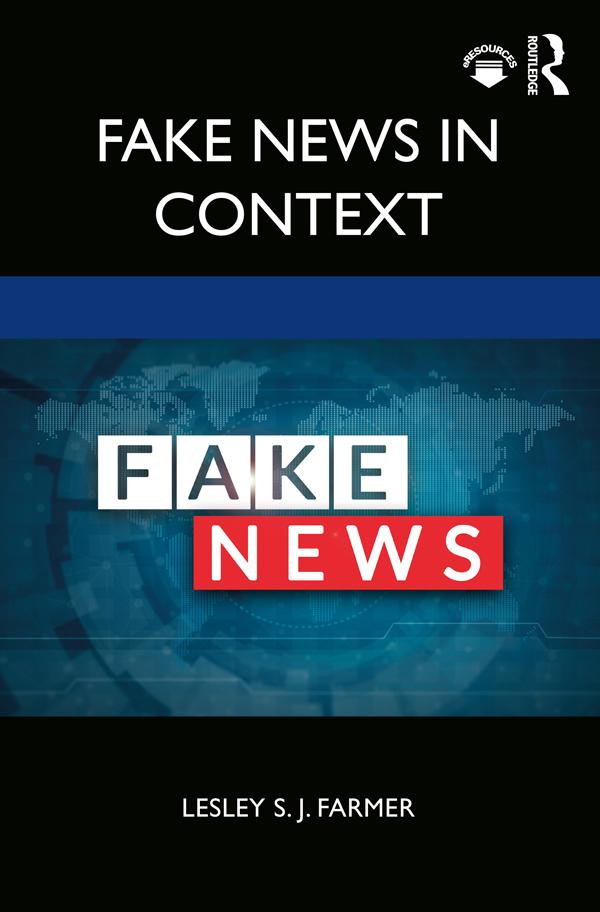
Fake News in Context defines fake news and sets it within a historical and international context. Helping readers to become more skilled at detecting misinformation, the book also demonstrates how such knowledge can be leveraged to facilitate more effective engagement in civic education.
Distinguishing between fake news and other forms of misinformation, the book explains the complete communication cycle of fake news: how and why it is created, disseminated and accessed. The book then explains the physical and psychological reasons why people believe fake news. Providing generic methods for identifying fake news, Farmer also explains the use of fact- checking tools and automated algorithms. The book then details how various literacies, including news, media, visual, information, digital and data, offer unique concepts and skills that can help interpret fake news. Arguing that individuals and groups can respond and counter fake news, which leads to civic engagement and digital citizenship, the book concludes by providing strategies for instruction and tips for collaborating with librarians.
Including a range of international examples, Fake News in Context will be of interest to teaching faculty, and students of library and information science, communication studies, media studies, politics and journalism. Librarians and information professionals will also find a valuable resource in this book.
Płać wygodnie kartą, Klarną, Apple Pay lub Google Pay. Nie jesteś zadowolony? Zawsze masz 14-dniową gwarancję zwrotu pieniędzy. Więcej przeczytasz w naszych warunkach. Masz pytania? Napisz do nas na hello@memmo.org.
Memmo ułatwia naukę – gdziekolwiek jesteś na świecie. U nas znajdziesz podręczniki i sprytne narzędzia do nauki w jednym miejscu: streszczenia, quizy, podcasty i fiszki. A do tego Ted, Twój kumpel do nauki, który odpowie na wszystko, co Cię nurtuje. Ponad 50 000 studentów już tu się uczy – stworzone, byś uczył się szybciej i mniej stresował.