
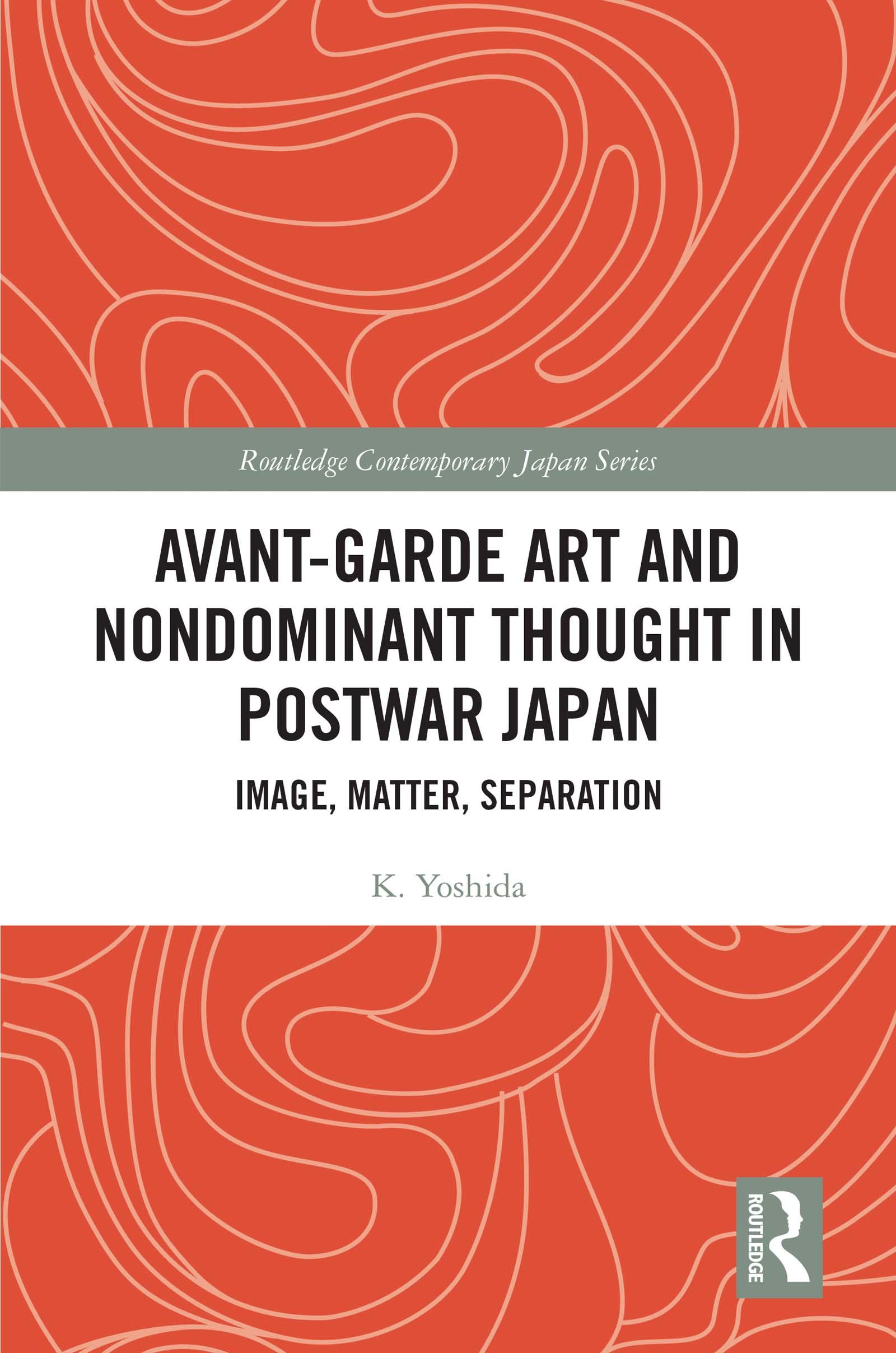
This book offers a reassessment of how "matter" – in the context of art history, criticism, and architecture – pursued a radical definition of "multiplicity", against the dominant and hierarchical tendencies underwriting post-fascist Japan.
Through theoretical analysis of works by artists and critics such as Okamoto Taro, Hanada Kiyoteru, Kawara On, Isozaki Arata, Kawaguchi Tatsuo, and Nakahira Takuma, this highly illustrated text identifies formal oppositions frequently evoked in the Japanese avant-garde, between cognition and image, self and other, human and thing, and one and many, in mediums ranging from painting and photography, to sculpture and architecture. In addition to an "aesthetics of separation" which refuses the integrationist implications of the human, the author proposes the "anthropofugal" – meaning fleeing the human – as an original concept through which to understand matter in the epistemic universe of the postwar Japanese avant-garde. Chapters in this publication offer critical insights into how artists and critics grounded their work in active disengagement, to advance an ethics of nondominance.
Avant-Garde Art and Nondominant Thought in Postwar Japan will appeal to students and scholars of Japanese studies, art history, and visual cultures more widely.
Płać wygodnie kartą, Klarną, Apple Pay lub Google Pay. Nie jesteś zadowolony? Zawsze masz 14-dniową gwarancję zwrotu pieniędzy. Więcej przeczytasz w naszych warunkach. Masz pytania? Napisz do nas na hello@memmo.org.
Memmo ułatwia naukę – gdziekolwiek jesteś na świecie. U nas znajdziesz podręczniki i sprytne narzędzia do nauki w jednym miejscu: streszczenia, quizy, podcasty i fiszki. A do tego Ted, Twój kumpel do nauki, który odpowie na wszystko, co Cię nurtuje. Ponad 50 000 studentów już tu się uczy – stworzone, byś uczył się szybciej i mniej stresował.