
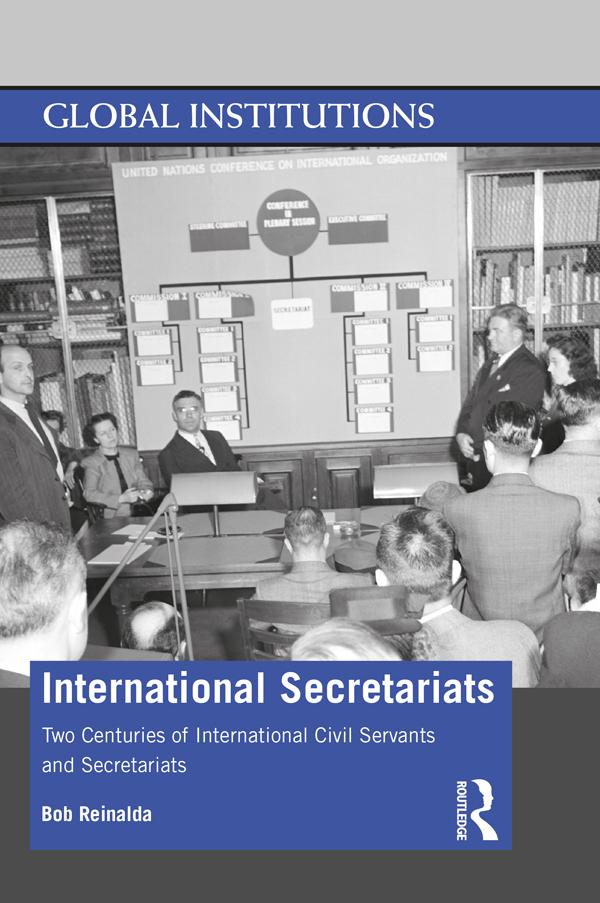
Providing a comprehensive overview of two centuries of international civil servants and international secretariats, this book reveals how international secretariats have emerged and evolved, focusing on both structures (international public administrations) and the practitioners (international civil servants).
Reinalda explores the history and development of international secretariats and international civil servants, starting with the Congress of Vienna (1814–1815), when the first international organization was established in the form of a river commission for the navigation of the Rhine. Charting the development of international secretariats through the nineteenth century – the League of Nations, the United Nations, and the United Nations System with its many specialized agencies, the author explains why NATO (North Atlantic Treaty Organization) and the OECD (Organisation for Economic Co-operation and Development) have strong, rather than weak, international secretariats, and shines a light on the registries of international courts and tribunals.
The book fills a gap in the literature by exploring the full evolution of international secretariats, covering global and continental developments as well as regional integration practices around the world. Secretariats have become the leading actors in multilateral diplomacy particularly for dealing with complex issues, and this book will be of interest to all scholars of global governance and practitioners working for a range of international organizations.
Płać wygodnie kartą, Klarną, Apple Pay lub Google Pay. Nie jesteś zadowolony? Zawsze masz 14-dniową gwarancję zwrotu pieniędzy. Więcej przeczytasz w naszych warunkach. Masz pytania? Napisz do nas na hello@memmo.org.
Memmo ułatwia naukę – gdziekolwiek jesteś na świecie. U nas znajdziesz podręczniki i sprytne narzędzia do nauki w jednym miejscu: streszczenia, quizy, podcasty i fiszki. A do tego Ted, Twój kumpel do nauki, który odpowie na wszystko, co Cię nurtuje. Ponad 50 000 studentów już tu się uczy – stworzone, byś uczył się szybciej i mniej stresował.