
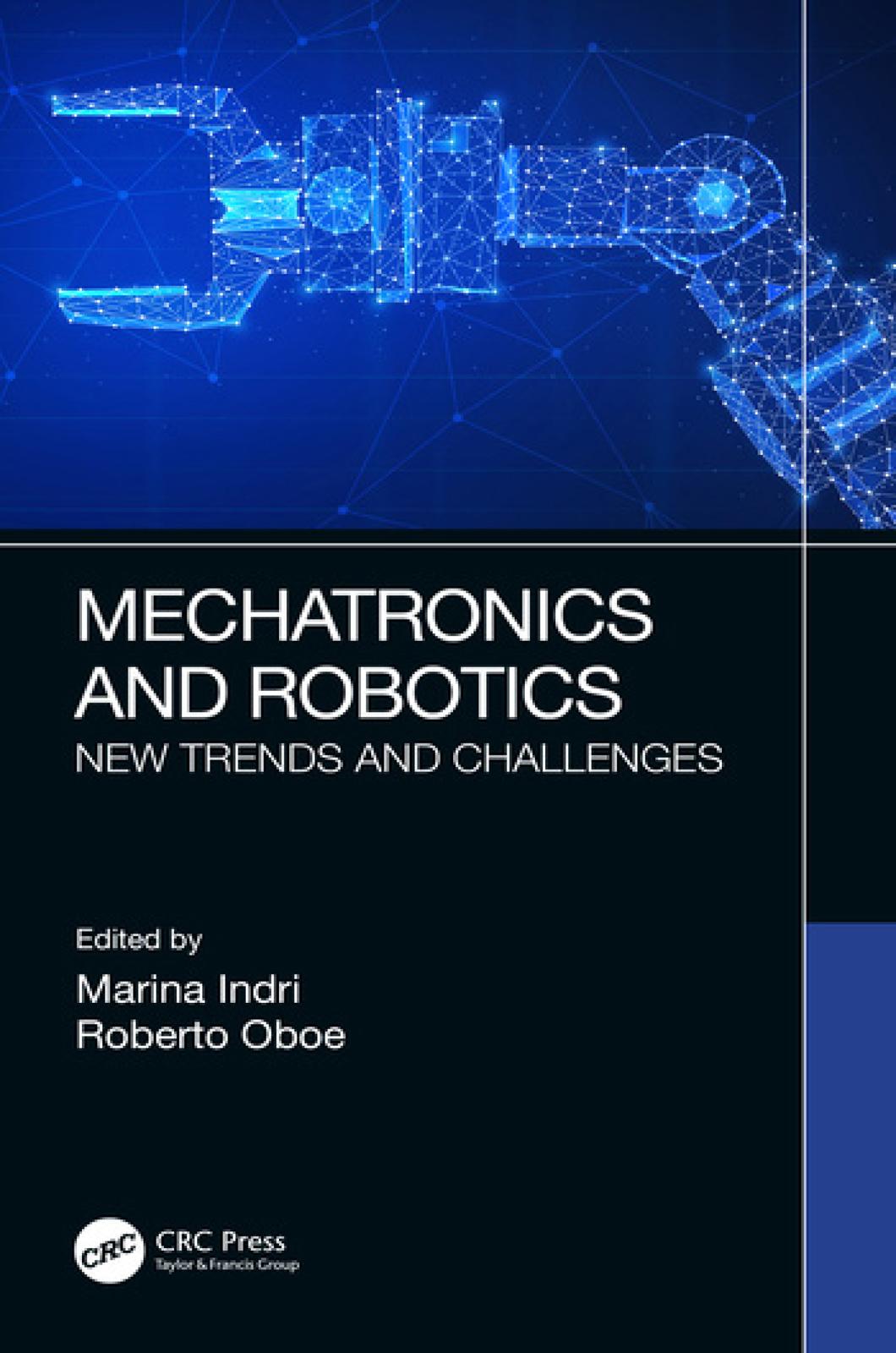
The term “mechatronics” was coined in 1969, merging “mecha” from mechanism and “tronics” from electronics, to reflect the original idea at the basis of this discipline, that is, the integration of electrical and mechanical systems into a single device. The spread of this term, and of mechatronics itself, has been growing in the years, including new aspects and disciplines, like control engineering, computer engineering and communication/information engineering.
Nowadays mechatronics has a well-defined and fundamental role, in strict relation with robotics. Drawing a sharp border between mechatronics and robotics is impossible, as they share many technologies and objectives. Advanced robots could be defined as mechatronic devices equipped with a “smart brain”, but there are also up-to-date mechatronic devices, used in tight interaction with humans, that are governed by smart architectures (for example, for safety purposes).
Aim of this book is to offer a wide overview of new research trends and challenges for both mechatronics and robotics, through the contribution of researchers from different institutions, providing their view on specific subjects they consider as “hot topics” in both fields, with attention to new fields of application, new challenges to the research communities and new technologies available.
The reader of this book will enjoy the various contributions, as they have been prepared with actual applications in mind, along a journey from advanced actuators and sensors to human-robot interaction, through robot control, navigation, planning and programming issues. The book presents several state-of-the-art solutions, like multiple-stage actuation to cope with conflicting specification of large motion-spans, ultra-high accuracy, model-based control for high-tech mechatronic systems, modern approaches of software systems engineering to robotics, aand humanoids for human assistance. The reader can also find new techniques in approaching the design of mechatronic systems in some possible industrial and service robotics scenarios, with a particular attention for the interaction between humans and mechanisms.
Płać wygodnie kartą, Klarną, Apple Pay lub Google Pay. Nie jesteś zadowolony? Zawsze masz 14-dniową gwarancję zwrotu pieniędzy. Więcej przeczytasz w naszych warunkach. Masz pytania? Napisz do nas na hello@memmo.org.
Memmo ułatwia naukę – gdziekolwiek jesteś na świecie. U nas znajdziesz podręczniki i sprytne narzędzia do nauki w jednym miejscu: streszczenia, quizy, podcasty i fiszki. A do tego Ted, Twój kumpel do nauki, który odpowie na wszystko, co Cię nurtuje. Ponad 50 000 studentów już tu się uczy – stworzone, byś uczył się szybciej i mniej stresował.