
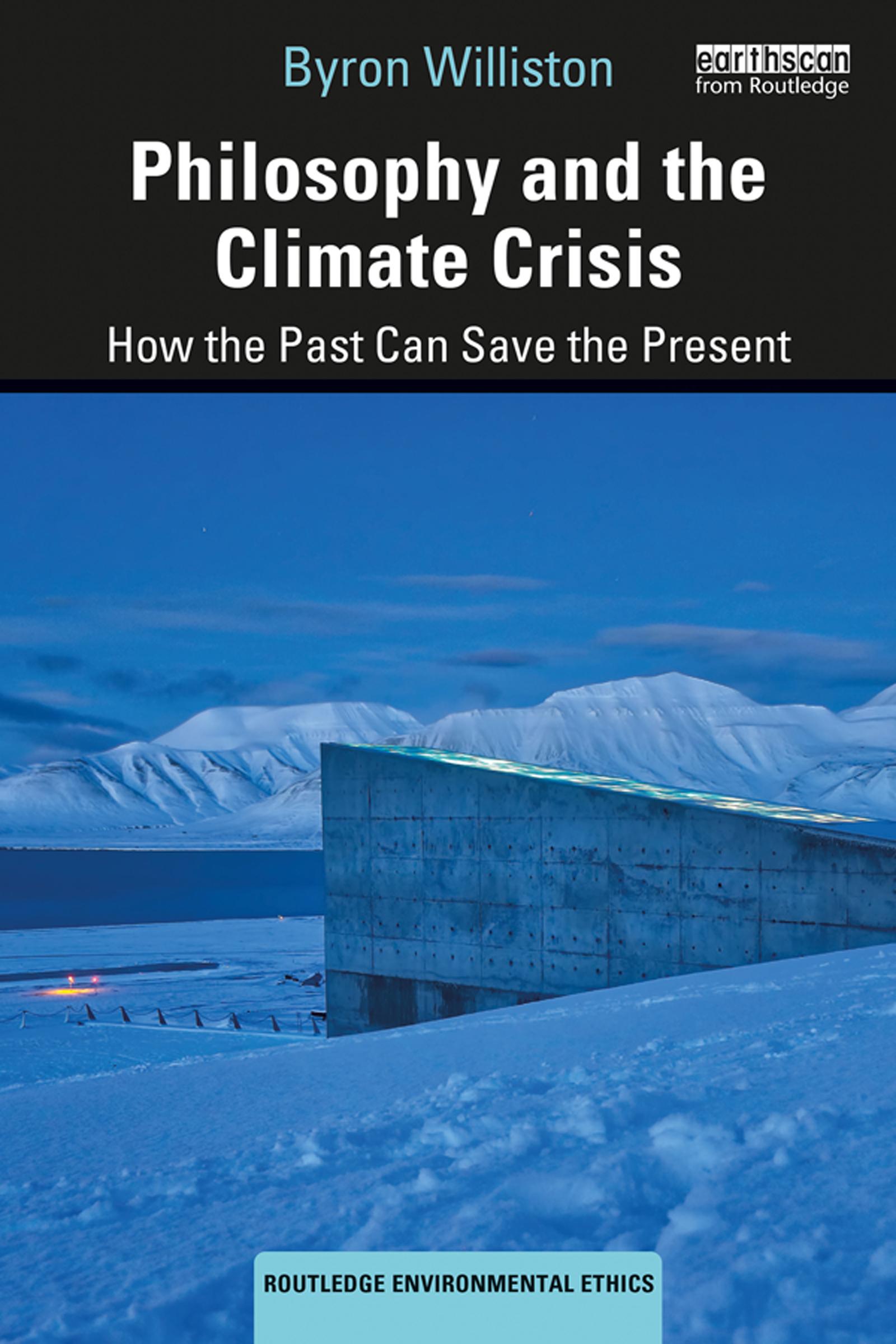
This book explores how the history of philosophy can orient us to the new reality brought on by the climate crisis.
If we understand the climate crisis as a deeply existential one, it can help to examine the way past philosophers responded to similar crises in their times. This book explores five past crises, each involving a unique form of collective trauma. These events—war, occupation, exile, scientific revolution and political revolution—inspired the philosophers to remake the whole world in thought, to construct a metaphysics. Williston distills a key intellectual innovation from each metaphysical system:
• That political power must be constrained by knowledge of the climate system (Plato)
• That ethical and political reasoning must be informed by care or love of the ecological whole (Augustine)
• That we must enhance the design of the technosphere (Descartes)
• That we must conceive the Earth as an internally complex system (Spinoza)
• And that we must grant rights to anyone or anything—ultimately the Earth system itself—whose vital interests are threatened by the effects of climate change (Hegel).
Philosophy and the Climate Crisis will be of great interest to students and scholars of climate change, environmental philosophy and ethics and the environmental humanities.
Płać wygodnie kartą, Klarną, Apple Pay lub Google Pay. Nie jesteś zadowolony? Zawsze masz 14-dniową gwarancję zwrotu pieniędzy. Więcej przeczytasz w naszych warunkach. Masz pytania? Napisz do nas na hello@memmo.org.
Memmo ułatwia naukę – gdziekolwiek jesteś na świecie. U nas znajdziesz podręczniki i sprytne narzędzia do nauki w jednym miejscu: streszczenia, quizy, podcasty i fiszki. A do tego Ted, Twój kumpel do nauki, który odpowie na wszystko, co Cię nurtuje. Ponad 50 000 studentów już tu się uczy – stworzone, byś uczył się szybciej i mniej stresował.