
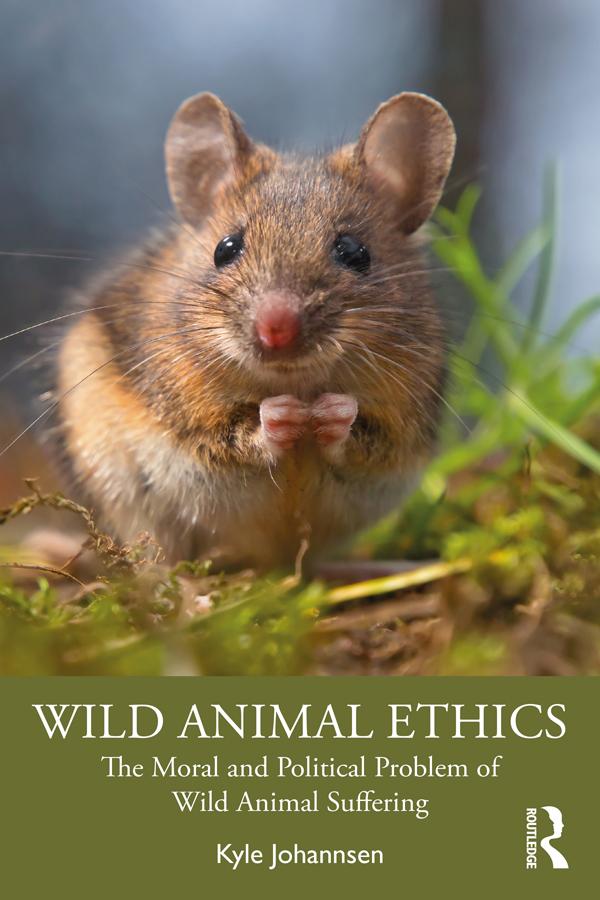
Though many ethicists have the intuition that we should leave nature alone, Kyle Johannsen argues that we have a duty to research safe ways of providing large-scale assistance to wild animals. Using concepts from moral and political philosophy to analyze the issue of wild animal suffering (WAS), Johannsen explores how a collective, institutional obligation to assist wild animals should be understood. He claims that with enough research, genetic editing may one day give us the power to safely intervene without perpetually interfering with wild animals’ liberties.
Questions addressed include:
- In what way is nature valuable and is intervention compatible with that value?
- Is intervention a requirement of justice?
- What are the implications of WAS for animal rights advocacy? What types of intervention are promising?
Expertly moving the debate about human relations with wild animals beyond its traditional confines, Wild Animal Ethics is essential reading for students and scholars of political philosophy and political theory studying animal ethics, environmental ethics, and environmental philosophy.
Płać wygodnie kartą, Klarną, Apple Pay lub Google Pay. Nie jesteś zadowolony? Zawsze masz 14-dniową gwarancję zwrotu pieniędzy. Więcej przeczytasz w naszych warunkach. Masz pytania? Napisz do nas na hello@memmo.org.
Memmo ułatwia naukę – gdziekolwiek jesteś na świecie. U nas znajdziesz podręczniki i sprytne narzędzia do nauki w jednym miejscu: streszczenia, quizy, podcasty i fiszki. A do tego Ted, Twój kumpel do nauki, który odpowie na wszystko, co Cię nurtuje. Ponad 50 000 studentów już tu się uczy – stworzone, byś uczył się szybciej i mniej stresował.