
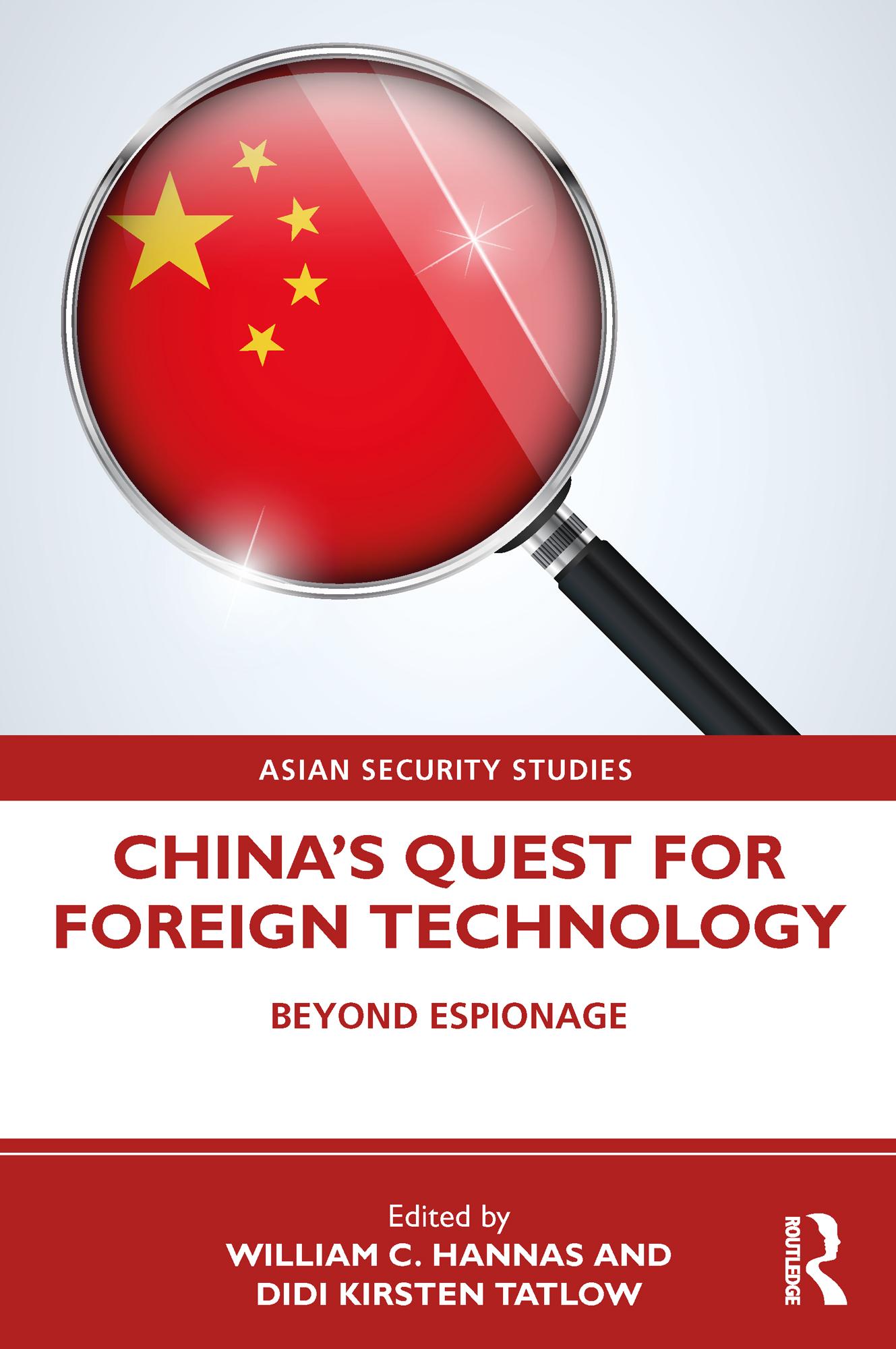
This book analyzes China’s foreign technology acquisition activity and how this has helped its rapid rise to superpower status.
Since 1949, China has operated a vast and unique system of foreign technology spotting and transfer aimed at accelerating civilian and military development, reducing the cost of basic research, and shoring up its power domestically and abroad—without running the political risks borne by liberal societies as a basis for their creative developments. While discounted in some circles as derivative and consigned to perpetual catch-up mode, China’s "hybrid" system of legal, illegal, and extralegal import of foreign technology, combined with its indigenous efforts, is, the authors believe, enormously effective and must be taken seriously. Accordingly, in this volume, 17 international specialists combine their scholarship to portray the system’s structure and functioning in heretofore unseen detail, using primary Chinese sources to demonstrate the perniciousness of the problem in a manner not likely to be controverted. The book concludes with a series of recommendations culled from the authors’ interactions with experts worldwide.
This book will be of much interest to students of Chinese politics, US foreign policy, intelligence studies, science and technology studies, and International Relations in general.
Płać wygodnie kartą, Klarną, Apple Pay lub Google Pay. Nie jesteś zadowolony? Zawsze masz 14-dniową gwarancję zwrotu pieniędzy. Więcej przeczytasz w naszych warunkach. Masz pytania? Napisz do nas na hello@memmo.org.
Memmo ułatwia naukę – gdziekolwiek jesteś na świecie. U nas znajdziesz podręczniki i sprytne narzędzia do nauki w jednym miejscu: streszczenia, quizy, podcasty i fiszki. A do tego Ted, Twój kumpel do nauki, który odpowie na wszystko, co Cię nurtuje. Ponad 50 000 studentów już tu się uczy – stworzone, byś uczył się szybciej i mniej stresował.