
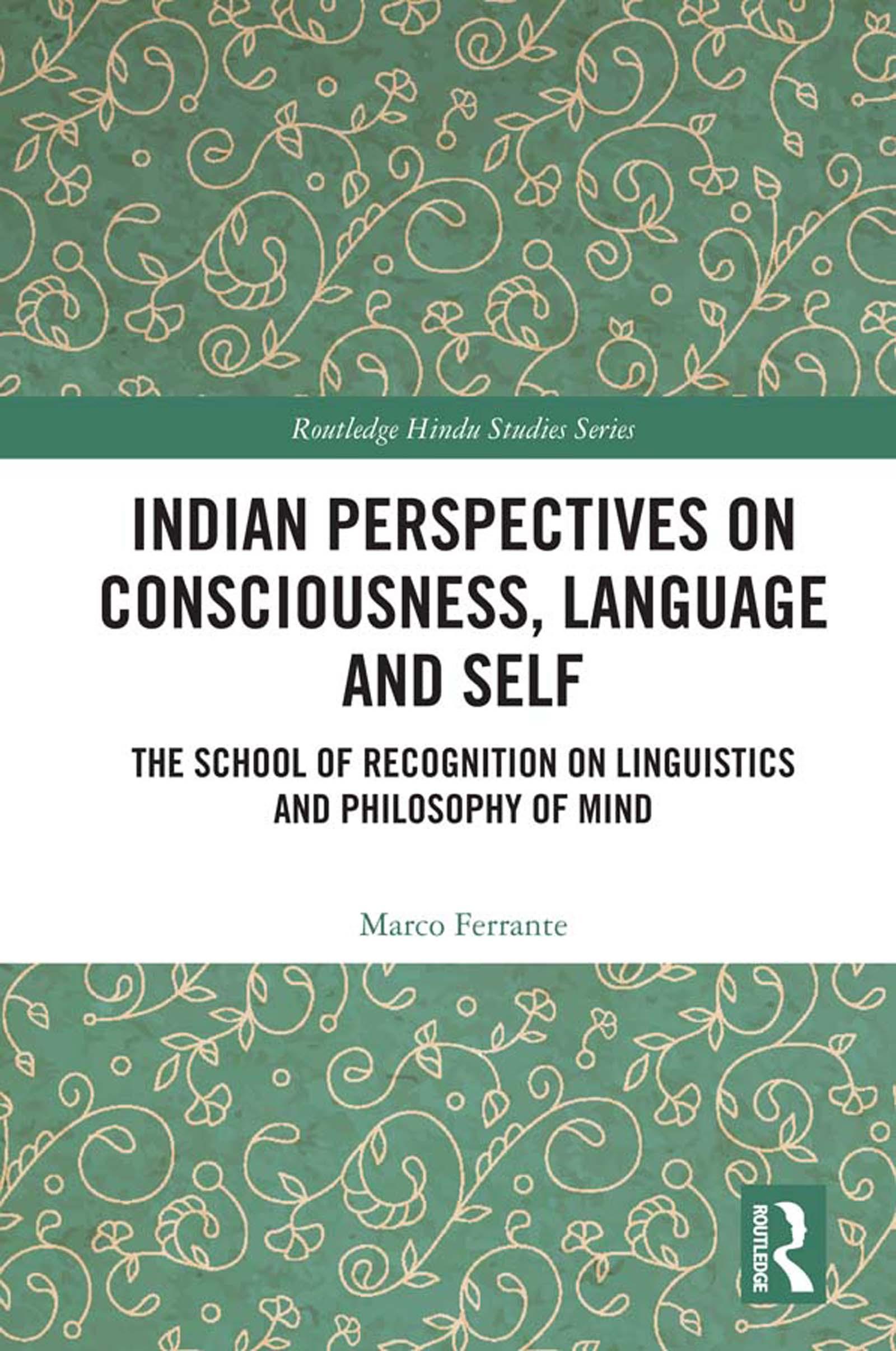
This book examines the theory of consciousness developed by the school of Recognition, an Indian philosophical tradition that thrived around the tenth c. CE in Kashmir, and argues that consciousness has a linguistic nature. It situates the doctrines of the tradition within the broader Indian philosophical context and establishes connections with the contemporary analytic debate.
The book focuses on Utpaladeva and Abhinavagupta (tenth c. CE), two Hindu intellectuals belonging to the school of Recognition, Pratyabhijñā in Sanskrit. It argues that these authors promoted ideas that bear a strong resemblance with contemporary ‘higher–order theories’ of consciousness. In addition, the book explores the relationship between the thinkers of the school of Recognition and the thought of the grammarian/philosopher Bhartṛhari (fifth c. CE). The book bridges a gap that still exists between scholars engaged with Western traditions and Sanskrit specialists focused on textual materials. In doing so, the author uses concepts from contemporary philosophy of mind to illustrate the Indian arguments and an interdisciplinary approach with abundant reference to the original sources.
Offering fresh information to historians of Indian thought, the book will also be of interest to academics working on Non-Western Philosophy, Comparative Philosophy, Indian Philosophy, Religion, Hinduism, Tantric Studies and South Asian Studies.
Płać wygodnie kartą, Klarną, Apple Pay lub Google Pay. Nie jesteś zadowolony? Zawsze masz 14-dniową gwarancję zwrotu pieniędzy. Więcej przeczytasz w naszych warunkach. Masz pytania? Napisz do nas na hello@memmo.org.
Memmo ułatwia naukę – gdziekolwiek jesteś na świecie. U nas znajdziesz podręczniki i sprytne narzędzia do nauki w jednym miejscu: streszczenia, quizy, podcasty i fiszki. A do tego Ted, Twój kumpel do nauki, który odpowie na wszystko, co Cię nurtuje. Ponad 50 000 studentów już tu się uczy – stworzone, byś uczył się szybciej i mniej stresował.