
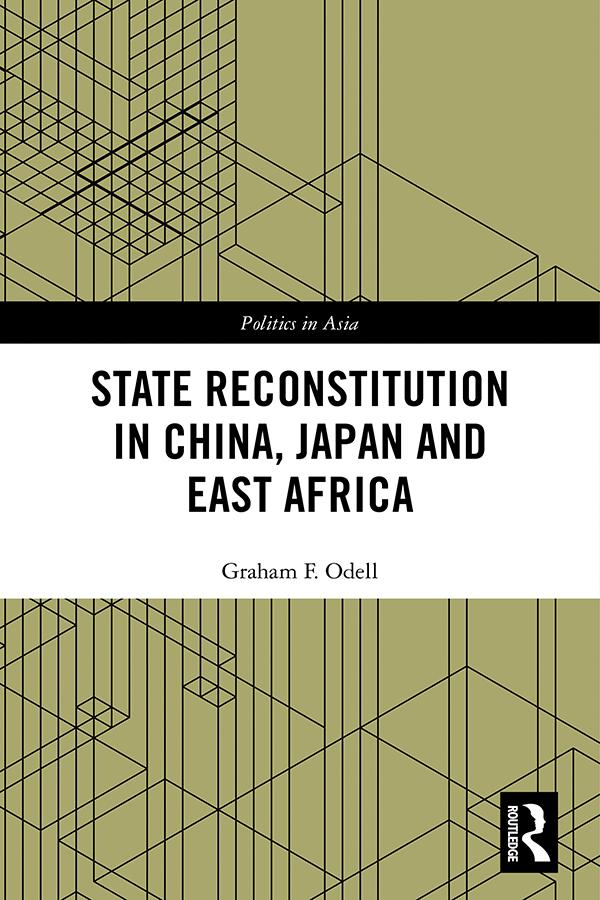
Presented through an investigation of Sengoku Japan and Republican China, this book proposes an innovative explanation of state formation that focuses on ideational and geographic factors.
This study addresses the question; why are some collapsed states able to reconstitute themselves where others have not? Graham F. Odell employs two cases of successful state reconstitution – Republican China (1912-1949) and Sengoku Japan (1477-1615) – to derive a new theoretical framework around this question. These cases are distinct across several significant factors, making them ideal for a research design that seeks to formulate an original theoretical explanation for a phenomenon. Taken together, these two periods of Chinese and Japanese history are paradigmatic cases of state collapse and reconstitution and thus intrinsically compelling to the study of state formation. By developing a new theory of successful state reconstitution through emphasizing the roles of ideology, political symbolism and the geographical distribution of social power, this text provides an answer to the question that has not only scholarly and practical implications, but also a wide geographical applicability.
This book will be key reading for scholars interested in matters of international politics, political science, and state formation, especially in East Asia.
Płać wygodnie kartą, Klarną, Apple Pay lub Google Pay. Nie jesteś zadowolony? Zawsze masz 14-dniową gwarancję zwrotu pieniędzy. Więcej przeczytasz w naszych warunkach. Masz pytania? Napisz do nas na hello@memmo.org.
Memmo ułatwia naukę – gdziekolwiek jesteś na świecie. U nas znajdziesz podręczniki i sprytne narzędzia do nauki w jednym miejscu: streszczenia, quizy, podcasty i fiszki. A do tego Ted, Twój kumpel do nauki, który odpowie na wszystko, co Cię nurtuje. Ponad 50 000 studentów już tu się uczy – stworzone, byś uczył się szybciej i mniej stresował.